Yangshuo Rock Climbing Packing List 2026: No Guide Needed
On this page10 sections
- 01What this guide covers
- 02Yangshuo is a single-pitch sport climbing paradise
- 03What to bring from home vs what to rent
- 042026 rental prices near West Street
- 05The key crags (and the approach logistics)
- 06Seasons and weather
- 07A realistic 3-day self-guided itinerary
- 08When to hire a guide instead
- 09Partners, safety, and insurance
- 10Frequently asked questions
I showed up at Moon Hill in borrowed hiking sandals with a chalk bag full of baby powder my hostel mate had handed me five minutes earlier. It was October, the route was a crumbling 5.7 with two bolts that had been placed sometime during the Jiang Zemin era, and a group of local kids below were eating sugarcane and taking bets on how long I would stay on the wall. I lasted about four moves. Then Li Wei, who runs my usual hostel, walked over and said: "Come on. Let me show you what you actually need."
This is that list.
What this guide covers
What to pack from home vs what to rent at a Yangshuo climbing shop
Where the real gear shops are near West Street (China Climb, SpiderMan, and the local rental outfits)
2026 rental prices for shoes, harness, chalk bag, rope, and quickdraws
Key crags: Moon Hill, White Mountain, Twin Gate Cave, Wine Bottle, Lei Pi Shan
Grade range (5.9 to 5.13, with a few 5.14s for the pro projects)
Seasonal windows and weather reality
A realistic 3-day self-guided climbing itinerary
When to hire a guide instead of going solo
Partners, approach logistics, and a no-nonsense FAQ
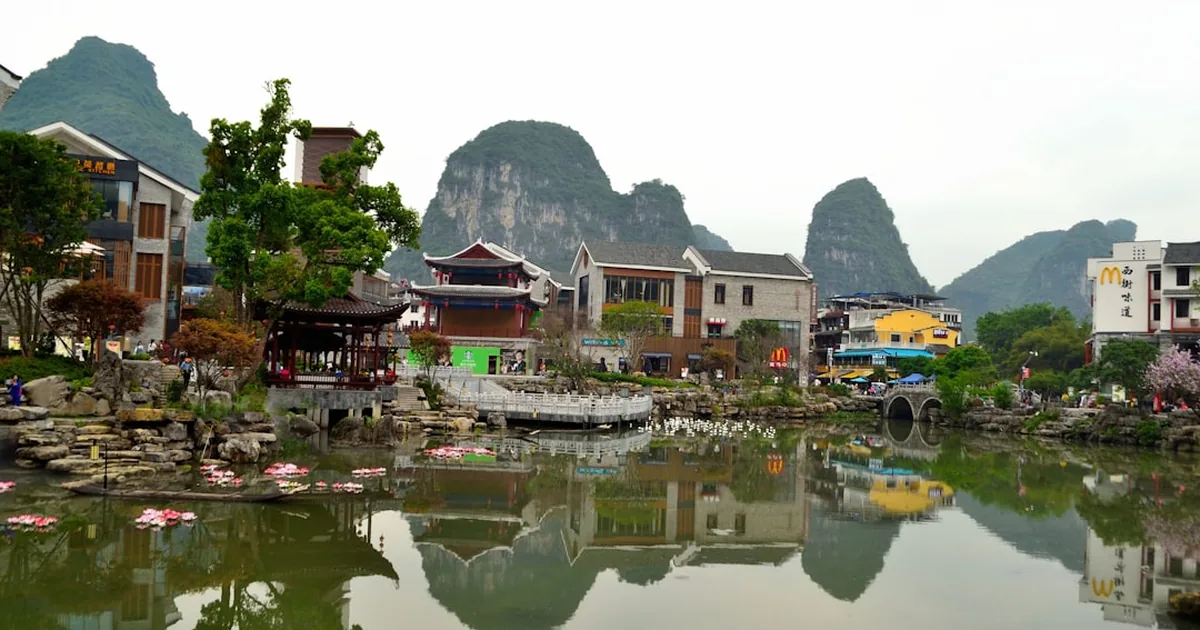
Yangshuo is a single-pitch sport climbing paradise
Before the packing list, know what you are walking into. Yangshuo is the best single-pitch sport climbing area in China and one of the top five in Asia. The limestone karst towers that make the scenery famous are also the rock — compact, sharp, pocketed, and sometimes crumbly. There are roughly 1000 bolted sport routes across 30+ crags within a 20 km radius of Yangshuo town. Grades run from 5.6 to 5.14+. Multipitch is extremely limited; 95% of what you will climb is single-pitch sport.
This matters for your gear choices. You do not need a trad rack. You do not need cams. You do not need a double rope. You need exactly the kit you would take to a sport crag anywhere in the world — plus a few Yangshuo-specific adaptations for humidity, polished footholds, and the long walks in under a hot sun.
What to bring from home vs what to rent
You can fly to Guangxi with a carry-on and still climb every day. The local shops stock everything except the deeply personal items you already trust.
Bring from home (your personal kit)
Climbing shoes that fit you well — rentals exist but broken-in personal shoes will climb harder and hurt less
Harness you have used before
Helmet if you always climb in one (rentals exist but fit matters)
Belay device (ATC, Grigri, or similar) and locking carabiner
Chalk bag
Chalk (buy a Friction Labs or Metolius block at home; local powder chalk is fine but not great)
Finger tape
Small dry bag for a camera or phone in the rain
Rent in Yangshuo (bulky or expensive)
Rope — a 70 m single is standard for Yangshuo; most rentals are 70 m 9.8-10.2 mm dynamics
Quickdraws — you need 12-15 for a typical route, renting saves luggage weight
Approach shoes if your climbing shoes are too stiff to walk in
A second rope if you want to rig a top-rope on a friend's project
Guidebook — every shop sells the current Yangshuo sport climbing guide (¥120-180)
Do not bother bringing
Cams or nuts — there is essentially no trad in Yangshuo
A 60 m rope — too short for many routes, you will have to simul-lower or get stuck
Aid gear
A rack of pitons from the 1980s your uncle gave you
2026 rental prices near West Street
Three reliable shops in Yangshuo rent and sell climbing gear. All three are within a 10-minute walk of West Street (Xi Jie) and all three accept WeChat Pay, Alipay, and cash.
China Climb (the main shop)
China Climb is the longest-running climbing shop in Yangshuo and the default starting point for foreign visitors. They are on Guihua Road, two minutes from West Street, and they speak English fluently. They rent, they sell, they run guided climbs, and they host the informal notice board where you find partners.
SpiderMan and local rental outfits
SpiderMan is the other well-known shop; a couple of smaller local shops run out of hostel lobbies (Wada, Climbers Inn, and the informal crew at Yangshuo Outside Inn). Prices are similar across all of them.
Rental price table
Item | Daily rate (¥) | Daily rate (USD) | Notes |
|---|---|---|---|
Climbing shoes | 40-80 | 6-11 | La Sportiva or Scarpa, sizes 35-46 |
Harness | 30-50 | 4-7 | Black Diamond or Petzl |
Helmet | 20-30 | 3-4 | Petzl or local brand |
Chalk bag | 10-15 | 1-2 | Often free with shoe rental |
Chalk (powder, 100g) | 15-25 | 2-4 | Buy, do not rent |
70 m single rope | 80-150 | 11-21 | 9.8-10.2 mm, 2-3 years old |
Quickdraw (per piece) | 8-15 | 1-2 | Rent 12-15 for a full day |
Full kit bundle (shoes + harness + chalk + rope + 12 draws) | 200-350 | 28-49 | Best value for a full day |
Belay device + locker | Free with rental | - | Usually included |
Guidebook (paper) | 120-180 | 17-25 | Buy, not rent |
A typical day of climbing without owning any gear works out to ¥250-350 (about $35-50) including full kit rental, which is cheap by international standards. Prices drop slightly if you rent for multiple days — ¥800-1200 for a full kit across 5 days.
The key crags (and the approach logistics)
Yangshuo has 30+ crags and you will not climb all of them on a first trip. Here is the short list every self-guided climber should know.
Moon Hill (Yueliang Shan)
The iconic arch. Moon Hill is 7 km from Yangshuo town, 15-20 minutes by scooter or 30-40 minutes by taxi (¥40-60). The approach is a 20-minute uphill walk from the parking lot. Routes range from 5.8 to 5.14 and the classic moderate line is "Single Life" (5.11a), which climbs through the arch itself. Best in the morning before the sun hits the cave.
White Mountain (Bai Shan)
Five km from town, slightly higher elevation, and almost always in the shade by 14:00. White Mountain has the highest concentration of mid-5.11 to 5.13 sport routes in Yangshuo. The approach is a hot 25-minute walk from the road but the rock is excellent. This is where many strong climbers spend most of their days.
Twin Gate Cave (Chuan Yan)
Known for overhanging 5.12 and 5.13 routes and a deep cave at the base where you can escape midday heat. Approach: 10 km from town by scooter, then a 15-minute walk. The cave itself is cool even in July.
Wine Bottle (Jiuhu Shan)
Beginner-friendly. The Wine Bottle crag has a cluster of 5.8 to 5.10 routes perfect for first-day warmups or a less intimidating second day. Closer to town (4 km) and easier to reach on a rental electric scooter.
Lei Pi Shan (Lei Pi Cave)
The "Lightning Cave." Steep overhangs, 5.12+ to 5.14, projects you will see being worked by the local climbing crew. Come here to spectate even if you are not climbing at that grade — the rock is spectacular.
Getting to the crags
Rent an electric scooter from any shop in Yangshuo for ¥60-100 per day (passport required for the deposit). You will also need a helmet and should have an international driving permit technically, though enforcement for short-term rentals at quiet rural crags is minimal. DiDi works from Yangshuo town to some crags — budget ¥40-80 one way. Walking from town is only realistic to Wine Bottle and a few closer crags; the others are too far.
Seasons and weather
October through April is the Yangshuo climbing season. Temperatures run from 10-25 deg C, humidity is tolerable, and the rock is dry most days. November and March are peak — dry, cool, good friction.
May through September is monsoon and tropical heat. Many routes seep for weeks after heavy rain, the polished footholds become dangerous, and 35 deg C humidity will break you on a two-hour approach. Local climbers still climb in summer but only in the shaded caves and very early in the morning. If this is your first trip, come in the dry season.
Weather apps
Amap and the Chinese Yahoo-style weather services give you the current forecast. Climbing-specific, check the Yangshuo Climbing WeChat group via China Climb — they post daily route conditions and which crags have dried out after rain.
A realistic 3-day self-guided itinerary
Day 1: Wine Bottle (easy warmup + orientation)
08:30 — Breakfast in Yangshuo town, pick up rental kit at China Climb (¥250 for full kit)
09:30 — Scooter to Wine Bottle (¥60 per day for the scooter)
10:00 — Approach and warm up on a 5.9
11:00-13:00 — Session on 5.10 to 5.11 routes
13:00 — Scooter back to town, lunch at a noodle place near West Street (¥25-40)
15:00 — Rest, read the guidebook, pick tomorrow's project
18:00 — Dinner, early bed
Day 2: Moon Hill (the classic day)
07:30 — Early breakfast, skip the Moon Hill tourist buses
08:30 — Scooter to Moon Hill parking lot
09:00 — Approach to the crag (20 min)
09:30-13:00 — Climb in the shade before the sun rotates onto the arch
13:30 — Lunch break
14:30-16:00 — One or two more routes if the sun allows
17:00 — Back in town, swap shoes if needed
Day 3: White Mountain (push your grade)
08:00 — Breakfast and pack water (minimum 2 L per person — approach is hot)
08:30 — Scooter to White Mountain
09:00 — Approach (25 min uphill)
09:30-16:00 — Full session, 4-6 routes, rest in the shade
16:30 — Scooter back
18:00 — Return rental kit to China Climb, celebrate at a West Street restaurant
Total cost for three self-guided climbing days including rentals, scooter, food, and a modest hostel bed: about ¥900-1400 ($125-195). Add ¥180 if you buy the guidebook and keep it.
When to hire a guide instead
Self-guided is the cheapest and most flexible option, but there are three cases where you should hire a local guide through China Climb or a similar shop:
You have never climbed outdoors before and need real instruction before you can safely sport lead.
You are traveling alone and cannot find a partner at the shops or on the climber notice boards — a guide can belay you safely and get you on routes.
You want to access a specific project or multipitch that is hard to find without local knowledge.
Guided day rates in 2026 at China Climb run ¥600-1200 per climber depending on group size and crag. That includes gear, the guide, and transport to the crag. If you are new to outdoor climbing, this is excellent value.
Partners, safety, and insurance
Finding a partner
Walk into China Climb in the late afternoon. Every major shop has a partner notice board where climbers post "looking for partner for [date] at [crag] at [grade]." You can also post in the Yangshuo Climbers WeChat group. Most climbers in Yangshuo are solo travelers doing exactly what you are doing, and finding a partner usually takes less than an hour.
Insurance
Standard travel insurance does not cover rock climbing. Buy a World Nomads Explorer plan or a Global Rescue plan before you fly. Guided climbs through licensed shops are generally covered under more standard plans, but if you are leading sport routes independently, you need the explorer-tier coverage. Read your policy before you book the flight, not after.
Medical realities
Yangshuo town has a hospital, but for serious climbing injuries you will be transferred to Guilin (1.5 hours by ambulance). Bring basic climbing first aid (tape, ibuprofen, antiseptic, gauze). Carry your passport to any medical facility.
Frequently asked questions
Can I climb in Yangshuo without any prior outdoor climbing experience?
Technically yes — the easier crags have 5.6 to 5.8 routes you could top-rope under supervision — but you should hire a guide for your first day. Trying to learn sport leading and outdoor belay technique from YouTube while standing at the base of a crag is how accidents happen. Pay the ¥600-1200 for a guided intro day, then go self-guided from day two.
What if I forget my climbing shoes?
Rent them at China Climb or SpiderMan. They stock sizes 35 to 46 in La Sportiva Tarantulace, Scarpa Origin, and a few local brands. ¥40-80 per day. Older pairs, but they will get you on routes.
Is the rock quality good?
Mostly yes. The classic crags (Moon Hill, White Mountain, Twin Gate Cave) are clean compact limestone with solid bolts. Some older routes on less-trafficked crags have aged bolts and polished holds. Check the guidebook's star rating and bolt-date notes before you get on a route you do not know. Avoid anything flagged as "choss" or "needs rebolting."
Do I need a visa for Yangshuo?
You need a standard China tourist visa or visa-free entry if you qualify. There is no extra climbing permit and no special Yangshuo registration. Book your hotel through Trip.com with the foreigner filter and you are legal.
What is the cheapest way to climb Yangshuo on a budget?
Share gear with a partner. A rope and a rack of quickdraws split between two climbers is ¥80-150 per day total. Bring your own shoes and harness from home. Rent a scooter for ¥60 per day. Stay at a hostel dorm for ¥60-100. Eat at local noodle places for ¥25-40 per meal. Total daily cost under ¥400 per person.
The crags are spread out and the bike is the right tool, not a car — hiring a driver in Guilin makes sense for the Li River and not for climbing, where you would be paying someone to wait. Getting here at all is the part people underestimate: Yangshuo sits between two Guilin stations, and the five-city route explains which one the Shanghai trains actually leave from. For the wider region, the Chinese food guide covers what Guangxi cooking is and is not.