Chinese Food Guide by Region 2026: 8 Cuisines Explained
On this page14 sections
- 01What this guide covers
- 02The Eight Great Cuisines at a glance
- 03Sichuan Cuisine (川菜)
- 04Cantonese Cuisine (粤菜)
- 05Shandong Cuisine (鲁菜)
- 06Jiangsu Cuisine (苏菜)
- 07Zhejiang Cuisine (浙菜)
- 08Fujian Cuisine (闽菜)
- 09Hunan Cuisine (湘菜)
- 10Anhui Cuisine (徽菜)
- 11Beyond the Eight: other regional styles
- 12Price ranges you can expect
- 13How to order without embarrassing yourself
- 14FAQ
Chinese food is not a single cuisine. It's forty or fifty, depending on how you count, with sharp regional personalities that don't translate across provinces. A Sichuan cook from Chengdu and a Cantonese cook from Guangzhou can barely read each other's menus. Travelers who land in China expecting "Chinese food" the way it exists in Toronto or Sydney are usually startled, then delighted. This 2026 guide walks through the Eight Great Cuisines (八大菜系) that form the classical framework, then adds the regional styles every traveler should recognize, with signature dishes, price ranges, and where to find them.
What this guide covers
The Eight Great Cuisines and what each one is actually known for
25+ signature dishes with Chinese characters, pinyin, and English names
Where to find each regional style (city by city)
Price ranges from street food to fine dining
Regional styles beyond the classic eight — Northwest, Dongbei, Yunnan, Tibetan
How to order, what to expect, and what to avoid
Heading to China soon?
Take every guide offline — translation, payments, maps, and emergency help in one free app.
The Eight Great Cuisines at a glance
Chinese food schools were formally codified into Eight Great Cuisines (八大菜系, Ba Da Cai Xi) in the late Qing dynasty. They reflect the climate, ingredients, and history of their home provinces. Each has a distinct flavor logic and a set of signature dishes.
Cuisine | Chinese | Home province | Flavor profile | Famous city |
|---|---|---|---|---|
Sichuan | 川菜 | Sichuan | Spicy, numbing, bold | Chengdu |
Cantonese | 粤菜 | Guangdong | Light, fresh, umami | Guangzhou |
Shandong | 鲁菜 | Shandong | Salty, savory, classical | Jinan |
Jiangsu | 苏菜 | Jiangsu | Delicate, sweet, ornate | Nanjing, Yangzhou |
Zhejiang | 浙菜 | Zhejiang | Fresh, light, seafood | Hangzhou |
Fujian | 闽菜 | Fujian | Umami, broths, mushrooms | Fuzhou |
Hunan | 湘菜 | Hunan | Hot, sour, smoky | Changsha |
Anhui | 徽菜 | Anhui | Earthy, braised, wild herbs | Huangshan |
People argue endlessly about which four are the "real" Big Four (usually Sichuan, Cantonese, Shandong, and Jiangsu), but for travelers the full eight is a better framework.
Sichuan Cuisine (川菜)
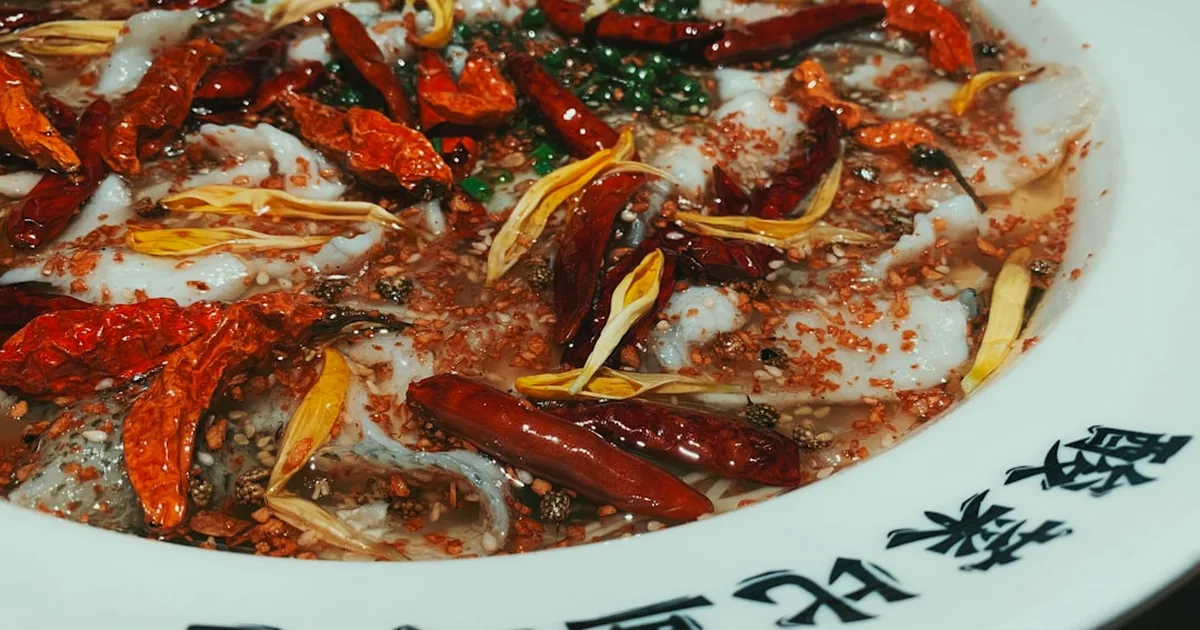
Sichuan food is the one most travelers know by reputation. The hallmark is mala (麻辣), the combination of numbing Sichuan peppercorn and spicy chili pepper that creates a tingly, buzzing mouth-feel distinct from pure heat. Sichuan food also prizes a "seven flavors" philosophy — sweet, sour, bitter, spicy, salty, fragrant, and numbing — balanced across a meal.
Core dishes
Mapo Tofu (麻婆豆腐, má pó dòu fu) — silky tofu in fiery bean paste sauce, minced pork, topped with ground Sichuan peppercorn. ¥20-60 at neighborhood shops.
Kung Pao Chicken (宫保鸡丁, gōng bǎo jī dīng) — diced chicken stir-fried with peanuts, dried chilies, and a tangy sweet-sour glaze. Medium heat. ¥30-80.
Twice-Cooked Pork (回锅肉, huí guō ròu) — pork belly boiled, sliced thin, then stir-fried with fermented bean paste and leeks. ¥40-90.
Dan Dan Mian (担担面, dàn dàn miàn) — noodles with minced pork, chili oil, Sichuan pepper, and preserved vegetables. ¥15-30.
Sichuan Hotpot (火锅, huǒ guō) — beef tallow broth with peppercorn, chilies, and spices. ¥80-150 pp at mid-range chains. Pair with the classic dipping sauce of sesame oil, garlic, and cilantro.
Fish-Fragrant Eggplant (鱼香茄子, yú xiāng qié zi) — eggplant in a sweet-sour-spicy sauce that mimics the flavor of fish cookery (no actual fish). ¥30-60.
Where to eat Sichuan
Chengdu is the heartland — go there for the full experience, from street-corner dan dan mian to high-end omakase like Yu Zhi Lan. Chongqing (technically its own municipality but historically part of Sichuan) has its own intensely spicy hotpot tradition. Outside Sichuan, Sichuan restaurants are reliably good in every major city; in Beijing and Shanghai, chains like Mei Zhou Dong Po and Ba Shu Feng offer polished versions.
Cantonese Cuisine (粤菜)
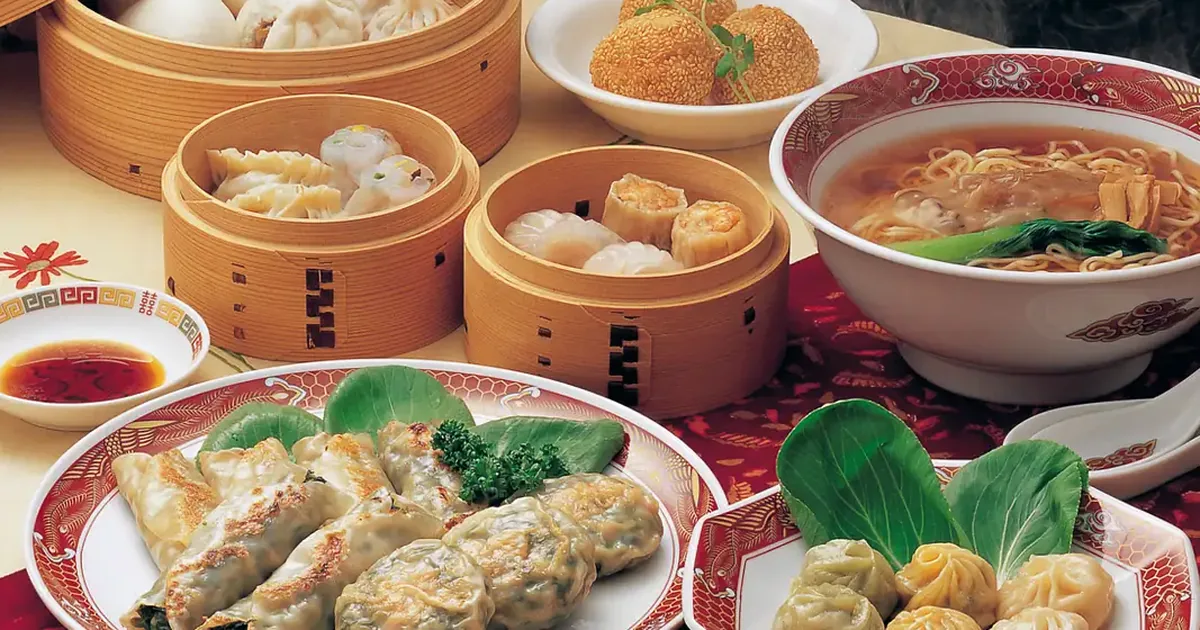
Cantonese is the Chinese food most of the world has already tasted. It's the cuisine behind dim sum, sweet-and-sour pork, char siu, and countless takeout menus, but in its home region it's immeasurably more subtle and ingredient-focused than the adapted Western versions suggest. Cantonese cooks prize freshness, steaming, and mild flavors that showcase raw ingredients.
Core dishes
Dim Sum (点心, diǎn xīn) — not one dish but a whole meal format. Steamed dumplings, buns, rice rolls, egg tarts, all pushed on carts or ordered from a checklist. Classic items include siu mai (烧卖), har gow (虾饺), char siu bao (叉烧包), egg tarts (蛋挞), and cheung fun (肠粉). Brunch format, ¥80-200 pp.
Char Siu (叉烧, chā shāo) — honey-glazed barbecue pork, caramelized and fatty. Served over rice with greens for ¥30-50, or as part of a rice plate with roasted duck.
Roasted Duck / Goose (烧鸭 / 烧鹅, shāo yā / shāo é) — crackling skin, juicy meat, usually eaten with plum sauce or pickled vegetables. Goose is the regional specialty, especially in Shunde. ¥50-120 for a quarter.
Steamed Fish (清蒸鱼, qīng zhēng yú) — a whole fresh fish steamed with ginger, scallions, and a light soy sauce. The test of a Cantonese kitchen. ¥80-300 depending on fish.
Wonton Noodles (云吞面, yún tūn miàn) — thin egg noodles in broth with shrimp-pork wontons. Hong Kong-style especially. ¥25-50.
Congee (粥, zhōu) — savory rice porridge, often with pork and preserved egg (皮蛋瘦肉粥) or fish slices. Breakfast food. ¥15-30.
Where to eat Cantonese
Guangzhou is the source. Dim sum brunches run from classic teahouses like Tao Tao Ju and Guangzhou Restaurant to modern spots. Shunde, 40 minutes outside Guangzhou, is the district UNESCO recognized as a "City of Gastronomy" and is worth a dedicated trip. Hong Kong and Macau serve Cantonese food at every price tier. Shenzhen is improving rapidly.
Shandong Cuisine (鲁菜)
Shandong is the oldest of the eight and the direct ancestor of northern Chinese cooking, including much of imperial Beijing cuisine. Its flavors are clean, salty, savory, and dependent on meticulous stock-making (清汤, clear broth, is a technical marvel). Braising, quick stir-frying over high heat, and wheat-based staples dominate.
Core dishes
Sweet and Sour Yellow River Carp (糖醋鲤鱼, táng cù lǐ yú) — whole carp fried until crisp, then drenched in a sweet-sour sauce. ¥80-180.
Dezhou Braised Chicken (德州扒鸡, dé zhōu pá jī) — slow-braised whole chicken with a dozen spices. ¥60-120.
Jiuzhuan Dachang (九转大肠) — "nine-turned large intestine," pig intestine cleaned and simmered into a sweet-salty-savory-spicy-sour delicacy. The name comes from Taoist alchemy. ¥40-80.
Scallion Braised Sea Cucumber (葱烧海参, cōng shāo hǎi shēn) — luxury banquet dish, springy sea cucumber with a deeply savory scallion sauce. ¥200-500.
Where to eat Shandong
Jinan and Qingdao are the centers. Qingdao leans heavily seafood thanks to its coast. Outside Shandong, many classical banquet restaurants in Beijing draw on Lu cuisine techniques — this is the root of what you might call "state dinner" Chinese food.
Jiangsu Cuisine (苏菜)
Jiangsu cooking comes from the water-town heartland south of the Yangtze, including Nanjing, Yangzhou, and Suzhou. It's the most ornate of the eight, with precise knife work, slow braising, and a preference for gentle, almost delicate sweetness. Seasonal ingredients — especially freshwater fish, crabs, and vegetables — drive the menus.
Core dishes
Lion's Head Meatballs (狮子头, shī zi tóu) — Giant pork meatballs braised in soy and rock sugar, served in broth. ¥30-80.
Yangzhou Fried Rice (扬州炒饭, yáng zhōu chǎo fàn) — the ancestor of every "special fried rice" on the planet, with shrimp, char siu, scallion, and peas. ¥25-60.
Crystal Pork (水晶肴肉, shuǐ jīng yáo ròu) — Zhenjiang specialty, pork cured and set in aspic, served cold. ¥40-80.
Braised Pork with Brown Sauce (红烧肉, hóng shāo ròu) — sweet, glossy pork belly (also claimed by Hunan and Shanghai; Jiangsu's version is gentler). ¥40-90.
Hairy Crab (大闸蟹, dà zhá xiè) — Shanghai hairy crab, strictly a fall seasonal specialty (October-November). ¥60-200 per crab depending on size and source.
Where to eat Jiangsu
Nanjing, Yangzhou, Suzhou, and Zhenjiang are all centers of Su cuisine with slightly different sub-styles. Shanghai — technically its own thing (本帮菜, benbang cai) — borrows heavily from Jiangsu cooking and is the easiest city to experience the flavor profile.
Zhejiang Cuisine (浙菜)
Zhejiang is Jiangsu's neighbor, equally water-oriented but leaning even more to fresh fish, tender vegetables, and light seasoning. Hangzhou, Ningbo, and Shaoxing are the three sub-schools. Shaoxing wine — the rice wine you've seen in every Chinese supermarket — comes from here.
Core dishes
West Lake Vinegar Fish (西湖醋鱼, xī hú cù yú) — poached freshwater fish in a sweet-sour vinegar sauce, Hangzhou specialty. ¥80-160.
Dongpo Pork (东坡肉, dōng pō ròu) — slow-braised pork belly named after Song-dynasty poet Su Dongpo, served in a square. ¥40-90.
Beggar's Chicken (叫花鸡, jiào huā jī) — whole chicken wrapped in lotus leaf and clay, baked. Ceremonially cracked open at the table. ¥100-200.
Longjing Shrimp (龙井虾仁, lóng jǐng xiā rén) — delicate river shrimp stir-fried with Longjing green tea leaves. ¥80-150.
Where to eat Zhejiang
Hangzhou is the obvious destination, especially around West Lake. The institution is Lou Wai Lou (楼外楼), 170 years old, on the lake. Shaoxing, 90 minutes away, is worth a detour for the drunken-in-wine dishes and old town canals.
Fujian Cuisine (闽菜)
Fujian food is underappreciated outside China. It's defined by clear broths, umami-forward seasoning, wild mushrooms, and seafood. The province sits across the strait from Taiwan, and many Taiwanese dishes trace back to Fujian origins.
Core dishes
Buddha Jumps Over the Wall (佛跳墙, fó tiào qiáng) — luxury soup of shark fin, abalone, sea cucumber, ham, mushrooms, and herbs, slow-stewed. The name suggests the aroma would tempt a Buddhist monk to jump a wall. ¥300-1500 per portion.
Oyster Omelette (蚵仔煎, ó ā jiān) — Hokkien / Fujian classic, fresh oysters in an eggy starch pancake. ¥25-50.
Fish Ball Soup (鱼丸汤, yú wán tāng) — springy fish balls with pork or shrimp stuffing in clear broth. ¥15-35.
Red Wine Lees Chicken (红糟鸡, hóng zāo jī) — chicken cooked with fermented red rice lees, a Fuzhou specialty. ¥50-90.
Where to eat Fujian
Fuzhou, Xiamen, and Quanzhou are the three main cities, with slightly different coastal specialties. Xiamen is the easiest tourist-friendly base.
Hunan Cuisine (湘菜)
Hunan food is spicier than Sichuan food, on average, though differently so. Sichuan has the numbing peppercorn; Hunan brings pure chili heat, sour fermented vegetables, and smoke. Dishes are often brighter and more sour than their Sichuan counterparts.
Core dishes
Chairman Mao's Red Braised Pork (毛氏红烧肉, máo shì hóng shāo ròu) — Mao Zedong's favorite dish, sweet and glossy pork belly. Claimed by multiple regions but Hunan's version has a distinct caramelization. ¥40-90.
Steamed Fish Head with Chopped Chilies (剁椒鱼头, duò jiāo yú tóu) — a fish head (usually bighead carp) steamed with a mountain of pickled red chilies. Fiery, aromatic, the iconic Hunan dish. ¥80-180.
Hunan Smoked Pork (腊肉, là ròu) — cured, smoked pork belly stir-fried with dried vegetables or chilies. ¥40-80.
Stinky Tofu Changsha-Style (长沙臭豆腐) — black, fermented, pan-fried tofu, drizzled with chili sauce. ¥15-25.
Where to eat Hunan
Changsha is the capital and the center. Outside Hunan, reliable restaurants include Di Shui Dong (a famous Shanghai outpost), Guyi Hunan in Beijing, and Hunan Ren chain nationally.
Anhui Cuisine (徽菜)
Anhui is the least tourist-famous of the Eight. Its cooking comes from the mountainous Huizhou region and relies on wild herbs, bamboo, mushrooms, slow braising, and strong use of ham. Flavors are earthy, salty, and rustic.
Core dishes
Stinky Mandarin Fish (臭鳜鱼, chòu guì yú) — fish lightly fermented until it develops a pungent aroma, then braised. ¥80-160.
Li Hong Zhang Hot Pot (李鸿章杂烩) — a braised mix of ham, sea cucumber, chicken, and vegetables named after a Qing statesman. ¥150-300.
Bamboo Shoots with Ham (火腿炖笋干) — slow-stewed local ham with dried bamboo. ¥60-120.
Where to eat Anhui
Huangshan / Huizhou region, especially Shexian old town. Combine with a Yellow Mountain (Huangshan) hike for a proper regional food trip.
Beyond the Eight: other regional styles
The Eight Great Cuisines cover most of the Han heartland, but China has four more styles every traveler should know.
Northwest (Xinjiang, Gansu)
Uyghur and Hui Muslim food, heavily influenced by Central Asia. Lamb dominates. Dishes include:
Big Plate Chicken (大盘鸡, dà pán jī) — stewed chicken with potato, pepper, and hand-pulled noodles. ¥80-180 for a plate feeding 2-3.
Lamb Pilaf (手抓饭, shǒu zhuā fàn) — rice cooked with lamb and carrots. ¥25-50.
Lanzhou Beef Noodles (兰州拉面, lán zhōu lā miàn) — hand-pulled noodles in clear spiced beef broth. ¥15-30.
Lamb Skewers (羊肉串, yáng ròu chuàn) — grilled cumin-dusted lamb on metal skewers. ¥3-8 per stick.
Nang Bread (馕, náng) — round flatbread baked in tandoor ovens. ¥3-10.
Find it in: Urumqi, Kashgar, Lanzhou, Xi'an. Northwest restaurants in Beijing and Shanghai are reliably good.
Dongbei (Northeast)
The three northeastern provinces (Heilongjiang, Jilin, Liaoning) have their own hearty cold-climate cooking, heavy on stews and dumplings, influenced by Manchu and Russian neighbors.
Guo Bao Rou (锅包肉) — breaded, fried pork in a sweet-sour sauce. ¥40-80.
Di San Xian (地三鲜) — potato, eggplant, and pepper stir-fry. ¥25-50.
Suan Cai Rou (酸菜炖肉) — pickled cabbage stewed with pork. ¥50-120.
Dongbei Dumplings (东北水饺) — plump boiled dumplings with pork and sour cabbage. ¥25-60 per plate.
Find it in: Harbin, Shenyang, Changchun. Dongbei restaurants are everywhere in China.
Yunnan
Southwest province bordering Vietnam, Laos, and Myanmar. Mushrooms, wild herbs, cheese (unusual in China), and fresh ingredients.
Crossing-the-Bridge Noodles (过桥米线, guò qiáo mǐ xiàn) — rice noodles assembled tableside in hot broth. ¥25-60.
Qi Guo Ji (汽锅鸡) — chicken steamed in a special lidded clay pot. ¥80-150.
Wild Mushroom Hotpot (野生菌火锅) — seasonal (July-October), dozens of local mushrooms in broth. ¥150-400 pp.
Rubing Cheese (乳饼) — grilled goat milk cheese, Bai minority specialty. ¥25-50.
Find it in: Kunming, Dali, Lijiang, Shangri-La.
Tibetan / Himalayan
Yak-based, high-altitude food adapted to the Tibetan plateau. Gentle seasoning, barley staples.
Tsampa (糌粑) — roasted barley flour, eaten with butter tea. ¥10-25.
Butter Tea (酥油茶) — yak butter, salt, and tea churned together. ¥5-20 per bowl.
Yak Momos (牦牛包子) — steamed yak-meat dumplings. ¥15-30.
Yak Yogurt — thick, tangy, fresh. ¥10-25.
Find it in: Lhasa, Shigatse, Yushu (Qinghai), Gannan (Gansu).
Price ranges you can expect
Setting | Range | Examples |
|---|---|---|
Street food, breakfast noodles | ¥8-25 | Rice noodles, jianbing, baozi, dan dan mian |
Lunch at a neighborhood restaurant | ¥30-80 pp | Sichuan, Dongbei, Hunan everyday meals |
Mid-range dinner | ¥80-200 pp | Hotpot, nicer Cantonese, Sichuan classics |
Upscale regional dinner | ¥300-800 pp | Proper Jiangsu or Cantonese, banquet style |
Fine dining / omakase | ¥1000+ pp | Yu Zhi Lan, Fu 1088, hotel restaurants |
How to order without embarrassing yourself
Order family-style. A Chinese meal is shared. For 2 people, order 3 dishes plus a rice or noodle; for 4 people, 5-6 dishes plus a soup and a staple.
Balance the flavors. Don't order four spicy dishes in a row. Aim for one cold appetizer, one meat, one vegetable, one seafood or tofu, and one staple (rice or noodles).
Ask for spice level. "Bu la" (不辣) means no spice, "wei la" (微辣) means mild, "zhong la" (中辣) medium, "te la" (特辣) extra spicy.
Let the server recommend. "Zhao pai cai" (招牌菜) means "house special" — most places have 2-3 signature dishes they're proud of.
Menu apps help. Use Google Translate's camera feature on a printed menu if no English version exists. Dianping reviews often list top-ordered dishes with photos.
FAQ
Is all Chinese food spicy?
Not remotely. Sichuan and Hunan bring the heat. Cantonese, Jiangsu, Zhejiang, and Shandong are mild. You can eat in China for a month without hitting a chili if you choose your restaurants. Most menus mark spicy dishes with a pepper icon.
What's the difference between Sichuan and Hunan food?
Sichuan uses Sichuan peppercorn for its signature numbing sensation alongside chili heat. Hunan relies more purely on chili heat, often fresh or fermented chilies, with a sour tang from pickled vegetables. Hunan is louder and punchier; Sichuan is more balanced and layered.
Where do I eat authentic dim sum?
Guangzhou, Shunde, Hong Kong, Macau. For a tourist-friendly version, dim sum restaurants in Shanghai and Beijing run from ¥80-200 per person and are reliable. Outside China, Vancouver, San Francisco, and London have genuinely good Cantonese dim sum scenes.
Is it safe to eat street food in China?
Yes, at busy stalls with high turnover. Avoid empty stalls, pre-cut fruit sitting out, and anything that looks like it's been warming for hours. Watch it being cooked if possible. The biggest risk for foreign travelers is unfamiliar bacteria, not contamination — take probiotics for the first week if you're prone to stomach upsets.
Do Chinese people actually eat Chinese takeout dishes like General Tso's chicken?
No. General Tso's chicken, beef and broccoli, crab rangoon, and most of the American-Chinese menu are 20th-century inventions by Chinese immigrants adapting to Western palates. Orange chicken doesn't exist in China. Fortune cookies are a Japanese-American invention. Traditional Chinese food is entirely different from the takeout you know.
What's the best region for food travelers?
Tough call. Chengdu (Sichuan) for depth and spice, Guangzhou (Cantonese) for refinement and seafood, Xi'an (Northwest-influenced) for variety and bold flavors, Kunming (Yunnan) for mushrooms and unusual ingredients. If you can only pick one for food-first travel, Chengdu edges out because of density, variety, and price.
Tags
Heading to China soon?
Take every guide offline — translation, payments, maps, and emergency help in one free app.