Fifteen days in China is not fifteen days of China. Take out the day you land jet-lagged, the morning you leave for the airport, and four days that go mostly to trains, and you are looking at nine days of actual sightseeing. Every decision below comes out of that number.
The route that survives the arithmetic: Beijing four nights, Xi'an three, Chengdu three, Yangshuo three, Shanghai two. Land at Beijing, fly out of Shanghai Pudong, so no leg doubles back.
Where the four travel days go
Leg | Train | Time | 2nd class |
|---|---|---|---|
Beijing West → Xi'an North | G87 and similar | 4h18m | ¥515 |
Xi'an North → Chengdu East | G-train | 3–4h | ¥263 |
Chengdu East → Guilin West | G-train via Guiyang | 6–7h | ¥501 |
Guilin North → Shanghai Hongqiao | 2 daily G-trains | ~9.5h | ¥670–810 |
Note the two different Guilin stations, because this is where people come unstuck. You arrive from Chengdu at Guilin West, on the Guiyang–Guangzhou line. The direct trains to Shanghai leave from Guilin North. They are not the same building and not walking distance. Yangshuo sits between them: 30 minutes and ¥30–50 by HSR, or 1.5 hours and ¥30–45 by bus.
If you would rather not lose a whole day on the Guilin–Shanghai run, four conventional overnight sleepers cover it in 18 to 25 hours: hard sleeper ¥351–367, soft sleeper ¥537–566. You save a hostel night and arrive with the morning gone. The daytime G-train keeps the following morning usable. Pick based on which half of the day you would rather lose — both cost you one.
Why not a sixth city
Nine sightseeing days across five cities is already 1.8 days per city. A sixth city takes the average under 1.5 and adds a fifth transit day, which comes out of the nine. You would be paying for station waiting rooms.
If you want to cut rather than add, drop Yangshuo. It is the furthest point and it costs two travel days just to reach and leave. Ten days works cleanly as Beijing four, Xi'an three, Shanghai three.
The money, checked
Most 15-day budgets you will read quote ¥3,000 at the bottom end. I could not make that number work against actual ticket prices, so here is the version that adds up.
Shoestring | Comfortable | |
|---|---|---|
Beds, 14 nights | ¥1,050 — dorms at ¥75 | ¥2,100 — private singles at ¥150 |
Trains | ¥1,200 — sleepers on two legs | ¥2,100 — all second class |
Food | ¥600 — ¥40 a day | ¥1,050 — ¥70 a day |
Entry tickets | ¥350 | ¥646 |
Metro and Didi | ¥80 | ¥150 |
Total, ground only | ¥3,280 | ¥6,046 |
The trains line is where the bottom end lives or dies. All-second-class on the four legs plus the Guilin hops is about ¥2,100. Swapping two legs to hard sleeper — Beijing–Xi'an at ¥260, Chengdu–Guilin at ¥240, Guilin–Shanghai at ¥351 — brings it to roughly ¥1,200. That one choice is nearly ¥900.
The entry-ticket line is the one usually understated. Four tickets you almost certainly will buy:
Price | |
|---|---|
Terracotta Warriors | ¥120 March–November, ¥60 otherwise |
Chengdu Panda Base | ¥55, booked ahead by passport |
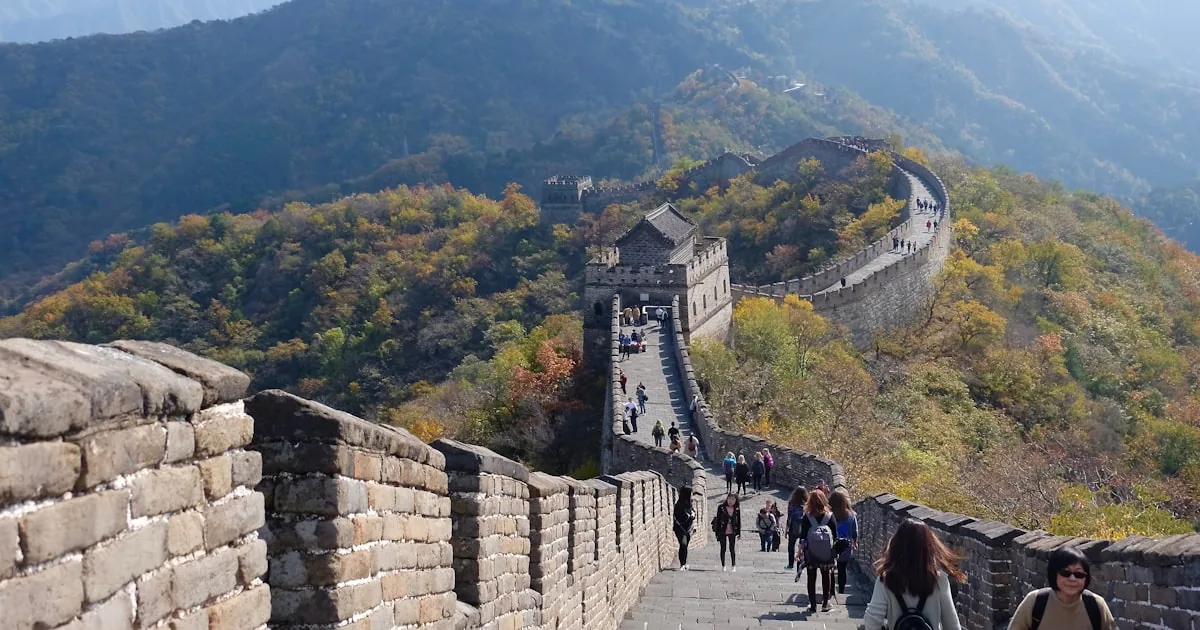
Mutianyu, entry and compulsory shuttle | ¥55 |
Li River bamboo raft, Xingping–Yangdi | ¥216 |
That is ¥446 in peak season before a single temple. The shoestring column skips the raft and walks up at Mutianyu, leaving about ¥120 for park and temple entries across fifteen days. The comfortable column adds the Mutianyu cable car and toboggan at ¥200 and the raft. Details of the Great Wall day are in the Mutianyu guide; Xi'an and Chengdu have their own guides — Xi'an and Chengdu.
On ¥40 a day for food: that is noodles, baozi and a canteen lunch. A Xi'an street dinner of skewers, biangbiang noodles and paomo is ¥25–45 on its own. Budget the low number and then break it twice.
What costs more because you are alone
Dorms and trains cost the same whoever you are. Four other things do not, and they are why solo trips drift above budget.
A hotpot in Chengdu. A solo pot with two plates is ¥70–110 — roughly what two people pay each in a shared pot, for a third of the food.
Didi. Every fare is yours. Two people at a station at 23:00 split ¥40; you pay ¥40.
Private rooms. The ¥150 single is the same room two people get for ¥75 each.
The upgrade you take because you are tired and there is nobody to talk you out of it.
None of it is a reason not to go alone. It is a reason to put ¥400 of slack in the budget and stop treating dorm nights as the thing to optimise.
Booking trains
Tickets open 15 days out. Book trunk routes 3 to 7 days ahead outside holidays, 10 to 14 days around Chinese New Year, Labour Day and Golden Week. Second class on the flagship G-trains goes first.
Booking early is close to free, which is the part people miss. Cancel more than 8 days before departure and you pay nothing. Inside that: 5% from 8 days to 48 hours, 10% from 24 to 48 hours, 20% in the final day, ¥2 minimum. Changing is free more than 48 hours out. Full ladder in the refund policy guide; the booking flow itself, including the English interface and foreign cards, is in the 12306 walkthrough.
On the overnight legs, take an upper berth. Quieter, and nobody walks past your head on a midnight snack run. More on sleeping on Chinese trains.
The hostel problem nobody warns you about
Cheap does not mean bookable. Plenty of budget properties still turn foreigners away at the desk.
They are not allowed to. In May 2024 the Ministry of Public Security, the Ministry of Commerce and the National Immigration Administration jointly confirmed that hotels cannot refuse foreign guests for lacking 「涉外资质」 — a certification abolished for almost all cities back in 2013. The refusals continue anyway, and the reason is mundane: front-desk staff do not know how to enter passport data into the police system and would rather not risk the fine.
So message the property before booking and ask, in these words, whether they can do the police registration for a foreign passport. Filter for places with reviews from foreign guests. Established hostel brands in these areas handle it daily:
Beijing, Gulou and the Nanluoguxiang fringe. Dorms ¥80–140, female-only four-beds ¥160–220. Hutongs, Houhai ten minutes on foot, Line 8 at the door.
Xi'an, inside the wall near the Bell Tower or Yongningmen. Dorms ¥70–120, five minutes from South Gate for the wall and bike hire.
Chengdu, around Wenshu Monastery. Dorms ¥75–130, Line 1 to People's Park.
Yangshuo, two or three lanes back from West Street, which is loud until late. Dorms ¥60–110.
Shanghai, Jing'an or Huangpu. The splurge: dorms ¥110–180, singles from ¥320.
If you ever sleep somewhere that does not register you, you file a temporary residence registration (临时住宿登记) at the local 派出所 within 24 hours, with your passport and entry stamp. Hotels do this silently at check-in. Skipping it where it applies carries a fine of up to ¥2,000, and checkpoints in Xinjiang and Tibet do ask to see the most recent slip.
Visa, by passport
This changed recently enough that older guides have it wrong. UK and Canadian passport holders have been able to enter visa-free for 30 days since February 2026, alongside most of Europe, Australia, New Zealand, Japan and Korea — 50 countries in all. That covers a 15-day trip with room to spare.
US passports are the exception: still no unilateral visa-free entry, so a 15-day trip means a tourist L visa with an itinerary and hotel bookings at application. The alternative is the 240-hour transit scheme if your route genuinely continues to a third country. Both tracks, and the Hainan exception, are in the visa-free countries list. The transit version has its own itinerary in the 240-hour guide.
The 30-day scheme is still formally a trial, authorised through 31 December 2026. Check before you book flights.
Before you fly
Set up Alipay at home, while you still have your own wi-fi and can receive card-verification texts. Doing it from a Chinese SIM after landing is considerably worse. Add the Tour Pass and bind a Visa or Mastercard; the foreign-card top-up caps around ¥2,000 a time and refills.
Then Amap with the language set to English, Didi, 12306, and a translation app with Chinese downloaded for offline. WeChat if you want to message hostels ahead, which by the section above you do. Carry ¥500–1,000 in mixed notes for the rural taxi and the temple donation box. For getting online at all, see the connectivity guide.
FAQ
Is 15 days enough to see China?
It is enough for five cities at a sane pace, because the fifteen days contain about nine sightseeing days once arrival, departure and four train legs are taken out. It is not enough to add Zhangjiajie or Harbin to the same loop.
What does 15 days actually cost?
Roughly ¥3,280 on the ground at the bottom end and ¥6,046 comfortable, excluding international flights. The gap is mostly trains — sleepers on two legs instead of second-class HSR saves about ¥900.
Do I need a visa for a 15-day trip?
UK, Canadian, Australian, New Zealand and most European passports enter visa-free for 30 days. US passports still need a tourist L visa for a holiday of this length.
Is it safe to backpack China alone?
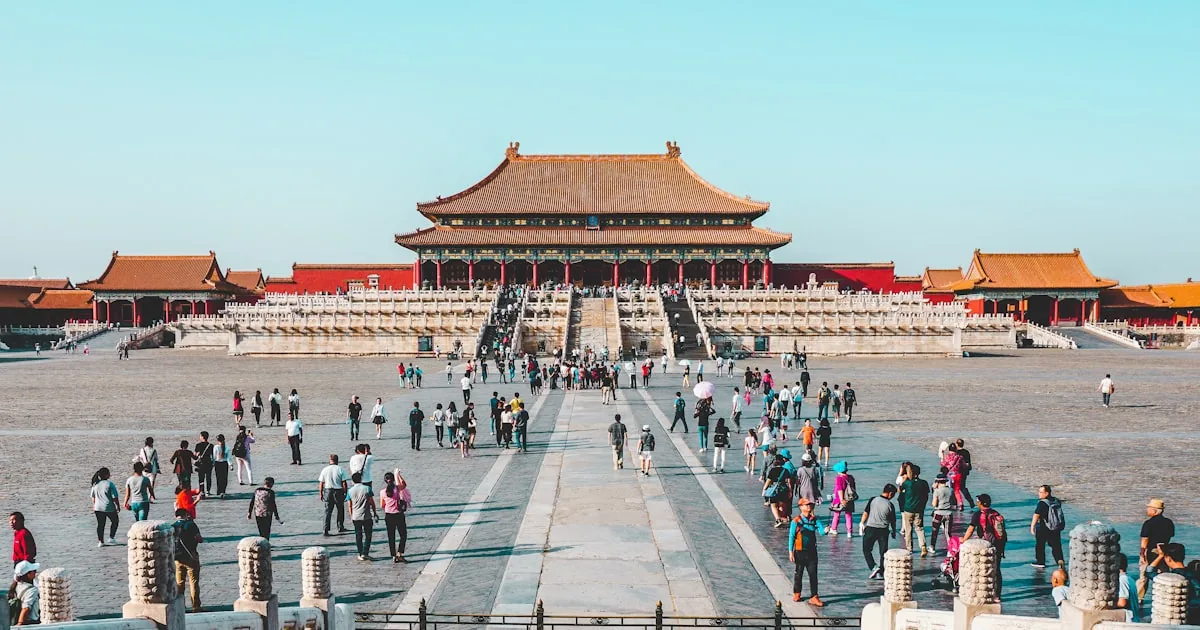
Violent crime against travellers is rare and stations, hostels and tourist sites are well lit and heavily policed. The real risks are pickpocketing in crowds and the tea-ceremony scam, where friendly English-speakers at the Forbidden City or the Bund invite you to practise English and hand you a ¥2,000 bill. The day-to-day friction for solo women is the booking system, not danger.
Tags
Travelers also asked
View all →- What is the recommended strategy for booking domestic flights and optimizing a long-term China itinerary?
- Is the proposed itinerary duration suitable for a first trip, and are there specific stopover recommendations?
- Is China worth visiting despite negative media portrayals?
- What is a realistic pace and preparation strategy for a multi-city High-Speed Rail trip in China?