Shanghai Travel Guide 2026: Neighborhoods, Food, Itinerary
Quick answer: Shanghai needs at least 3 days for first-timers: Day 1 the Bund and Yu Garden, Day 2 the French Concession, Day 3 a day trip or Disneyland. Most travelers from 54 countries can enter visa-free for up to 240 hours. As of June 2025, you tap any foreign Visa/Mastercard contactless card directly at metro gates.
Shanghai rewards travelers who stop treating it like a stopover. Three days is the floor, five is better, and even a week fills up fast once you realize the old lanes of Tianzifang and the glass tower observatories of Lujiazui feel like two different cities speaking the same mandarin. This 2026 guide walks you through exactly how to spend your time, where to sleep, how the metro works, and what to eat when you finally get hungry around 9 p.m.
What this guide covers
Core neighborhoods and how they differ, from the Bund to Jing'an
A clear 3-day itinerary plus an expanded 5-day version
Metro, taxi, maglev, and high-speed rail basics with 2026 fares
Where to eat xiaolongbao, shengjian, and red-cooked pork without queueing two hours
Day trips to Suzhou, Hangzhou, and Wuzhen
Hotel districts ranked by why you'd pick them
Seasonal timing, weather windows, and the payment setup nobody explained to you
Getting around China without Chinese?
Save routes and key phrases offline — show your driver the address in Chinese with one tap.
Understanding Shanghai: Pudong vs Puxi
The Huangpu River splits the city in two, and the two halves feel like siblings who grew up in different decades. Puxi (pronounced "poo-shee") is the older, denser side, west of the river. Pudong ("poo-dong") is the east side, the one in every postcard, built mostly after 1990 with skyscrapers growing out of what used to be farmland.
Puxi: the side you'll actually walk
Puxi holds the Bund waterfront, Nanjing Road pedestrian street, People's Square, the former French Concession, Jing'an Temple, Xintiandi, and Tianzifang. This is where you'll spend most of your daylight hours. The streets are walkable, plane trees arch over the French Concession lanes in a way that feels almost Parisian, and the metro connects everything.
Pudong: skyline and airport
Pudong is where Shanghai Pudong International Airport (PVG) lives, along with Lujiazui financial district, the Shanghai Tower, Oriental Pearl TV Tower, Jin Mao Tower, and Shanghai Disneyland. You'll cross over for views, observatory decks, and the maglev if you want the novelty. Pudong is wider, more spread out, and less pedestrian-friendly than Puxi.
When to cross the river
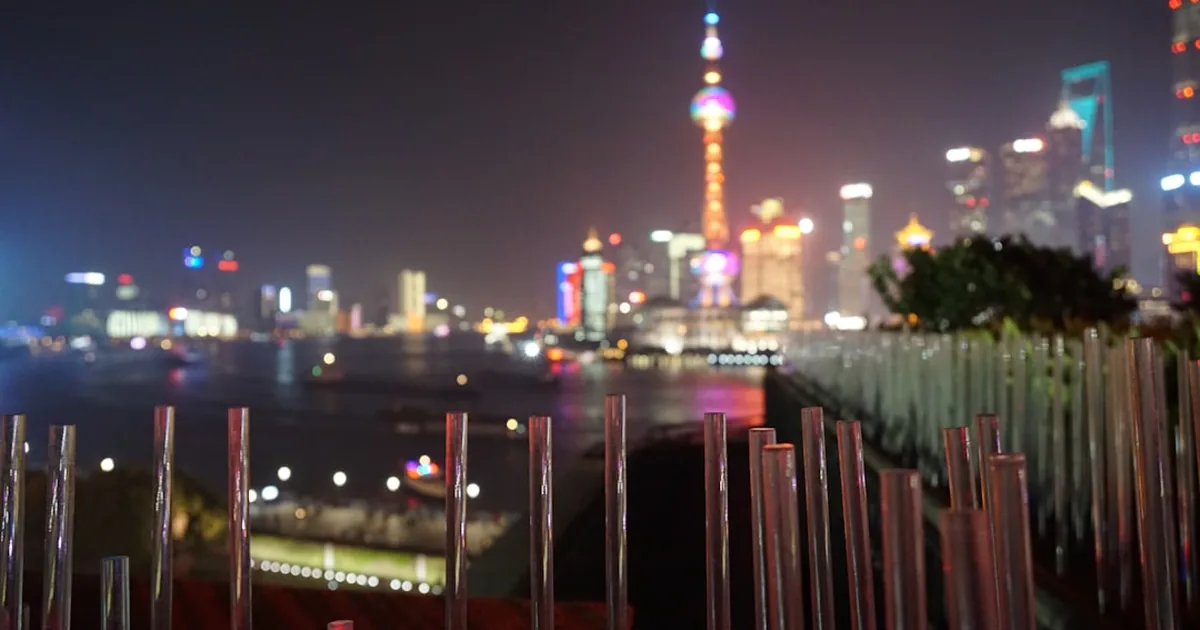
Plan one evening on the Bund looking at Pudong's lit-up skyline, then one morning or afternoon in Pudong going up the Shanghai Tower (¥180 for the 118th floor observatory) or the Shanghai World Financial Center. The Sightseeing Tunnel under the river is a gimmicky neon ride and worth skipping unless you're with kids who'll find it funny.
Core neighborhoods to know
Shanghai's neighborhoods aren't numbered like Paris arrondissements, but a handful of names come up constantly. Knowing them saves you from wandering half the city by accident.
Neighborhood | Vibe | Do | Nearest metro |
|---|---|---|---|
The Bund (Waitan) | Colonial facades, Pudong views | Walk waterfront at sunset | Line 2/10 East Nanjing Road |
Nanjing Road East | Pedestrian shopping | People-watch, snacks | Line 2/10 East Nanjing Road |
People's Square | Civic core, museums | Shanghai Museum, Urban Planning Exhibition | Line 1/2/8 People's Square |
Jing'an Temple | Golden temple, mid-range shopping | Temple visit, nearby cafes | Line 2/7 Jing'an Temple |
Xintiandi | Restored shikumen, upscale dining | Dinner, cocktails | Line 10/13 Xintiandi |
Tianzifang | Artsy lanes, craft stalls | Wander, coffee, souvenirs | Line 9 Dapuqiao |
French Concession | Plane trees, boutiques, cafes | Long walk, lunch | Line 1/7 Changshu Road |
Lujiazui (Pudong) | Skyline towers, megamalls | Shanghai Tower, observatory | Line 2 Lujiazui |
Yuyuan | Ming-era garden, old bazaar | Garden, xiaolongbao at Nanxiang | Line 10/14 Yuyuan Garden |
Xintiandi and Tianzifang both sell "old Shanghai" but feel different. Xintiandi is polished, corporate, expensive. Tianzifang is narrower, messier, cheaper, with more actual artists. See both if you have time; pick Tianzifang if you're rushing.
Getting around Shanghai
Shanghai's metro is one of the largest in the world and by far the best way to move around. Taxis and Didi work well too. Driving yourself is a terrible idea.
Metro basics
Fares run ¥3 to ¥9 depending on distance, with most tourist rides falling in the ¥4 to ¥6 range. Buy single-journey tokens from machines (English supported), or load the Shanghai Metro QR code into Alipay for tap-and-go. A Shanghai Public Transport Card (交通卡) works too but you have to buy and refund the deposit at a service counter, so for a short trip the Alipay QR is easier.
Key lines for tourists:
Line 2 runs east-west through the middle, connecting Hongqiao Airport and Hongqiao Railway Station to People's Square, East Nanjing Road, Lujiazui, and out to Pudong Airport. It's the spine you'll use most.
Line 10 hits Yuyuan Garden, Xintiandi, and South Shaanxi Road (French Concession edge)
Line 1 connects South Shaanxi Road and People's Square to Shanghai Railway Station
Line 14 opened recently and threads through Yuyuan and the old town
Trains run roughly 5:30 a.m. to 11 p.m. Announcements are bilingual. Rush hour (8-9 a.m. and 6-7 p.m.) on Line 2 is brutal; avoid if you can.
Taxi and Didi
Official taxis are turquoise, white, gold, or green. Starting fare is ¥16 for the first 3 km, then around ¥2.5 per km. A ride across central Puxi is usually ¥25 to ¥50. Drivers rarely speak English; have your destination saved in Chinese characters (use Amap or ask your hotel to print it). Didi is the main ride-hail app and now accepts foreign cards through its English interface or through the Alipay Didi mini-program.
Airport connections
PVG (Pudong) to city: Metro Line 2 (¥7-9, 70-80 min) is cheapest. Maglev PVG to Longyang Road is ¥50 one-way (¥40 with a same-day boarding pass), hits 300 km/h, takes 7 minutes, but you still need to transfer to Line 2 at Longyang Road. Didi runs ¥180-250. Airport bus routes go to major hotel districts for ¥22-30.
SHA (Hongqiao) to city: Line 2 and Line 10 both stop here. Line 10 reaches the French Concession directly.
Hongqiao Railway Station is next door to Hongqiao Airport and is your entry point for high-speed trains from Beijing, Hangzhou, Suzhou, and Nanjing.
"The Maglev (Longyang Road ↔ Pudong Airport) is ¥50 one-way / ¥80 round-trip, runs ~06:45–21:42, takes about 8 minutes at up to 430 km/h on peak runs. Money-saving tip: show your same-day boarding pass or flight booking at the ticket window and you get 20% off — ¥40 instead of ¥50 (one discounted single per flight ticket). Vending machines only apply this discount for tickets bought via certain apps, so use the staffed window to be safe. At Longyang Road the Maglev connects to Metro Line 2 (exits 3/4) to continue downtown."
"Shanghai Metro fares are distance-based: ¥3 for up to 6 km, then +¥1 roughly every 10 km, capping around ¥9-15 for the longest cross-city rides. Passes (buy at any station Service Center): 1-Day Pass ¥18, 3-Day (72-hour) Pass ¥45, both unlimited metro rides, but the Maglev is NOT included. The 3-day pass only pays off above ~15 rides, so most 3-day visitors are better off just tapping a contactless card per ride."
3-day Shanghai itinerary
Tight but complete. Assumes you arrive the night before Day 1 and leave the evening of Day 3.
Day 1: Puxi classics
Morning at People's Square and the Shanghai Museum (free, closed Mondays, book a slot in advance on the museum's WeChat mini-program). Walk down Nanjing Road East toward the Bund. Lunch at Yang's Fry-Dumpling (Yang's Shengjian) on Huanghe Road, ¥10 for four shengjian. Afternoon at the Bund: walk the full waterfront, dip into the Peace Hotel lobby for free history. Evening: cross to Pudong for the Shanghai Tower observatory (¥180, open until 10 p.m., go up at dusk to see both daylight and lights). Dinner back in Puxi at Jia Jia Tang Bao for xiaolongbao (¥20-40, cash or WeChat).
Day 2: Old Shanghai and lanes
Morning at Yuyuan Garden (¥40 entry, arrive at 8:30 a.m. opening to avoid crowds), then the surrounding bazaar for xiaolongbao at Nanxiang Mantou Dian — the original branch is a zoo, but the upstairs dining room is calmer. Midday: metro to Dapuqiao, explore Tianzifang's lanes for an hour, stop for coffee. Afternoon in Xintiandi walking the restored shikumen alleys. Late afternoon: Jing'an Temple (¥50 entry, or skip the entry and admire from outside). Dinner in the French Concession — try Lost Heaven for Yunnan or Fu 1088 for proper Shanghainese set menus if you want to splurge.
Day 3: French Concession slow morning, plus a choice
Start with a leisurely French Concession walk: Wukang Road, Wulumuqi Road, Anfu Road, stopping wherever looks good for breakfast. This is the Shanghai that makes people fall in love with Shanghai. Then choose:
Option A: Day trip to Zhujiajiao water town (metro Line 17 to Zhujiajiao, ¥45 combined ticket, 90 min each way). Easy, picturesque, touristy but close.
Option B: Stay in the city, visit the Power Station of Art or the M50 art district, hunt for specific coffee shops, and have a proper long lunch.
Evening: second Bund walk, this time on the Pudong riverside promenade looking back at Puxi's colonial facades. Last dinner at Di Shui Dong for Hunan food (a Shanghai institution despite being Hunan, not Shanghainese).
5-day Shanghai itinerary
Keep Days 1-3 from above, then add:
Day 4: Suzhou day trip
Take a high-speed train from Shanghai Hongqiao to Suzhou (25-35 minutes, ¥40-65 on 12306 or Trip.com). Suzhou's classical gardens — Humble Administrator's Garden (¥80), Lingering Garden (¥45), the Master of the Nets Garden (¥40) — are UNESCO-listed and worth the trip. Pingjiang Road canal area is a lovely walk. Return to Shanghai by evening.
Day 5: Hangzhou or Zhujiajiao plus Disneyland
Hangzhou full day: High-speed train 45-60 minutes (¥73-120), walk the West Lake, visit Lingyin Temple (¥45 entry plus ¥30 for the Feilai Feng grottos), grab Longjing tea at a lakeside teahouse. Return same day.
Shanghai Disneyland: Go early, stay late. Tickets are ¥475-769 depending on date, bookable on the Shanghai Disney Resort app or Trip.com.
Wuzhen water town: A bit farther but more atmospheric than Zhujiajiao. Bus from Shanghai South Long-Distance Bus Station, 90-120 minutes, ¥150 including ticket bundles.
"Shanghai↔Suzhou is the easiest day trip in China: 450+ high-speed trains a day, as fast as 23-25 min, second-class from about ¥25-40. Shanghai↔Hangzhou runs 270+ trains a day, ~45-60 min, second-class roughly ¥47-90. Book on the official 12306 app (now has an English interface) or Trip.com using just your passport — register your passport on 12306 a day ahead because verification can take 10 min to 24 hrs. At the station, scan your passport at the automated gate; no paper ticket needed."
Where to eat: the honest shortlist
Shanghai food is subtle and a little sweet. The ingredients are delicate, the sauces lean soy-sugar rather than chili-Sichuan peppercorn, and you'll get tired of xiaolongbao before you admit it.
Must-try dishes
Xiaolongbao (小笼包): soup-filled dumplings, the famous one. Nibble a corner, sip the soup, then eat
Shengjian bao (生煎包): pan-fried pork buns with crispy bottoms, even better than xiaolongbao for many locals
Hongshao rou (红烧肉): red-cooked pork belly, sweet and glossy, Chairman Mao's favorite dish reportedly
Cong you ban mian (葱油拌面): scallion oil noodles, simple and addictive, ¥15-25 at any noodle shop
Da zha xie (大闸蟹): hairy crabs, in season October-November, a seasonal obsession worth trying if you're in town
Where to find them
Spot | Dish | Price | Notes |
|---|---|---|---|
Jia Jia Tang Bao (佳家汤包) | Xiaolongbao | ¥30-50 | Multiple branches, the Huanghe Road one is the original |
Yang's Fry-Dumpling (小杨生煎) | Shengjian | ¥10 for 4 | Chain, reliable everywhere |
Nanxiang Mantou Dian (南翔馒头店) | Xiaolongbao | ¥40-120 | In Yuyuan bazaar, go upstairs for less wait |
Lao Zhengxing (老正兴) | Shanghainese classics | ¥100-200 pp | Institution, old-school |
Di Shui Dong (滴水洞) | Hunan ribs, spicy | ¥80-150 pp | Upstairs on Maoming Road, loud and fun |
Fu 1088 | Upscale Shanghainese | ¥400-800 pp | Book ahead, romantic old villa |
Lost Heaven (花马天堂) | Yunnan | ¥150-250 pp | French Concession, reliable for groups |
Most places accept Alipay and WeChat Pay. A few older shops are still cash-only — keep ¥100-200 in small bills just in case.
Hotels: where to sleep and why
Pick your neighborhood based on how you want to start your morning.
The Bund / East Nanjing Road: Dramatic, central, touristy. Good for first-timers who want the classic view. Peninsula Shanghai, Fairmont Peace Hotel, and the Waldorf Astoria anchor the top tier; mid-range options on Nanjing Road.
People's Square: Maximum metro connectivity, walkable to the Bund and Jing'an. Good for short stays.
Jing'an: Central but less chaotic than the Bund. Shangri-La Jing'an, The Puli, and plenty of mid-range towers. Closer to the French Concession.
French Concession: Boutique hotels, quiet lanes, cafes. Less convenient to tourist sites but wins for atmosphere. Wanda Reign, URBN Hotels, Magnolia B&B.
Xintiandi: Restored shikumen, upscale chains. Good base if you like dinner and drinks near your hotel.
Lujiazui (Pudong): Towers, views, business conferences. The Ritz-Carlton Pudong, Grand Hyatt in Jin Mao, Park Hyatt in SWFC. Picture-worthy but less day-to-day walking access.
Budget rooms start around ¥250-400 at chains like Hanting, All Season, or Atour in Puxi. Mid-range runs ¥600-1200. Five-star luxury is ¥1800 and up.
Payment, SIM, and apps
You need a working payment setup or the city becomes infuriating. Cash is legal but increasingly awkward; many small vendors only take mobile pay.
Alipay: Install before you arrive, add an international card (Visa, Mastercard). Use it for metro QR, taxis, restaurants, shops. Works natively in English.
WeChat Pay: Similar, slightly trickier for foreign cards but useful as backup.
Amap (高德): Best map and transit app. Beats Google Maps, which is blocked anyway.
Didi: Ride-hail, available in English and through Alipay mini-program.
Meituan and Dianping: Restaurant reviews and food delivery. Dianping is Shanghai's Yelp.
Trip.com: Book hotels, trains, attractions. Works with foreign cards.
12306: Official rail booking app; slightly clunky, but real-name registration is needed for tickets anyway.
For internet, grab a travel eSIM before you arrive (Airalo, Nomad, Holafly) or buy a local SIM with a passport at the airport. eSIMs with built-in VPN passthrough save hours of setup. Google, Instagram, WhatsApp, and Facebook are blocked without a VPN; set up your VPN before landing, not after.
"Update (June 2025): You no longer need any app to ride the Shanghai Metro. The entire network — every station, including the suburban/airport lines — now accepts foreign contactless bank cards (Visa, Mastercard, American Express, JCB chip 'contactless' cards) tapped directly at the gate. Just enable 'small-amount no-PIN/no-signature' contactless on your card before you fly, keep enough balance/credit, and tap in and out like you would in London or New York. No Alipay, no QR code, no registration. If your card fails to tap, any station Service Center has a POS desk and can issue a paper ticket." This is the single biggest practical change of 2025-2026 and almost no English guide has caught up.
Seasonal timing
Shanghai has four distinct seasons. Weather makes a real difference.
Spring (March-May): Best window. 12-24°C, blooming plane trees, bearable humidity. Late March to early May is peak sweet spot.
Summer (June-August): 28-35°C, humid, punishing. Plum rains in June soak everything. Typhoons possible July-August. Budget for AC breaks.
Autumn (September-November): Second-best window. 15-26°C, clearer skies, hairy crab season in late October. Book ahead — locals travel during the October 1 Golden Week and everything fills up.
Winter (December-February): 2-10°C, damp cold that cuts through jackets. Heating in older buildings is weak. Chinese New Year shuts down many restaurants for a week. Skip unless you have a reason.
Avoid the first week of October (Golden Week) and Chinese New Year unless you specifically want to experience them — prices spike and crowds are unreal.
Safety, language, and practical tips
Shanghai is one of the safest megacities in the world. Petty theft exists but violent crime against tourists is vanishingly rare. Normal precautions apply: watch your phone in crowds, avoid obvious scams near the Bund and Nanjing Road (the "art student," "tea ceremony invitation," and "let's practice English" all still exist).
English signage is excellent on the metro, mediocre at smaller restaurants, and hit-or-miss elsewhere. Download Google Translate's Chinese offline pack and the camera translate feature before arriving. A saved photo of your hotel's name and address in Chinese makes taxi rides painless.
Tap water isn't drinkable. Hotels provide kettles; boil or buy bottled. ¥2 for a 550ml bottle at any convenience store.
"The #1 scam targeting foreigners on the Bund and East Nanjing Road is the tea-house / art-gallery invitation. Friendly, well-dressed young people who speak good English say they're students wanting to 'practice English' or invite you to a 'traditional tea ceremony' or a friend's art exhibit. The bill then arrives at ¥2,000–10,000 per person. Rule: anyone near Nanjing Road, People's Square, or the Bund inviting you to tea, a 'cultural experience,' or a gallery is running this. Don't share where you're from or follow anyone into a side-street venue; if you're already inside, demand a printed menu with prices before anything is served, and leave if there isn't one. Tourist police: 110."
"Most travelers can skip the visa entirely. Citizens of 54 countries qualify for China's 240-hour (10-day) visa-free transit when arriving in Shanghai en route to a third country/region. You can move freely across Shanghai plus Jiangsu and Zhejiang provinces (which covers Suzhou, Hangzhou and the water towns in this guide). You need a passport valid 3+ months, a confirmed onward ticket to a third country within 240 hours, and you complete an Arrival Card on landing. Separately, many nationalities (most EU countries, plus others) now get 30-day unilateral visa-free entry for tourism — check your passport's status before assuming you need a visa."
FAQ
How many days do I need for Shanghai?
Three days covers the core sights at a fast pace. Four or five gives you breathing room for a day trip to Suzhou or Hangzhou and a slow French Concession morning. A week is ideal if you're combining Shanghai with nearby cities.
Is Shanghai better than Beijing?
Different, not better. Beijing has the heavy historical hitters — Forbidden City, Great Wall, temples. Shanghai feels more modern, international, and walkable. First-time China travelers often split the two: a few days in each connected by a 4-5 hour high-speed train.
Can I use credit cards in Shanghai?
Luxury hotels and international chains accept Visa and Mastercard. Almost everywhere else expects Alipay or WeChat Pay. Set up one of those before you leave home. Keep ¥200-500 cash for the rare cash-only noodle shop.
Is the maglev worth riding?
Once, for fun. It's fast (300 km/h, hits 431 km/h on some services), but it only connects Pudong Airport to Longyang Road, and from Longyang Road you still need the metro. For efficiency, Line 2 all the way is cheaper. The maglev is a novelty ride, not a shortcut.
What day trips from Shanghai are worth it?
Suzhou (25 minutes by train) for classical gardens, Hangzhou (45-60 minutes) for West Lake, Zhujiajiao (90 minutes by metro) for a quick water town, and Wuzhen (2 hours by bus) for a more atmospheric water town. All doable in a day round-trip.
How bad is the pollution?
Better than it used to be. Shanghai's air quality is improved from the worst 2013-2014 years but still runs 2-5x worse than average European or American cities on bad days. Check IQAir or AirVisual for real-time readings. Pack an N95 if you're sensitive.
Related Shanghai guides
Shanghai Disney FastPass Replacement 2026: Premier Access Guide
Shanghai PVG Airport Transfer Guide: Metro, Maglev, Taxi 2026
Beijing to Shanghai Distance: Train vs Flight Compared (2026)
Shanghai to Hangzhou by Train: Complete Guide for Foreigners
Getting a SIM Card at Shanghai Pudong Airport After 10 PM (2026)
Shanghai to Chongqing: Train, Flight & Yangtze Cruise Guide (2026)
Related: the Dalian travel guide · the Qingdao travel guide · Wuhan's stay-eat-nightlife guide
Tags
Getting around China without Chinese?
Save routes and key phrases offline — show your driver the address in Chinese with one tap.