Shanghai to Hangzhou by Train: Complete Guide for Foreigners
Shanghai to Hangzhou by Train: Complete Guide for Foreigners
If you only have time for one trip outside Shanghai, make it Hangzhou. Just 202 kilometers to the southwest, this is one of China's most rewarding and effortless train journeys. A high-speed ride of 45 minutes to an hour drops you into a world of misty lakeshores, ancient temples, and hillside tea plantations. We've made this trip dozens of times, and it never gets old.
Route Overview: Why Hangzhou Deserves Your Time
Hangzhou sits at the southern end of the Grand Canal, the city that Marco Polo reportedly called "the finest and most splendid city in the world." Today it's a fascinating mix of classical Chinese beauty and cutting-edge modernity. It serves as Alibaba's headquarters and a thriving tech hub, but it's also home to West Lake (西湖), a UNESCO World Heritage Site that has inspired poets and painters for over a thousand years.
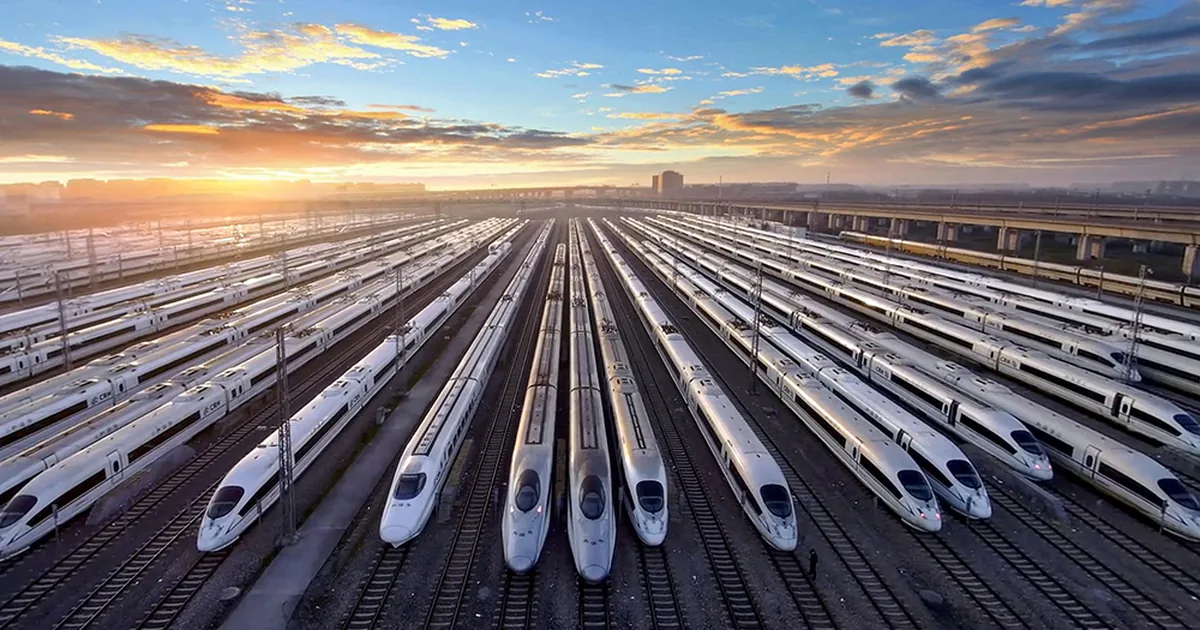
The Shanghai-Hangzhou corridor is one of the busiest high-speed rail routes in China, with roughly 80 departures per day. Trains leave every 5 to 15 minutes during peak hours, which means you barely need to plan ahead. Think of it less like catching a specific flight and more like hopping on a subway: show up, buy a ticket, and go.
Can you do Hangzhou as a day trip from Shanghai? Absolutely. With a 45-minute ride each way, you can leave after breakfast and be strolling along West Lake by mid-morning. A full day gives you enough time to walk the causeways, visit Lingyin Temple, and have a proper Hangzhou lunch. We'd recommend two days if your schedule allows, though. An overnight stay lets you explore the Longjing Tea Village (龙井村), wander through Xixi National Wetland Park (西溪国家湿地公园), and experience West Lake at dawn, when the mist hangs low and the tourist crowds haven't yet arrived. Those quiet morning hours on the lake feel like stepping into a Song Dynasty painting.
Getting around China without Chinese?
Save routes and key phrases offline — show your driver the address in Chinese with one tap.
Which Stations to Know
A little knowledge here saves you a lot of time. Multiple stations serve both ends of this route, and which ones you use can make a real difference to your day.
Shanghai Departure Stations
Shanghai Hongqiao Station (上海虹桥站) is where the vast majority of Hangzhou-bound G-trains depart. It's a massive, modern station connected to Hongqiao International Airport and well served by Metro Lines 2, 10, and 17. If you're staying in central Shanghai, budget 30 to 45 minutes to get here by metro. The station is efficient but enormous, so arrive at least 30 minutes before departure to clear security and find your platform. (If you're also considering a day trip to Suzhou, many of those trains depart from Hongqiao too.)
Shanghai Station (上海站), the older central station near Jing'an, handles some D-trains to Hangzhou. It's more convenient if you're staying in the Bund or Jing'an area, but departures are less frequent. Check the schedule and see if timing works in your favor.
Hangzhou Arrival Stations
Hangzhou East Station (杭州东站) is the main high-speed rail hub and where most trains arrive. It's a gleaming mega-station connected to Metro Lines 1 and 4. The catch: it's about 12 kilometers east of West Lake, so you'll need the metro (25 minutes) or a taxi (15-20 minutes) to reach the scenic area.
Hangzhou Station (杭州站, also called 城站) is the older, centrally located station right next to the West Lake area. It's served by Metro Line 1, and you can literally walk to West Lake's eastern shore in about 10 minutes. Fewer trains stop here, but if you spot one on the schedule, grab it. The convenience is real.
Hangzhou West Station (杭州西站) is a newer station in the western suburbs near the Alibaba campus and Cloud Town. Unless you're heading to a tech conference or visiting someone in that area, avoid it. It's far from all the places tourists want to be.
Our recommendation: When booking, filter for trains arriving at Hangzhou Station (杭州站) first. If the timing doesn't work, Hangzhou East (杭州东站) is perfectly fine. You'll just add 25 minutes of metro time to your journey.
Train Types and Schedule
Almost every train on this route is a G-train (高铁), running on the dedicated Shanghai-Hangzhou High-Speed Railway that opened in 2010. These are Fuxing (复兴号) trains, China's flagship bullet trains. Smooth, quiet, and capable of 350 km/h, though they cruise at around 300 km/h on this short route.
You'll also see some C-trains (城际, intercity), which are slightly slower but still modern and comfortable. The difference is marginal, maybe 10 to 15 minutes extra.
The first train departs around 6:00 AM, and the last one leaves around 9:30 PM. During peak hours (roughly 7:00-10:00 AM and 4:00-7:00 PM), trains leave every 5 to 15 minutes. Even during off-peak midday hours, you'll rarely wait more than 20 minutes for the next departure.
Journey time runs 45 minutes to 1 hour depending on the specific train and number of intermediate stops. The fastest direct G-trains cover it in 46 minutes. Some trains stop at Jiaxing South (嘉兴南) or Haining West (海宁西), adding a few minutes.
Ticket Prices: Surprisingly Affordable
This is one of the great bargains in world travel. For a high-speed rail journey covering 202 kilometers in under an hour, you'll pay:
Class | Price | USD Equivalent |
|---|---|---|
G-Train Second Class (二等座) | ~¥73 | ~$10 |
G-Train First Class (一等座) | ~¥117 | ~$16 |
G-Train Business Class (商务座) | ~¥219 | ~$30 |
Second class is perfectly comfortable: wide seats, good legroom, clean. First class gives you a wider seat (3 across instead of 5) and a bit more recline, but for a 50-minute ride, second class is all you need.
Availability is almost never an issue. This route runs so many trains with such high capacity that it rarely sells out, except during Chinese New Year (春节) and the October Golden Week holiday (国庆节). On a normal day, you can walk up to the station, buy a ticket at the counter or from the machines, and be on a train within 30 minutes. This is one of the few Chinese train routes where spontaneity actually works.
You can also book in advance through the official 12306 app or Trip.com (which has an English interface). Tickets open 15 days before departure. But honestly, for this route, same-day purchase is usually fine.
A round trip costs about ¥146 ($20) in second class. That's roughly what you'd pay for a one-way taxi ride across Shanghai.
The Onboard Experience
Don't expect to settle in with a movie. You'll barely have time to get comfortable before the train starts slowing down for Hangzhou. The ride is short, smooth, and quiet.
Seating: Second class has rows of 3+2 seats, all forward-facing. Seats recline slightly and have fold-down tray tables. First class has 2+2 seating with more width and legroom. Both classes are clean and air-conditioned.
Scenery: The route cuts through the Yangtze River Delta flatlands. For the first 20 minutes, you'll see Shanghai's suburban sprawl: apartment blocks, construction cranes, industrial zones. Then the landscape shifts. Concrete gives way to green paddies, fish ponds glinting in the sun, and clusters of white-walled villages. As you approach Hangzhou, low green hills appear on the horizon. Not the most dramatic scenery in China, but the transition from megacity to green countryside happens fast and offers a pleasant preview of what's ahead.
Food and drink: Most trains on this route don't have a dining car because the journey is too short to justify one. A cart may come through selling snacks, instant noodles, and drinks, but selection is limited and overpriced. Pro tip: Shanghai Hongqiao station has excellent convenience stores (FamilyMart, Lawson) near the waiting halls. Grab breakfast, coffee, snacks, or a bento box before boarding. It's one of the best-stocked stations in China.
Charging: USB ports and power outlets are available at most seats on Fuxing trains. You won't need them for a 50-minute ride, but they're there if your phone is low.
Luggage: Overhead racks and space behind the last row of seats. For a day trip with just a backpack, you'll have no issues.
Day Trip Itinerary: Shanghai to Hangzhou and Back
Below is a tried-and-tested itinerary for a full day trip. Adjust departure time to your preference, but earlier is better — West Lake is most beautiful in the morning light.
Morning
7:30-8:30 AM — Board a G-train at Shanghai Hongqiao. Buy a coffee and a meat bun (肉包子) at the FamilyMart near the gate.
8:15-9:15 AM — Arrive at Hangzhou East Station. Take Metro Line 1 toward Xianghu (湘湖方向) and transfer at... actually, the simplest route: take Metro Line 1 directly to Longxiang Bridge (龙翔桥) station, which puts you right at the eastern edge of West Lake. The metro ride takes about 25 minutes and costs ¥4.
9:30 AM — Start at the eastern shore of West Lake. Walk south along the lakeside promenade, crossing the famous Broken Bridge (断桥) at the north end, particularly beautiful if there's morning mist. Continue along the Bai Causeway (白堤), a tree-lined path stretching across the lake with mountain views on all sides.
10:30 AM — Cross to the Su Causeway (苏堤), the longer causeway running north-south across the lake. This 2.8-kilometer walk, flanked by weeping willows and arched bridges, is the classic West Lake experience.
Midday
12:00 PM — Lunch at Louwailou (楼外楼), a legendary restaurant that's been serving Hangzhou cuisine on the shores of West Lake since 1848. Order the West Lake Vinegar Fish (西湖醋鱼), Dongpo Pork (东坡肉), and Longjing Shrimp (龙井虾仁) — all signature Hangzhou dishes. Expect to pay ¥100-150 per person. Yes, it's touristy. Yes, the food is still excellent.
Afternoon
1:30 PM — Take a taxi or bus to Lingyin Temple (灵隐寺), one of China's largest and most important Buddhist temples, set dramatically against forested hillsides. Entry to the scenic area costs ¥30, and the temple itself costs an additional ¥45. The carved Buddhist grottoes at Feilai Feng (飞来峰) along the path deserve a slow look — some date back to the 10th century. (For more temple hiking nearby, see our Hangzhou temple trail guide.)
3:30 PM — Taxi to Longjing Village (龙井村), about 15 minutes from Lingyin Temple (¥20-30 by Didi). This is where China's most famous green tea, Longjing (Dragon Well), is grown. Walk through the terraced tea fields, visit a family tea house, and taste freshly brewed Longjing tea. The setting — misty hills, neat rows of bright green tea bushes, stone paths through quiet villages — is extraordinary. Budget ¥50-100 if you want to buy some tea to take home.
Evening
5:30 PM — Head back to Hangzhou East Station by taxi (¥40-50) or metro. If you end up at Hangzhou Station instead (closer to West Lake), even easier.
6:30-7:30 PM — Board a G-train back to Shanghai. You'll be home by 8:15 PM, tired in the best way. The last train is around 9:30 PM, so you have a comfortable buffer.
Day Trip Budget
Item | Cost |
|---|---|
Round-trip train (second class) | ¥146 (~$20) |
Metro and local transport | ¥30-50 (~$5-7) |
Lingyin Temple entry | ¥75 (~$10) |
Lunch | ¥100-150 (~$14-21) |
Tea tasting and snacks | ¥50-100 (~$7-14) |
Total | ¥400-520 (~$56-73) |
A full day in one of China's most beautiful cities for under $75. Try finding that value anywhere else in Asia.
Arrival and Getting Around Hangzhou
From Hangzhou East Station (杭州东站)
Metro: Line 1 runs directly from Hangzhou East to the West Lake area. Get off at Longxiang Bridge (龙翔桥) for the east shore, or Fengqi Road (凤起路) for the north side. Takes about 25 minutes, costs ¥4-5. The metro is clean, well-signed in English, and runs from about 6:00 AM to 11:00 PM.
Taxi/Didi: A ride to West Lake costs ¥40-50 and takes 15-25 minutes depending on traffic. Use Didi (China's Uber) for convenience. Prices are transparent and you avoid language barriers with drivers.
Bus: Several routes connect the station to the lake area, but the metro is faster and simpler.
From Hangzhou Station (杭州站/城站)
This is the ideal arrival point. Walk out the east exit, cross the road, and West Lake's Hubin commercial district is right there. A 10-minute stroll brings you to the lakeshore. Metro Line 1 also stops here if you need to go elsewhere in the city.
Getting Around the West Lake Area
Walking: West Lake's circumference is about 15 kilometers. You can walk the highlights (Bai Causeway, Su Causeway, and the eastern shore) in a half day, covering about 8 to 10 kilometers.
Shared bikes: Hangzhou was actually a pioneer in bike-sharing, and the system is excellent. Look for pale blue Hellobike (哈啰单车) or yellow Meituan bikes (美团单车) parked everywhere. Scan the QR code with Alipay or WeChat Pay. Cost: about ¥1.5 per 30 minutes. Cycling around West Lake on a sunny day is one of the great simple pleasures of traveling in China.
Tourist buses: Routes Y2 and K7 loop around West Lake with stops at all major scenic points. Fare is ¥2-3. Useful if your feet are tired after miles of walking.
Boat: Ferries cross West Lake and visit the islands (Three Pools Mirroring the Moon / 三潭印月 is the most famous). Boat rides cost ¥55 including island entry. Best in the late afternoon when the light goes golden.
Didi/Taxi: Easy to hail in Hangzhou. You'll need one to reach Lingyin Temple, Longjing Village, or Xixi Wetlands, as these are outside the immediate lakeside area. Most rides within the city cost ¥15-40.
Payment
Hangzhou is one of China's most cashless cities, fitting given it's Alibaba's hometown. WeChat Pay and Alipay work virtually everywhere. International credit cards are increasingly accepted at hotels and chain restaurants, and Alipay now supports international cards for tourists. If you're not sure how to pay without WeChat, have some cash (¥200-300) as backup for small vendors and temple entry fees, but you can get through most of a day on mobile payments alone.
Final Tips
Weather matters. Hangzhou is gorgeous in spring (March to May) when the tea plantations are vivid green and the cherry blossoms frame West Lake. Autumn (September to November) brings warm light and comfortable temperatures. Summer is brutally hot and humid. Hangzhou is one of China's "furnace cities." Winter is cold and gray but also when West Lake is most atmospheric, especially with a dusting of snow.
Avoid Golden Week. The first week of October and Chinese New Year (late January or February) bring massive domestic tourism. West Lake becomes uncomfortably crowded, and trains can actually sell out. If you must go during these periods, book train tickets as early as possible.
Passport required. You need your passport to buy and board trains in China. Keep it with you.
The return trip is just as easy. Hangzhou East Station has frequent departures back to Shanghai throughout the evening. You don't need to pre-book your return. Check the departure board when you arrive at the station, walk up to the counter, and buy a ticket for the next available train. During peak evening hours, you'll rarely wait more than 15 minutes.
Shanghai to Hangzhou is, quite simply, one of the best short train trips in the world. Fast, cheap, frequent, and it delivers you to a city that's been enchanting visitors for over a thousand years. Don't overthink it. Just go.
Planning your full Shanghai trip? Our Shanghai travel guide covers neighborhoods, food, and a day-by-day itinerary.
Tags
Getting around China without Chinese?
Save routes and key phrases offline — show your driver the address in Chinese with one tap.
Travelers also asked
View all →- On a 240-hour China transit itinerary, should I keep a one-day Hangzhou stop or spend more time in Shanghai?
- What is a realistic pace and preparation strategy for a multi-city High-Speed Rail trip in China?
- How to transfer between Hongqiao and Pudong airports Shanghai
- What is the best transportation route from Wangxian Valley to Suzhou?