Shanghai to Suzhou by Train: Complete Guide for Foreigners
Shanghai to Suzhou by Train: Complete Guide for Foreigners
Suzhou is the easiest world-class day trip in China. A 25-minute bullet train from Shanghai drops you into a 2,500-year-old canal city where nine classical gardens hold UNESCO World Heritage status, white-walled lanes trace waterways older than most European capitals, and a bowl of hand-pulled noodles costs less than a coffee at Starbucks back home. At 84 kilometers, the distance is short enough to feel spontaneous. The payoff is anything but.
Organized tour groups charge upward of 500 yuan per person and spend half the day in gift shops. Do it yourself and the whole trip runs 250 to 350 yuan, covering round-trip train tickets, garden admissions, lunch, and local transport. Each way on the Fuxing bullet train costs about 40 yuan, roughly $5.50, for a seat on one of the most advanced rail networks on Earth.
Suzhou is often called the "Venice of the East" for its lattice of canals, though it predates Venice by about 1,500 years. Founded in 514 BC, the city's classical gardens represent the pinnacle of Chinese landscape design. Nine of them are UNESCO-listed. Add the Suzhou Museum designed by I.M. Pei, the ancient Tiger Hill pagoda leaning at a visible angle since 961 AD, and canal streets where daily life still unfolds much as it did centuries ago, and you have one of the most rewarding day trips from Shanghai. (The other strong contender is Hangzhou, but Suzhou wins on sheer convenience.)
With over 100 daily departures between Shanghai and Suzhou, this is essentially a commuter route. You don't need to plan weeks in advance. You barely need to plan at all.
Which Stations to Use
This is the single most important detail to get right.
On the Shanghai side, you have two main options. Shanghai Hongqiao Station (上海虹桥站) is the massive modern terminus in western Shanghai, connected to Hongqiao Airport and Metro Lines 2, 10, and 17. Most G-trains to Suzhou depart from here. Shanghai Station (上海站), the older central station on Metro Lines 1, 3, and 4, also runs frequent trains to Suzhou and may be more convenient depending on where you're staying. Both work well.
On the Suzhou side, there are three stations, and only one of them is the right choice for tourists:
Suzhou Station (苏州站) is your target. It sits at the northern edge of the old town, connected to Metro Lines 2 and 4. From here, you can walk 15 to 20 minutes south to reach the Humble Administrator's Garden and the historic garden district. This station puts you right where you want to be.
Suzhou North Station (苏州北站) is the newer high-speed station, but it sits roughly 20 kilometers from the old town gardens. If you accidentally book a ticket here, you'll end up in a suburban area with nothing to see and a 40-minute taxi ride into town ahead of you. Avoid it.
Suzhou New District Station (苏州新区站) is on the west side of town, also far from the gardens. Skip it.
When booking your ticket on 12306, look carefully at the Chinese characters. You want 苏州 (Suzhou) as your destination, not 苏州北 (Suzhou North) or 苏州新区 (Suzhou New District). This three-second check will save you an hour of frustration.
Getting around China without Chinese?
Save routes and key phrases offline — show your driver the address in Chinese with one tap.
Train Types and Schedule
The Shanghai-Suzhou corridor is one of the busiest rail routes in China. Trains run roughly every 5 to 10 minutes during peak hours, with the first departure around 6:00 AM and the last around 22:30. You could show up at the station with no ticket, buy one at the counter, and be on a train within 20 minutes.
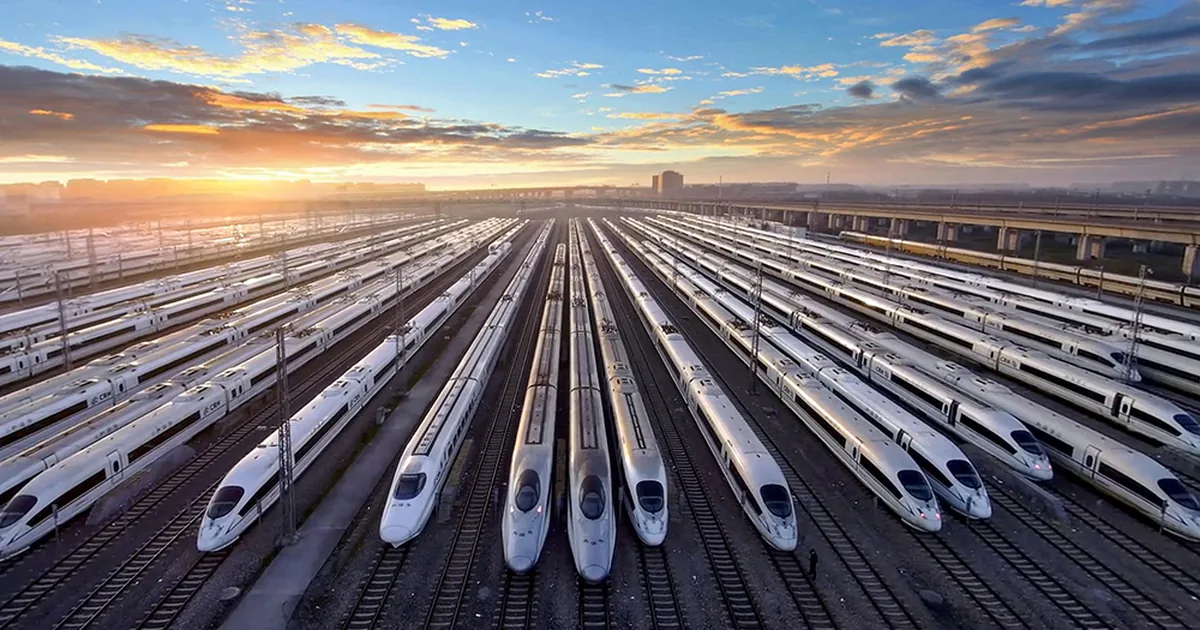
G-trains (高铁, gaotie) are the fastest option. Shanghai Hongqiao to Suzhou takes about 25 minutes. These are the sleek white bullet trains cruising at 300 km/h. Most G-trains on this route depart from Hongqiao.
D-trains (动车, dongche) are slightly slower at 30 to 40 minutes. They run at around 250 km/h and often depart from Shanghai Station rather than Hongqiao. The difference is negligible, and D-trains are sometimes a few yuan cheaper.
Regular trains (K/T trains) also cover this route in about 50 minutes. They're the cheapest option at around 15 to 20 yuan, but the speed advantage of the G-train is worth the small price difference. Not worth the trade-off unless you're on the tightest possible budget.
The frequency is so high that locals actually commute daily between Shanghai and Suzhou. We've met software engineers who live in Suzhou for the lower cost of living and take the morning G-train to their Shanghai office. When a 25-minute train ride costs less than a latte, it starts to make economic sense.
Ticket Prices
This route offers some of the cheapest high-speed rail tickets in China:
G-train Second Class (二等座): approximately 39.5 yuan ($5.50). This is what we recommend. The seats are comfortable, spacious, and perfectly adequate for a half-hour ride.
G-train First Class (一等座): approximately 65.5 yuan ($9.00). Wider seats in a 2+2 configuration instead of 3+2. Nice but unnecessary for such a short journey.
D-train Second Class: approximately 29.5 yuan ($4.00). A few yuan less for a slightly longer ride.
Tickets are almost always available same-day for this route. You can buy them through the 12306 app, at the station counter with your passport, or at the self-service machines (some accept foreign passports, but results vary by station). During major holidays like Chinese New Year, Golden Week in early October, or the May holiday, booking a day in advance locks in your preferred departure time, but even then, getting stranded without a ticket is extremely unlikely on this corridor.
One practical note: keep your passport with you. You'll need it to buy tickets and to pass through the ID checkpoint at the station entrance.
The Onboard Experience
Twenty-five minutes from platform to platform. You'll barely have time to settle into your seat, scroll through a few photos, and glance out the window before the announcement tells you Suzhou is approaching.
The route crosses the flat Yangtze River Delta, passing through Kunshan (昆山, itself a worthwhile day trip for the ancient water town Zhouzhuang). Out the window you'll see a patchwork of fish ponds, canals, rice paddies in season, and clusters of residential towers that characterize this densely populated region. It's not dramatic mountain scenery, but it's an honest glimpse of the landscape that has shaped Jiangnan culture for millennia.
No dining car worth visiting for a 25-minute ride, and vendors don't usually make it down the aisle before you arrive. Eat before you leave or plan lunch in Suzhou, which is the better option anyway.
Travel light. You're doing a day trip, so a small daypack with water, a portable phone charger, sunscreen, and your passport is all you need. Keep your passport accessible rather than buried at the bottom of your bag, because you'll need it to pass through the exit gates at Suzhou Station.
A Perfect Day Trip Itinerary
We've refined this itinerary over dozens of visits. It hits the highlights without rushing and leaves room for wandering.
Morning departure (7:30 to 9:00 AM): Grab any G-train from Shanghai Hongqiao or Shanghai Station. You'll arrive at Suzhou Station between 8:00 and 9:30 AM. Earlier is better, because the gardens are significantly more enjoyable before the tour bus crowds arrive around 10:00 AM.
Humble Administrator's Garden (拙政园, Zhuozheng Yuan): Walk 15 minutes south from the station or take Metro Line 2 one stop to Bei Si Ta (北寺塔). This is China's finest classical garden, a 52,000-square-meter masterpiece of rocks, water, pavilions, and carefully framed views. Admission is 70 yuan. Arrive when the gates open and you'll have the winding paths and lotus ponds largely to yourself. Allow 60 to 90 minutes.
Lion Grove Garden (狮子林, Shizi Lin): A 5-minute walk south from the Humble Administrator's Garden. This smaller garden is famous for its elaborate rockery labyrinth, a maze of limestone formations that's surprisingly fun to navigate. Kids love it, and so do adults who haven't lost their sense of play. Admission is 30 yuan. Allow 30 to 45 minutes.
Lunch at Tong De Xing (同得兴): Head to Guanqian Street (观前街), Suzhou's main pedestrian shopping street, about a 10-minute walk south. Tong De Xing is a legendary Suzhou noodle shop where you should order their signature red soup noodles (红汤面) or the classic Suzhou-style braised duck noodles. A bowl costs about 20 to 35 yuan and is one of the most satisfying meals you'll have in China. The noodle broth here is treated with the same reverence that the French give to their sauces.
Pingjiang Road (平江路): After lunch, walk east to Pingjiang Road, an 800-year-old canal street that runs along a narrow waterway lined with whitewashed buildings, small bridges, and local shops. Unlike many "ancient streets" in Chinese tourism that feel manufactured, Pingjiang Road retains a lived-in residential character. People still call it home. Old men fish from the canal banks. Laundry hangs from second-floor windows. Walk slowly, sit at a canal-side tea house, and absorb the atmosphere. Free, and worth every minute.
Afternoon options: Depending on your energy and interests, choose one:
Tiger Hill (虎丘, Huqiu): About 3 kilometers northwest of the old town (taxi 10 to 15 yuan). The leaning Cloud Rock Pagoda here dates to 961 AD and tilts at a visible angle, sometimes called "China's Leaning Tower." Admission is 60 yuan. The grounds also include the legendary Sword Pool and pleasant forested paths.
Suzhou Museum (苏州博物馆): Right next to the Humble Administrator's Garden. This stunning building was designed by I.M. Pei, the Suzhou-born architect famous for the Louvre Pyramid. The museum itself is as much the attraction as the collection inside. Free admission, but book online in advance on their WeChat mini-program as walk-in slots fill quickly.
Evening return (17:00 to 18:00): Head back to Suzhou Station and catch any train back to Shanghai. You'll be at your hotel by 18:30 to 19:00, with plenty of time for dinner on the Bund.
Total cost for the day: Train tickets round trip, approximately 79 yuan. Humble Administrator's Garden, 70 yuan. Lion Grove Garden, 30 yuan. Lunch, 30 yuan. Metro or taxi, 10 to 20 yuan. Optional Tiger Hill, 60 yuan. Grand total: 220 to 290 yuan (roughly $30 to $40). Even adding Tiger Hill and a tea break, you're looking at 350 yuan maximum. Tour agencies charge 500-plus for less freedom and more gift shops.
Getting Around Suzhou After You Arrive
Suzhou Station drops you at the northern edge of the old town, and from here, the tourist district is easy to reach on foot.
Walking is the best option for the garden cluster. Suzhou Station to the Humble Administrator's Garden is about 1.5 kilometers due south, a pleasant 15 to 20-minute walk along tree-lined streets. The old town is compact, and most major attractions sit within a 3-kilometer radius of each other.
Suzhou Metro Line 2 runs from the station south through the old town. One stop to Bei Si Ta puts you near the northern gardens. Line 1 crosses east-west and connects to the Tiger Hill area. Fares are 2 to 5 yuan. You can pay with Alipay by scanning the QR code at the gates.
Shared bikes from Hello Bike (哈啰单车) or Meituan Bike are everywhere. Scan with Alipay to unlock. This is a fantastic way to explore Suzhou: the flat terrain and dedicated bike lanes make cycling easy and enjoyable. Cost is about 1.5 yuan per 15 minutes.
Taxis and Didi are plentiful. Within the old town, most rides cost 10 to 20 yuan. Didi (China's ride-hailing app) works well in Suzhou and eliminates the language barrier since you input your destination in the app.
One critical tip: Download Amap (高德地图) before your trip. Google Maps is unreliable in China generally, but it's especially poor in Suzhou's old town, where the narrow alley network confuses Western mapping services. Amap provides accurate walking and cycling navigation, real-time bus routes, and is the same app that Didi drivers themselves use. The interface has an English language option, though it's imperfect. Between Amap and a translation app, you'll navigate Suzhou with confidence.
Final Tips
For roughly the cost of a sandwich back home, you step onto a spotless bullet train, glide at 300 km/h through the Yangtze Delta, and 25 minutes later walk out into a city where classical gardens have been cultivated for five centuries. Few train rides anywhere in the world deliver that kind of return.
No other day trip from Shanghai offers this combination of convenience, affordability, and cultural depth. The trains run so frequently that there's no anxiety about schedules. The gardens are among the most beautiful human-made spaces in the world. The food is outstanding. And at the end of the day, you're back in Shanghai before the Bund lights up.
We've taken this train in every season. Spring brings azaleas blooming through the garden rockeries. Summer means lotus flowers blanketing the ponds at the Humble Administrator's Garden. Autumn turns the maple trees at Tiger Hill into a canopy of red and gold. Winter strips the gardens to their architectural bones, revealing the genius of the original designs.
Whatever time of year you visit Shanghai, carve out one day for Suzhou. Walk to the station, tap your passport at the gate, and in half an hour you'll be standing in a garden that was old when Columbus set sail. That's what 40 yuan buys you.
Planning your full Shanghai trip? Our Shanghai travel guide covers neighborhoods, food, and a day-by-day itinerary.
Tags
Getting around China without Chinese?
Save routes and key phrases offline — show your driver the address in Chinese with one tap.