Wangxian Valley to Suzhou: Train Guide and Route Tips

Quick answer: To reach Suzhou from Wangxian Valley, first take the ¥30 shuttle (about 1 hour) to Shangrao Railway Station, then board a high-speed train to Suzhou. Around 12 direct HSR trains run daily, the fastest 2h36m for roughly ¥277 second class. The last direct departure is mid-afternoon, so leave the valley by early afternoon.
Wangxian Valley has blown up online as a real-life fantasy world — cliffside inns lit up gold after dark, a glass walkway over a hundred-metre drop, an old mine reborn as something out of a wuxia film. If you're pairing it with the classic canals and gardens of Suzhou, the route is straightforward once you know one thing the old guides got wrong: where Wangxian Valley actually is.
First, the geography: it's in Jiangxi, not Anhui
Wangxian Valley (望仙谷) sits in Jiangxi province, in the city of Shangrao (Guangxin District), not in Anhui. The confusion is understandable — Shangrao borders Zhejiang, Anhui and Fujian all at once — but the scenic area is firmly inside Jiangxi, and routing your trip through Anhui sends you the wrong way. Get this right and the rest is easy.
It's a national AAAA scenic area built out of an abandoned mine: a cliffside canyon of hanging timber inns, waterfalls, Ming- and Qing-style villages, and a 388-metre glass skywalk. The real draw is after dark, when the whole valley is lit in warm light like a castle in the sky.
There are two scenic areas called "Wangxian Valley" in China, and confusing them will send you to the wrong province. This guide covers the famous fairyland one in Wangxian Township, Shangrao, Jiangxi (a national AAAA scenic area about 50 km from downtown Shangrao). The other, much smaller Wangxian Valley sits near Chongqing in the southwest. If a booking site shows the Chongqing version, it is not this one. The Jiangxi valley's nearest rail hub is Shangrao, not Huangshan, despite the two being marketed together on tour itineraries.
Getting around China without Chinese?
Save routes and key phrases offline — show your driver the address in Chinese with one tap.
Getting to Wangxian Valley
The nearest high-speed hub is Shangrao Station (上饶站), which sits on two HSR corridors — the Shanghai–Kunming line and the Hefei–Fuzhou line — so it's well connected from almost anywhere in eastern China.
From Shangrao Station to the valley is about 50km:
Tourist shuttle bus (the easy option): runs from the bus station beside the railway station to the Wangxian Valley visitor centre, roughly 1 to 1.5 hours, around ¥30. Departures cluster in the morning and early afternoon; the daily count varies by season (sources cite 8 to 12), so check the same-day schedule.
Taxi or Didi: direct to the entrance, about an hour, around ¥150.
From Shangrao Railway Station the official scenic-area shuttle is the cheapest and simplest option. The pickup is inside the same complex at Shangrao East Bus Station: leave the rail station exit, walk straight about 50 metres, turn right for about 60 metres, then take the stairs or elevator down on your left, roughly a five-minute walk. Buses leave the station between 7:40 and 15:30 and return from the valley between 10:00 and 20:30. The fare is ¥30 and the ride takes about an hour. Seats are not assigned, give your name to the gate staff, who call valley-bound passengers about 20 minutes before departure.
Book the shuttle through the WeChat mini-program "赣悦行" (Ganyue Travel) or via Trip.com, rather than expecting to buy on the spot during peak periods. If you do not use WeChat, a Didi or metered taxi from Shangrao Railway Station to the valley also takes about an hour and is the easiest fallback for non-Chinese speakers, though drivers rarely speak English, so save the destination in Chinese (望仙谷景区) to show or paste into the app.
The route to Suzhou
The trip is simply: Wangxian Valley back to Shangrao (1 to 1.5 hours by shuttle or taxi), then a direct high-speed train from Shangrao to Suzhou. There are direct G trains — no transfer through Hangzhou or Shanghai needed — running roughly seven times a day, and the ride is about 3.5 hours. (There's also a slow overnight K train of around 9 hours; skip it.)
One thing to check when you book: Suzhou has more than one station, and not every train uses the same one. Trains arrive at Suzhou Station (苏州站), Suzhou North (苏州北站), or Suzhou South depending on the service. Suzhou Station is the most central and closest to the old town and classic gardens; Suzhou North is further out on the Beijing–Shanghai high-speed line. If your plan is the gardens and canals, favour a train into Suzhou Station when you have the choice.
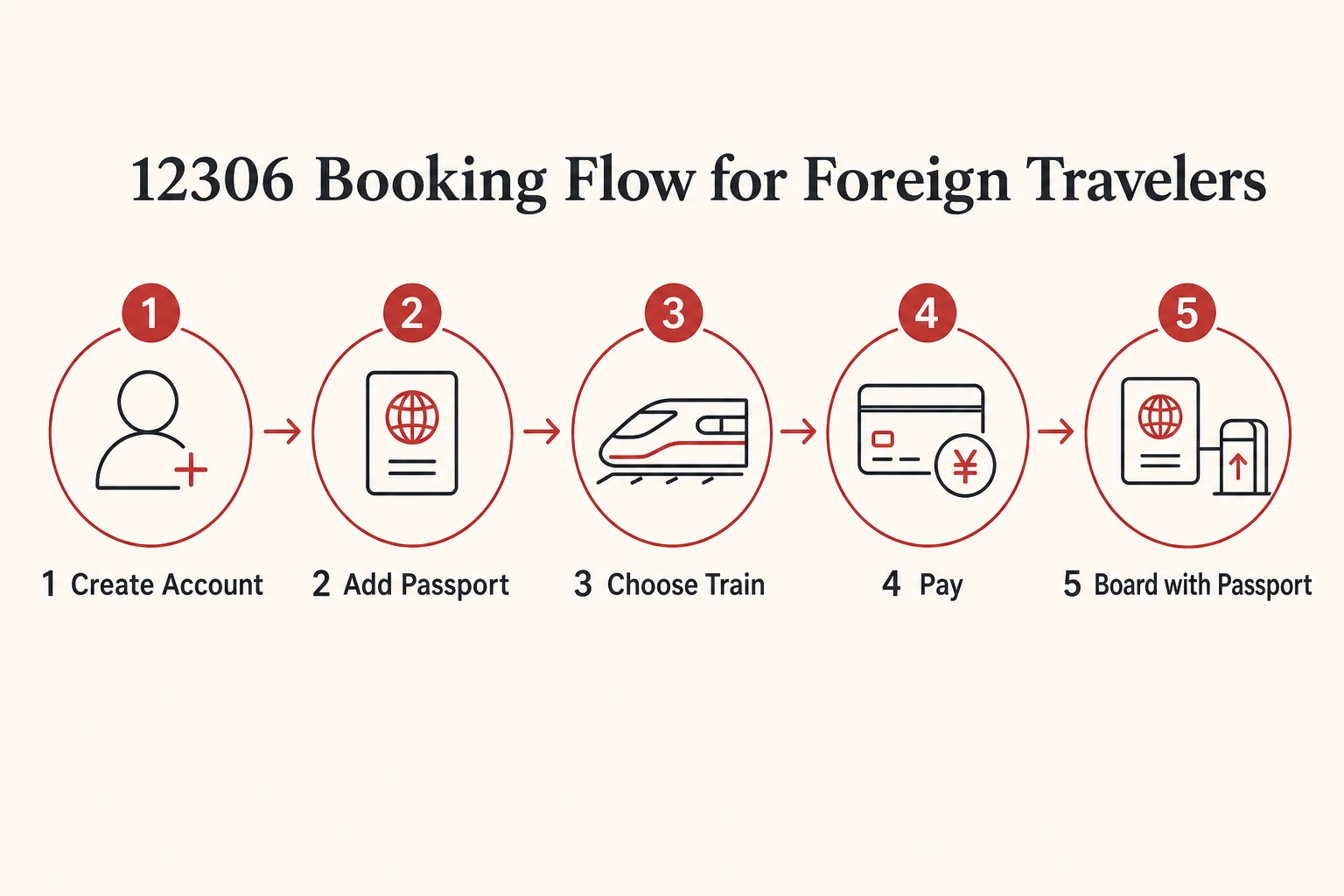
Exact train numbers and times shift, so book on 12306 with your passport and confirm the arrival station for your specific train rather than trusting a fixed timetable online.
The Shangrao to Suzhou leg is a direct high-speed service, not a forced transfer. Around 12 direct trains run daily. The fastest is roughly 2 hours 36 minutes (train G203, departing Shangrao about 07:30); most others fall between that and about 4h18m, the slower ones because they make more stops or run as slower D-series trains. Second class costs roughly ¥277. Direct trains arrive at Suzhou North (Suzhounan/Suzhou South on some routes) rather than the central Suzhou Station, so check which station your ticket lists before planning your onward metro or taxi.
Watch the last direct train. Direct Shangrao to Suzhou departures finish in the late afternoon (around 17:17), and the fastest morning train leaves at about 07:30. If you miss the last direct service, the fallback is a high-speed train from Shangrao to Shanghai Hongqiao, then a 25 to 40 minute hop on to Suzhou; Shanghai Hongqiao to Suzhou runs very frequently into the evening. Build the early last-departure into your day: the valley's night-light show only starts around 19:30, so seeing the lights means staying overnight rather than catching a same-day train to Suzhou.
If you are chaining sights in northeastern Jiangxi before heading to Suzhou, all of them funnel back through Shangrao Railway Station. Sanqingshan is about 70 km (1.5 hours) away, Wuyuan's Huangling terraced village and Geyou/Gexian Village are common add-ons, and tour itineraries routinely combine Wangxian Valley with these over three to five days. Return to Shangrao station for any of them rather than looking for a direct route to Suzhou from the smaller sites.
Timing your visit
Because the lights are the point, plan to be in the valley in the late afternoon and evening. The illumination comes on in layers around 6:30pm, and the dusk-to-dark transition is the most photographed moment. The best approach is to enter mid-afternoon, see the canyon in daylight, then stay for the lights — ideally overnight in one of the cliffside inns, which usually include the scenic-area ticket in the room rate. Standard admission is ¥120 (¥140 over the big holidays like Chinese New Year, May Day and National Day). The park is open roughly 8am to 9:30pm, but confirm current hours before you go.
Once you reach Suzhou, the city rewards slow wandering — our Suzhou silk market bargaining tips are a good place to start if you want to shop without overpaying.
Wangxian Valley is compact and most visitors need only one full day, ideally with one night inside the scenic area to catch the illuminated cliffside village. The standard entrance ticket is about ¥140 and the valley stays open into the evening, with the lights switching on around 19:30. If you want to sleep inside the scenic area, the cliffside inns on White Crane Cliff and the Jiangxi-style village lodges run roughly ¥800 to ¥5000 per night and usually bundle in the entrance ticket. Plan the Suzhou train for the day after, since the last direct departure is too early to combine with the night show.
Frequently asked questions
What province is Wangxian Valley in? Jiangxi — specifically Shangrao city, Guangxin District. It is not in Anhui, despite what some older guides say.
How do I get from Wangxian Valley to Suzhou? Travel back to Shangrao Station (about 1 to 1.5 hours by shuttle or taxi), then take a direct G high-speed train to Suzhou, about 3.5 hours.
Which Suzhou station should I aim for? Suzhou Station is the most central for the old town and gardens. Suzhou North is further out. Check which one your train uses before booking.
Is the trip doable as a day trip? It's better as an overnight. The valley's signature is its evening lighting, so you'll want to stay for dusk — and the cliffside inns are part of the experience.
When do the lights come on? Around 6:30pm, building up in layers. Aim to be in the valley by late afternoon to catch both the daytime scenery and the night show.
Tags
Getting around China without Chinese?
Save routes and key phrases offline — show your driver the address in Chinese with one tap.