Mutianyu Great Wall Guide for Young Travelers
On this page10 sections
- 01What This Mutianyu Great Wall Guide Covers
- 02Getting From Beijing to Mutianyu in 2026
- 03Mutianyu Ticket Prices and the Famous Toboggan
- 04Cable Cars vs. Toboggan vs. Walking Up
- 05Which Watchtowers to Walk Between
- 06Best Time of Day and Year to Visit Mutianyu
- 07What to Pack for a Day at Mutianyu
- 08Where to Eat in Mutianyu Village
- 09Sample One-Day Itinerary From Beijing
- 10Frequently Asked Questions About Mutianyu
Mutianyu Great Wall Guide for Young Travelers
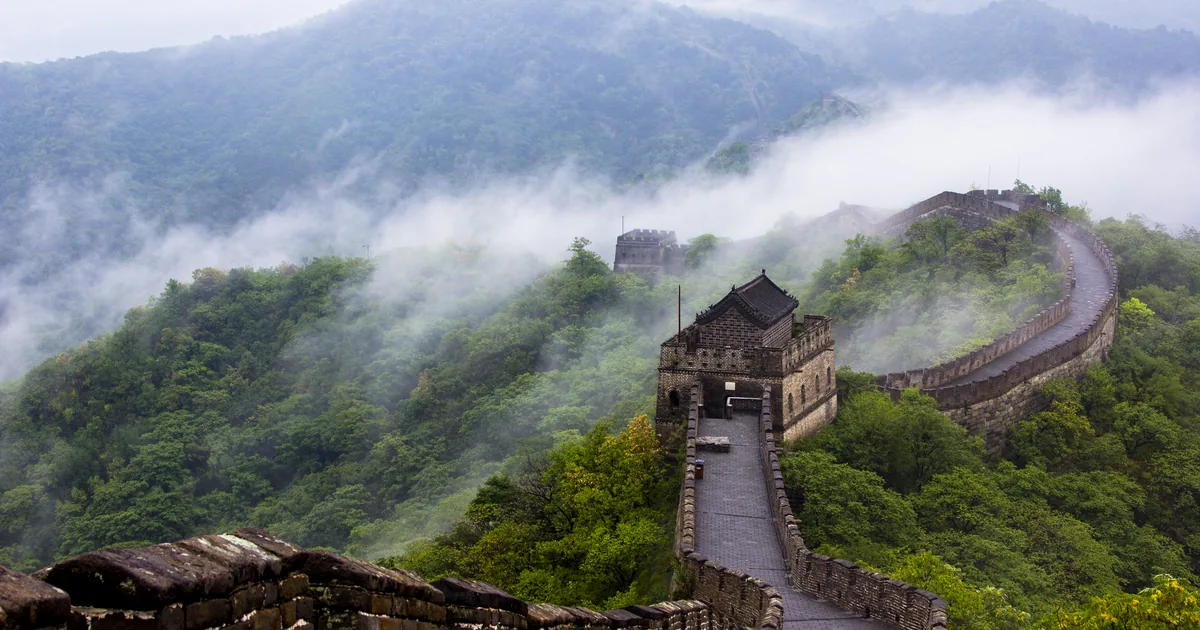
The Mutianyu section of the Great Wall sits about 73 kilometers northeast of central Beijing, tucked into a wooded valley in Huairou District. It is the section that most travelers in their twenties and early thirties end up loving the most, because it is long enough to feel wild, restored enough to walk in comfortable shoes, and equipped with a toboggan slide that makes the descent genuinely fun instead of just another stair workout. This Mutianyu Great Wall guide covers everything a younger, independent traveler needs to know for 2026, including how to get there without a tour, how the toboggan and cable car systems actually work, and how to hire a private driver without getting overcharged.
You will not find Badaling-style crowds here. You will not be elbowed off the parapet while trying to take a photo. What you will find is 5,400 meters of restored Ming-era wall stretching across 22 watchtowers, with a toboggan track winding down through the forest and a small village at the base selling grilled skewers, cold drinks, and post-hike ice cream.
What This Mutianyu Great Wall Guide Covers
How to get from central Beijing to Mutianyu by private driver, public bus 916, and chauffeured cars from Klook, GetYourGuide, or Viator
Real 2026 ticket prices for entry, shuttle bus, cable car, chairlift, and the famous toboggan
Which watchtowers to walk between (and which are steep enough to ruin your knees)
How long to spend on the wall and what time of day beats the heat
What to pack, where to eat in Mutianyu village, and how to get back to Beijing before dark
A frequently asked questions section covering visas, SIMs, and weather
Getting around China without Chinese?
Save routes and key phrases offline — show your driver the address in Chinese with one tap.
Getting From Beijing to Mutianyu in 2026
Mutianyu is roughly 2.5 hours by car from the center of Beijing, depending on traffic through the northern fifth and sixth ring roads. There is no metro line, no high-speed rail, and no direct taxi option that makes sense for a day trip. You have three realistic choices, and this Mutianyu Great Wall guide ranks them in the order that actually works for most visitors.
Option 1: Private Driver (Most Flexible)
Hiring a private driver is the easiest way to reach Mutianyu without joining a group tour. Rates on Klook, GetYourGuide, and Viator in 2026 range from ¥600 to ¥900 per day for a standard sedan, with prices climbing to ¥1,100 to ¥1,400 for a larger SUV or MPV if you are traveling with four to six people. The price usually includes pickup from your hotel, the full round trip, and waiting time at the wall (typically 4 to 5 hours on site).
What you are paying for is not just the ride. You are paying for the driver waiting in the parking lot while you hike, the flexibility to change plans mid-day, and the ability to ask for a quick stop at a countryside restaurant or the Hongluo Temple on the way back. Most drivers speak only basic English, so load Pleco or Google Translate onto your phone before you leave.
Booking tips:
Book at least 24 hours in advance; same-day bookings often get higher rates
Check that the booking includes the ¥15 parking fee and any expressway tolls (most reputable vendors do)
Bring cash or WeChat Pay for tips — ¥50 to ¥100 is standard for a full day
Confirm the exact pickup time in writing; Beijing traffic on the North Fourth Ring can add 45 minutes if you leave after 8:30 AM
Option 2: Public Bus 916 From Dongzhimen (Cheapest)
For budget travelers, the 916 express bus from Dongzhimen Transport Hub is the honest, working alternative. The fare is ¥12 using a Beijing Transportation Card (Yikatong) or roughly ¥24 cash, and the ride to Huairou Beidajie takes about 70 to 90 minutes depending on traffic. From Huairou, you transfer to the local H23 or H24 minibus for the final 20-minute run to the Mutianyu ticket office. The local transfer costs ¥3 to ¥5.
The 916 runs roughly every 15 minutes from around 5:50 AM until 7:30 PM. Dongzhimen Transport Hub is directly connected to Line 2 and Line 13 of the Beijing subway, so reaching it from anywhere in the city is straightforward. The catch is that you need to return the same way, and the last 916 back from Huairou leaves around 7:00 PM — miss it and you are calling a car.
Option 3: Chauffeured Group Car (Middle Ground)
Klook and GetYourGuide both sell shared chauffeured day trips for ¥280 to ¥450 per person. You share a van with other independent travelers, get door-to-door service, and skip the tour-guide component entirely. You still get the same 4 to 5 hours on the wall. This is a decent compromise if you are a solo traveler who does not want to pay ¥700 for a private sedan but also does not want to figure out the bus.
Mutianyu Ticket Prices and the Famous Toboggan
Entry to the Mutianyu Great Wall scenic area is ¥40 for adults in 2026. This ticket only gets you into the park — it does not include the shuttle bus from the parking lot to the base of the cable car, which is another ¥15 round trip. From there you decide how you want to reach the top of the wall.
Item | 2026 Price | Notes |
|---|---|---|
Entry ticket (adult) | ¥40 | Valid for one day, passport required |
Shuttle bus (parking lot to cable car base) | ¥15 round trip | Mandatory; about a 10-minute ride |
Cable car round trip | ¥120 | Arrives at Tower 14, the most scenic section |
Chairlift up + toboggan down | ¥120 | Chairlift to Tower 6; toboggan from Tower 6 |
Cable car up + toboggan down | ¥140 | Best of both worlds |
Toboggan one way down only | ¥100 | If you hike up and slide back down |
The toboggan is the thing most travelers remember. It is a 1,580-meter stainless-steel track that snakes down through the forest from Tower 6, and you control your own speed with a single brake lever on the sled. On a clear day you can see the wall winding above you as you descend. The ride takes about 6 to 8 minutes depending on how much you brake, and the queue at the top rarely runs more than 15 minutes outside of public holidays.
One note: the toboggan closes in heavy rain or after snow. If the weather turns while you are on the wall, budget time to walk back down or ride the cable car instead.
Cable Cars vs. Toboggan vs. Walking Up
The Mutianyu Great Wall has three lifts, and this Mutianyu Great Wall guide breaks down which one suits which kind of traveler:
Main cable car (gondola style): Drops you at Tower 14, which is the photogenic section with the steepest restored sections. Enclosed gondola, comfortable in all weather, good for travelers with mild fear of heights.
Chairlift: Drops you at Tower 6, which is closer to the toboggan exit and lets you walk in the gentler direction toward Tower 10. Open chair, feet dangling — not for anyone with serious vertigo.
Walking up: About 1,200 stone steps from the ticket gate to Tower 8. Takes 40 to 60 minutes depending on fitness. Free, but ruthless in summer heat.
If you are under 35, in decent shape, and want the full experience, take the cable car up to Tower 14, walk east toward Tower 20 for views, then loop back west to Tower 6 and take the toboggan down. That covers roughly 2 kilometers of wall, which is enough to feel the scale without destroying your quads.
Which Watchtowers to Walk Between
Mutianyu's restored section runs from Tower 1 to Tower 23. The cable car drops you in the middle at Tower 14, and most people walk east for views and west toward the toboggan. Here is the honest breakdown:
Tower 6 to Tower 10: Gentle, flat, family-friendly. Good for casual walking and photos.
Tower 10 to Tower 14: Moderate elevation. The most commonly walked section.
Tower 14 to Tower 20: Steeper, better views, fewer people. Worth the extra effort if the weather is clear.
Tower 20 to Tower 23: Closed to the public. The wall becomes wild and unrestored beyond Tower 23.
A comfortable visit walks Tower 6 to Tower 20 and back, totaling about 3 kilometers. Budget two to three hours on the wall itself, plus another 45 minutes for the cable car and toboggan queues.
Best Time of Day and Year to Visit Mutianyu
Arrive at the ticket gate by 8:30 AM if you can. The parking lot is nearly empty, the cable car has no queue, and you will be on the wall before 9:15 AM with soft morning light for photos. By 11:00 AM the tour bus crowds arrive and the toboggan line stretches past 30 minutes.
Season-wise:
April to early June: Clearest skies of the year, wildflowers on the hillsides, comfortable temperatures. Peak recommendation.
September to early November: Autumn foliage turns the surrounding forest red and gold from mid-October. Arguably the most photogenic time of year.
July and August: Hot, humid, occasional afternoon thunderstorms. Bring water and sunscreen.
December to February: Cold but dramatic. Clear winter skies, thin snow on the wall, almost no crowds. The toboggan sometimes closes after snow.
Avoid the first week of May (Labor Day holiday) and the first week of October (National Day holiday) unless crowds do not bother you.
What to Pack for a Day at Mutianyu
Comfortable shoes with grip — the restored steps get slick after rain
Small backpack with 1.5 liters of water per person
Light layers even in summer; the wall is 500 meters above sea level
Sunscreen and a hat — there is almost no shade on the wall itself
Passport (required for entry and for some ticket booths)
A power bank — you will take more photos than you expect
Cash and a WeChat Pay or Alipay account loaded up
Do not bother with heavy hiking boots unless you are planning to walk beyond the restored section. Sneakers or light trail runners are perfect.
Where to Eat in Mutianyu Village
The village at the base of the wall has a surprisingly good food scene for a tourist site. Schoolhouse at Mutianyu is the best-known western-style spot and does decent wood-fired pizza, pasta, and craft beer, with mains in the ¥80 to ¥150 range. A few local noodle shops along the main walkway serve hand-pulled noodles and pork dumplings for ¥25 to ¥50. Grilled skewers (chuanr) from the village stalls run ¥5 to ¥15 per stick.
If you are short on time, grab a quick bowl of noodles after your toboggan run and head back to Beijing. If you have a private driver and want to make an afternoon of it, have a proper sit-down meal and head back around 3:30 PM to beat the evening traffic.
Sample One-Day Itinerary From Beijing
Time | Activity |
|---|---|
7:30 AM | Private driver picks up at hotel |
9:15 AM | Arrive Mutianyu parking lot |
9:30 AM | Shuttle bus, cable car up to Tower 14 |
9:45 AM to 12:00 PM | Walk Tower 14 to Tower 20, return to Tower 6 |
12:00 PM | Toboggan down |
12:30 PM | Lunch in Mutianyu village |
2:00 PM | Depart for Beijing |
4:30 PM to 5:00 PM | Back at hotel |
This rhythm avoids both the morning tour bus surge and the evening rush-hour return. If you are using public bus 916, shift everything back by about 90 minutes and expect to be back in central Beijing around 6:30 PM.
Frequently Asked Questions About Mutianyu
Do I need to book Mutianyu tickets in advance? Walk-up tickets are available at the entrance and work fine on weekdays. On weekends and Chinese public holidays, pre-book through Klook, Trip.com, or the official Mutianyu WeChat mini-program to skip the ticket queue.
Can I visit Mutianyu and Jinshanling in one day? Technically yes, but it is a long and tiring day involving 5+ hours of driving. Better to pick one section and actually enjoy it. Mutianyu is the easier, more scenic choice for first-timers.
Is Mutianyu Great Wall wheelchair accessible? The shuttle bus, cable car, and the Tower 14 area are accessible. The wall itself becomes stepped and uneven almost immediately, so mobility is limited to the immediate platform around Tower 14.
What happens if the weather is bad? Light rain is fine — the wall is still open and the cable car still runs. Heavy rain closes the toboggan. Lightning closes the cable car and chairlift. Check the forecast the night before and have a backup plan (798 Art District, Houhai, or the Forbidden City all work as rainy-day alternatives).
How much should I tip my private driver? ¥50 to ¥100 is the standard range for a full day. Not required, but appreciated. Pay in cash if possible.
Can I bring a drone to Mutianyu? No. Drones are prohibited at the Mutianyu scenic area and at all Great Wall sections.
Is it safe to travel independently as a solo female traveler? Yes. Mutianyu is one of the safest tourist areas in Beijing. The cable car operators, shuttle bus drivers, and park staff are used to foreign visitors. Stick to the restored section and return before sunset if you are alone.
Tags
Getting around China without Chinese?
Save routes and key phrases offline — show your driver the address in Chinese with one tap.
Travelers also asked
View all →- Is it better to book a shared Klook tour or hire a private driver for visiting the Mutianyu Great Wall from Beijing?
- What is the best way to travel between Beijing and the Mutianyu Great Wall, and how do I handle transport on the return trip?
- Which section of the Great Wall did you visit near Beijing, and what was the most convenient transportation method to get there?
- Is it necessary to hire a tour guide for the Great Wall and Summer Palace, or is a private driver sufficient for a family visit?