Beijing Travel Guide 2026: A Local's Honest Tips for First-Time Visitors
On this page13 sections
- 01What this Beijing travel guide covers
- 02Beijing prices at a glance (2026)
- 03Day 1: Tiananmen, Forbidden City, and Qianmen
- 04Day 2: Great Wall at Mutianyu (full day)
- 05Day 3: Temple of Heaven, Houhai, and a hutong walk
- 06Day 4: Summer Palace, 798 Art District, and departure
- 07Beijing 4-day itinerary at a glance
- 08Peking duck: a whole section on its own
- 09Beijing metro and transit basics
- 10Where to stay in Beijing
- 11Apps you actually need in Beijing
- 12First-timer tourist traps to skip in Beijing
- 13FAQ: Beijing travel guide quick answers
Beijing Travel Guide 2026: A Local's Honest Tips for First-Time Visitors
Beijing has been misunderstood by almost every English-language travel guide I've read since 2019. They either tell you to rush through 47 UNESCO sites in three days or they scare you about scams until you think every cab driver is plotting against you. Neither is true. Beijing in 2026 is a cheap, safe, easy city if you know five or six basic things — and this Beijing travel guide is my attempt to hand those things to first-timers.
I've lived in Beijing twice and taken more than 30 out-of-town friends to the Great Wall. This Beijing travel guide is the set of numbers and decisions I wish I could just text to every first-timer who lands at PEK.
What this Beijing travel guide covers
Real 2026 prices for every big Beijing attraction: Forbidden City, Great Wall Mutianyu, Summer Palace, Temple of Heaven
A tested 4-day Beijing itinerary built for first-timers
The right way to get to the Great Wall (Mutianyu, not Badaling)
Peking duck: where to eat it, how much it costs, and how to order
Beijing metro basics: ¥3–9 fares, airport express, Alipay QR entry
Hutong walks: how to find the real ones, not the Nanluoguxiang cosplay version
PEK vs PKX airports and how to get to the city from each
Hotels: which zones save you 40 minutes a day in commute
Exactly which Beijing tourist traps to skip
Heading to China soon?
Take every guide offline — translation, payments, maps, and emergency help in one free app.
Beijing prices at a glance (2026)
The price table I use for a Beijing budget:
Attraction | 2026 price | Notes |
|---|---|---|
Forbidden City (Palace Museum) | ¥60 | ¥40 Nov 1 – Mar 31. Pre-book 7 days ahead via WeChat mini-program. Closed Mondays. |
Great Wall – Mutianyu | ¥40 | Plus ¥120 round-trip cable car or ¥100 chairlift + toboggan. |
Great Wall – Badaling | ¥40 | Skippable unless you're on a cruise day. |
Summer Palace | ¥30 (¥20 low season) | ¥60 combo ticket includes all pavilions. |
Temple of Heaven | ¥35 (¥30 low season) | ¥15 park-only entry possible outside peak. |
Tiananmen Square | Free | Passport required, security screening 10–20 min. |
798 Art District | Free | Individual galleries may charge ¥20–50. |
Lama Temple (Yonghegong) | ¥25 | Free incense provided. |
Nanluoguxiang hutong | Free | Touristy but walkable. |
Beijing Zoo (pandas) | ¥15 | Plus ¥5 for panda house. |
National Museum of China | Free | Bring passport, book 1 day ahead via WeChat. |
Almost every Beijing museum and park is now timed-entry via WeChat mini-programs. Set up WeChat Pay or Alipay Tour Pass before you arrive or you'll waste your first morning in a queue at a service desk.
Day 1: Tiananmen, Forbidden City, and Qianmen
Start at Tiananmen Square. Entry is free but you need your passport and you go through a security screening before entering the square. Line 1 metro to Tiananmen East or Tiananmen West gets you there for ¥3. Arrive by 8:30am to avoid the 10am crowd.
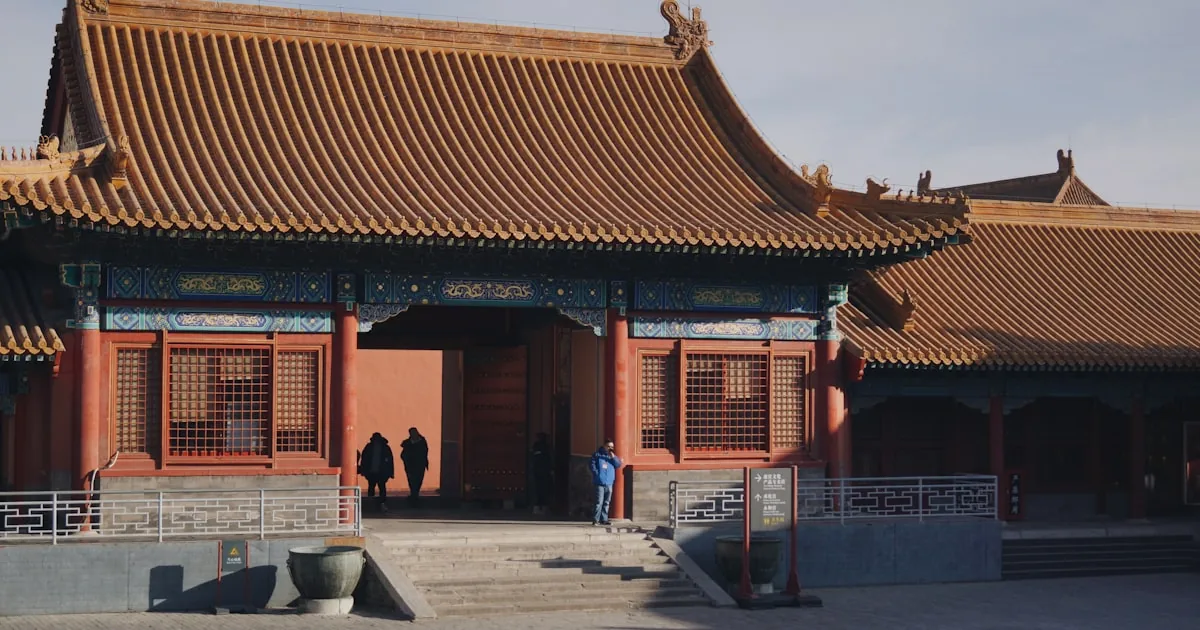
Walk through the square, face the portrait of Chairman Mao, then enter the Forbidden City (Meridian Gate / Wu Men). This is the one museum in China where advance booking is not optional — the Palace Museum only sells 40,000 tickets per day and they go fast. Book 7 days ahead on the official WeChat mini-program "故宫博物院 Palace Museum." Tickets are ¥60 from April 1 to October 31, ¥40 the rest of the year. Closed Mondays year-round.
Give yourself 3 hours for the main axis (south to north, Meridian Gate through Imperial Garden). If you want the Clock and Watches exhibition (my favorite), add ¥10 and 30 minutes. The Treasures Gallery is also ¥10 and worth it.
Exit through the north gate into Jingshan Park (entry ¥5). Climb the hill in 10 minutes for the best bird's-eye view of the entire Forbidden City. This is the photo you actually want from Beijing.
Lunch: walk 15 minutes east to Nanluoguxiang hutong for something tourist-priced but quick, or Metro Line 8 down to Qianmen Street for a sit-down meal. A hand-pulled noodle bowl runs ¥28–45, jianbing (Chinese breakfast crepe) is ¥15 from a cart.
Afternoon: Qianmen Street (前门大街), the restored commercial drag south of Tiananmen. It's touristy but useful for context. Walk it south to Dashilar (大栅栏) — the real Qing dynasty shopping alley with less tourist markup. Buy nothing unless you want Beijing's famous fabric shoes at Neiliansheng (¥200–500).
Dinner: Peking duck. First night, first duck. Details are in the next section.
Day 2: Great Wall at Mutianyu (full day)
I'll say this one loudly: go to Mutianyu, not Badaling. This is the single biggest decision first-timers get wrong.
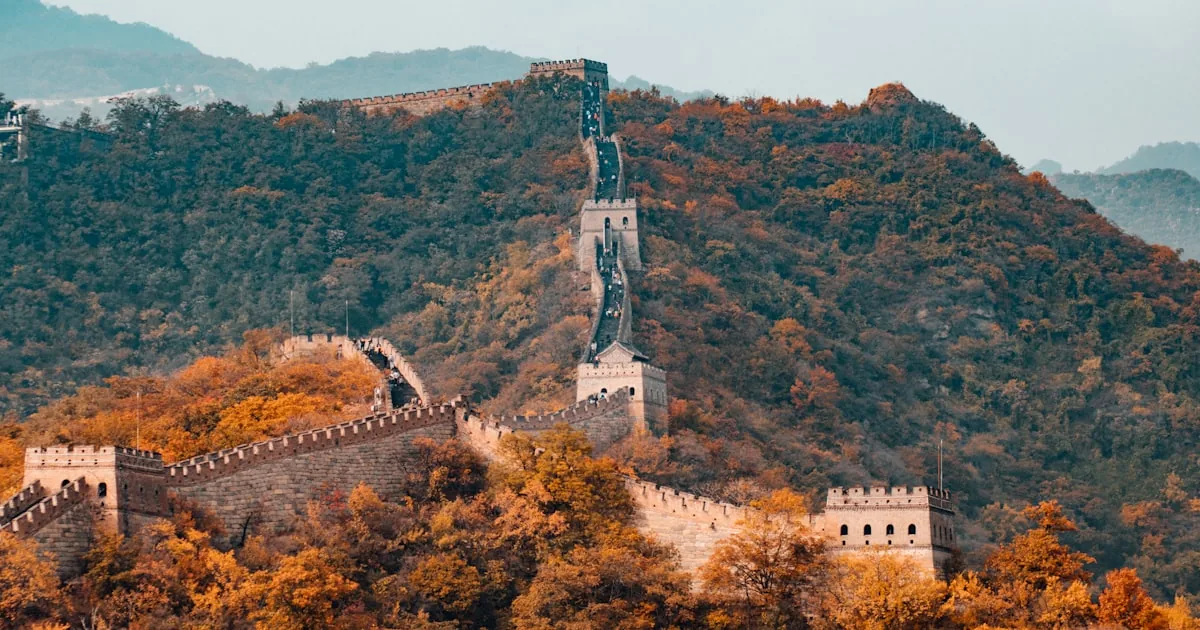
Badaling is closer and has a train station, so Chinese tour buses dump 80,000 people a day there during peak season. The wall is real, but the experience is being sardine-packed in a human river with zero silence. Mutianyu is 1 hour further by car, but it has 60% less foot traffic, better restored sections, forests on both sides, and a toboggan ride down (yes, a toboggan, ¥100).
How to get to Mutianyu in 2026 without a tour:
Public bus option — Take Metro Line 16 or a Beijing Bus Line 916 express to Huairou (怀柔), then transfer to Bus H23 or H24 to Mutianyu. Total ride ~2.5 hours, total cost ~¥25. Slow but cheap.
Mubus (official tourist shuttle) — Runs from Dongzhimen Outer Station at 9:00am daily, direct to Mutianyu in 90 minutes, round trip ¥80. Return shuttle at 4:00pm. This is what most budget travelers take.
Didi ride-hail — ¥280–400 one way, 1.5 hours. Ask the driver to wait for ¥300–400 extra and your round trip is ~¥700 total. For 2–4 people this is actually a great deal.
Private day tour — ¥500–800 per person including transport, lunch, cable car, and entry. Only worth it if you want zero logistics.
At the wall itself: entry is ¥40, the shuttle bus from the gate to the wall base is ¥15, and the cable car up/down is ¥120 round trip. If you want to walk up both ways (steep stone steps, 30 minutes), skip the cable car.
Which towers to walk. Mutianyu has watchtowers numbered 1 to 23. The cable car drops you at Tower 14. Walk east to Tower 20 for the best scenery and fewest crowds. The restored section ends at Tower 23. Don't try to walk past 23 — the unrestored wild wall is closed to tourists.
Back in Beijing by 5pm. Dinner near your hotel, then early bed. Tomorrow is another long walking day.
Day 3: Temple of Heaven, Houhai, and a hutong walk
Morning: Temple of Heaven (天坛). Metro Line 5 to Tiantan Dongmen Station, walk 2 minutes to the east gate. Entry is ¥35 in peak season, ¥30 in low season, and you can buy either park-only (¥15) or the combo that includes the main circular hall and the Echo Wall. Spring for the combo; the Hall of Prayer for Good Harvests is the postcard.
Morning bonus: arrive at 8am for the park-only entry and watch Beijing retirees do tai chi, play pingpong, practice calligraphy on the ground with giant brushes dipped in water, and sing Chinese opera in the garden. This is the real Beijing morning that no tour bus will show you.
Lunch: head up to Dongsi for a bowl of Beijing zhajiangmian (炸酱面) — thick wheat noodles with salty fermented bean paste and julienned vegetables. ¥25–35. Or duck back into a hutong restaurant for jiaozi (dumplings) at a family-run shop.
Afternoon: Houhai Lake (后海) and the real hutong walk. Metro Line 8 to Shichahai. Skip the main Houhai bar strip — that's the Vegas version. Walk north and west into the alleys: Yandai Xiejie (烟袋斜街), Mao'er Hutong (帽儿胡同), and Ju'er Hutong (菊儿胡同). These are where locals still live behind gray brick walls, with ancient trees, the occasional siheyuan courtyard house, and cats sleeping on the doorsteps.
Dinner: a boutique hutong restaurant like Wangfujing Quanjude if you want formal, or Siji Minfu for a ¥180/person Peking duck set. Both are described below.
Evening: walk back through Houhai for the lit-up lakeside. It's genuinely pretty at night.
Day 4: Summer Palace, 798 Art District, and departure
Morning: Summer Palace (颐和园). Metro Line 4 to Beigongmen for the north gate entrance. Entry is ¥30 peak, ¥20 low season. The ¥60 combo ticket includes the Tower of Buddhist Incense and is worth it. The must-sees: the Long Corridor (728m of painted beams), Marble Boat, Tower of Buddhist Incense, and the 17-Arch Bridge on the east side. Exit at the east gate.
Lunch: grab a jianbing from a cart on your walk out of the palace (¥15) or head to Wudaokou for student-priced options.
Afternoon: 798 Art District (Metro Line 14 to Wangjing South, then Didi ¥15 or Bus 401). Free entry. Bauhaus factory complex converted into galleries, cafes, and studios. Great for 2 hours of slow wandering.
Evening: back to hotel, pack, and catch the Airport Express or PKX Express.
Beijing 4-day itinerary at a glance
Day | Morning | Afternoon | Evening |
|---|---|---|---|
Day 1 | Tiananmen + Forbidden City | Jingshan Park + Qianmen Street | Peking duck dinner |
Day 2 | Mutianyu hike + toboggan | Local dinner near hotel | |
Day 3 | Temple of Heaven | Houhai + hutong walk | Houhai lakeside stroll |
Day 4 | Summer Palace | 798 Art District | Airport departure |
This Beijing travel guide sequence works for most first-timers. If you have 5 or 6 days, add: Lama Temple + Confucius Temple (half day), Beijing Zoo panda house + Wanshou Temple (half day), or a side trip to the Ming Tombs (half day).
Peking duck: a whole section on its own
You cannot leave Beijing without eating Peking duck. Here's my real ranking, from neighborhood favorite to special-occasion splurge:
Siji Minfu (四季民福) — Beijing locals' current favorite for quality-per-yuan. Multiple branches; the Nanchizi location next to the Forbidden City east gate is the best. Half duck ¥148, whole ¥268. Book via Dianping or walk in at 5pm.
Li Qun Roast Duck (利群烤鸭店) — hutong institution in Qianmen. Whole duck ¥298. Follow your map into a gray-brick alley. Traditional fruit-wood oven, arguably the best skin in Beijing. Reserve ahead.
Da Dong Roast Duck (大董烤鸭) — modern fine-dining version. Whole duck ¥358–428. Carved tableside, styled on the plate. Bill for two with wine: ¥800–1,200. Special-occasion pick.
Quanjude (全聚德) — the famous chain. Whole duck ¥268–398. Fine, not amazing. The Wangfujing branch has the traditional show-carving ceremony if you want the classic brand experience.
Bianyifang (便宜坊) — older than Quanjude (founded 1416), uses a closed-oven method. Whole duck ¥248–298. Less touristy and arguably better.
How to order. You'll be asked whole (整只) or half (半只). For two people, half is enough; for three or four, whole. You'll get crispy sliced duck skin, duck meat slices, paper-thin mandarin pancakes, cucumber, scallions, and sweet bean sauce. Assemble the pancakes yourself and eat with your hands. Per-person cost runs ¥180–400.
Beijing metro and transit basics
The Beijing metro (北京地铁) has 27 lines in 2026 and is the fastest way around the city. Fares are ¥3 for the first 6 km, rising to ¥9 for the longest cross-city rides. Pay by Alipay QR (activate "Beijing Metro" mini-program inside Alipay once and it works forever) or WeChat Pay QR. Cash-paper tickets still exist at single-trip machines but nobody uses them.
Lines you'll actually use:
Line 1 — east-west through Tiananmen, Wangfujing, Guomao. The tourist spine.
Line 2 — the Ring Line, around the old city walls. Connects Beijing Railway Station, Qianmen, Xuanwumen, Fuxingmen.
Line 4 — north-south through Xidan, Summer Palace, Beijing University. Airport-convenient via transfer.
Line 5 — north-south through Dongdan, Tiantan (Temple of Heaven), Lama Temple.
Line 8 — connects Qianmen, Nanluoguxiang, Olympic Park, Houhai (Shichahai).
Line 10 — the inner ring, connects National Library, Haidian, Sanlitun, Guomao.
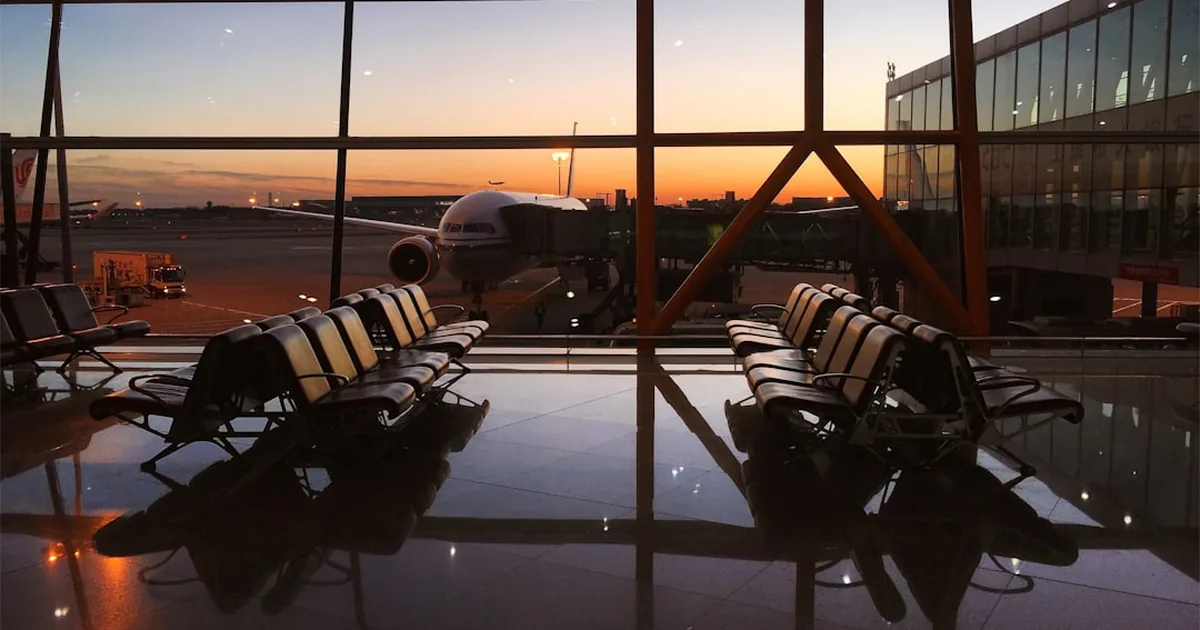
Airport express. Beijing has two airports: PEK (Capital International, older, used for most international flights) and PKX (Daxing International, newer, south of the city). PEK has the Airport Express train — 25 minutes from Terminal 3 to Sanyuanqiao, ¥25 flat fare, then transfer to Line 10. PKX has a dedicated subway called Daxing Airport Express (Line 19/Caoqiao Express) — 19 minutes to Caoqiao Station for ¥35.
Taxi/Didi. From PEK to downtown, official taxi is ¥100–130 with ¥15 expressway toll. Didi runs about the same. From PKX, Didi ranges ¥150–200 for the 50km drive. Book via Didi Chuxing or Trip.com in English.
Where to stay in Beijing
Stay inside the Second Ring Road (二环), ideally within walking distance of Line 1, 2, or 5:
Zone | Best for | Rough 2026 price |
|---|---|---|
Wangfujing / Dongdan | First-timers, walkable to Forbidden City | ¥450–900/night |
Qianmen | Old Beijing atmosphere, near Tiananmen | ¥500–1,000/night |
Nanluoguxiang / Houhai | Hutong boutique, old-city feel | ¥600–1,200/night |
Sanlitun | Nightlife, shopping, expat restaurants | ¥500–1,100/night |
Wudaokou | Budget travelers, metro to most sites | ¥250–500/night |
Hostels in the hutongs (Peking Youth Hostel, Beijing Downtown Backpackers) run ¥80–120 dorms and ¥200–350 private doubles. All foreigner-licensed.
Apps you actually need in Beijing
Alipay (支付宝) — universal payment. Link a Visa/Mastercard in Tour Pass before you arrive. Works for metro, food stalls, ticket booking, Didi.
WeChat (微信) — needed for the Forbidden City mini-program booking and countless other museum reservations.
Didi (滴滴) — ride-hail in English mode.
Trip.com — HSR tickets, hotels, attraction entries in English.
Amap (高德地图) — Google Maps is offset in China. Amap has an English interface and accurate routing.
Pleco — Chinese dictionary with OCR menu translation.
A prepaid China eSIM (Airalo, Nomad, Holafly; $8–25 for a week's 5GB plan) keeps all of the above working over a foreign network that bypasses the Great Firewall.
First-timer tourist traps to skip in Beijing
Badaling Great Wall — go to Mutianyu instead. Same wall, 60% less crowded.
Wangfujing Snack Street scorpions — photo trap. Overpriced, not local food.
Nanluoguxiang commercial section — walk through it for context, eat two hutongs over.
"Forbidden City VIP tour" scalpers — book the official ¥60 ticket yourself via the WeChat mini-program.
Fake "art student" tea ceremony scam — English-speaking strangers in Wangfujing who invite you for tea, then hand you a ¥2,000 bill. Decline and walk away.
Beihai Park paddle boats — ¥80 tourist price when the resident price is ¥40. Walk the shore instead.
Tiananmen "official photographer" — they'll sell you a ¥200 photo you could have taken yourself.
FAQ: Beijing travel guide quick answers
How many days do I need in Beijing as a first-timer? Four days is the sweet spot. Three is tight and you'll skip Summer Palace. Five or six lets you add the Ming Tombs, Lama Temple, and 798 without rushing.
Is Beijing safe for solo travelers? Yes. Violent crime against tourists is extremely rare. The main risks are taxi overcharging at PEK arrivals (use official taxi queue or Didi) and the fake-art-student tea scam.
Do I need a tour guide for the Forbidden City? No. The audio guide in English is ¥40 at the entrance and it's excellent. Private human guides run ¥600–1,200 for a half day.
Can I use Google Maps in Beijing? It sort of works but map tiles are offset 500m in China. Use Amap or Baidu Maps for routing.
What's the best time of year? Mid-September to early November is peak (cool, clear, golden leaves). Late April to early June is second-best. Avoid mid-July to mid-August and the Chinese New Year week.
Do I need a visa for Beijing in 2026? Most travelers do, but China's 240-hour visa-free transit program covers 55 countries if you're transiting on to a third destination. US, UK, EU, Canadian, Australian, and Japanese passport holders are among those eligible.
How cold is Beijing in winter? January hits -5°C to -12°C daytime. Pack a real winter coat. Upside: Forbidden City is half price (¥40) and 70% less crowded.
Which airport should I fly into: PEK or PKX? PEK if you have a choice — closer to downtown (¥25 Airport Express in 25 min). PKX is newer, far, and requires a ¥35 dedicated subway or ¥150–200 Didi.
How much should I budget per day? Backpacker ¥250–400/day, mid-range ¥600–1,100/day, comfortable ¥1,500–3,000/day.
Related: where to stay in Beijing · Beijing's local-only dumpling spots · a Beijing layover itinerary · watching Peking opera
Tags
Heading to China soon?
Take every guide offline — translation, payments, maps, and emergency help in one free app.
Travelers also asked
View all →- Where can I find the best traditional Chinese architecture and aesthetics in Beijing?
- Is it necessary to hire a tour guide for the Great Wall and Summer Palace, or is a private driver sufficient for a family visit?
- Where is the best area to stay in Beijing for a first-time visitor?
- Is it possible to visit the Great Wall and Forbidden City during a 10-hour layover in Beijing, and what is the best way to arrange transportation?