Solo Female Travel in China: Safety Guide (2026)
On this page10 sections
- 01What this guide covers
- 02The real safety picture in 2026
- 03Transport safety
- 04Hotels: the check-in reality
- 05Scams you will actually see
- 06Dress, harassment, and stares
- 07Night walking, bars, solo dining
- 08Packing list for solo female travelers in China
- 09Essential apps and numbers
- 10Frequently Asked Questions

China is one of the safest countries in the world for a solo female traveler. Violent street crime against foreigners is rare, the subway and high-speed rail are heavily policed, and walking alone at 11 PM in any major city is completely normal local behavior. The real friction for solo women in China is not danger - it is hotel registration refusals, unlicensed taxi scams in a handful of tourist zones, and occasional stares in smaller cities. This guide is the honest version: what is actually risky, what is not, and what I wish someone had told me before my first solo month in Sichuan.
What this guide covers
The real safety picture in 2026 (and what the numbers actually say)
Transport safety: Didi, official taxis, metros, overnight trains
Hotel check-in and the "does not accept foreigners" problem
Scams you will see in tourist zones and how to shut them down
Dress, harassment, and what actually happens
Night walking, bars, and solo dining
Packing for a solo woman: the short list
FAQs on periods, apps, emergency numbers, and cash
Heading to China soon?
Take every guide offline — translation, payments, maps, and emergency help in one free app.
The real safety picture in 2026
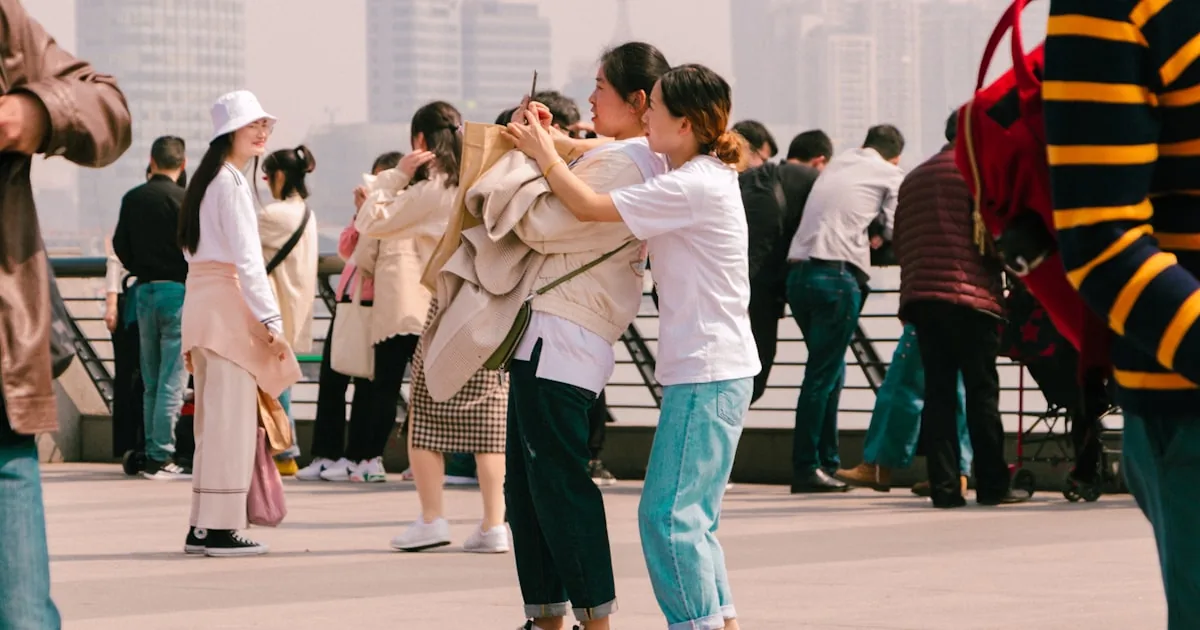
China's violent crime rate against foreign visitors is very low - consistently lower than the United States, the United Kingdom, or most of Western Europe. Major cities run thousands of visible CCTV cameras, subway entries require bag scans, and plain-clothes police ride late-night metro lines. I have walked home past midnight in Beijing, Shanghai, Chengdu, Xi'an, Hangzhou, and Kunming alone and the worst thing I experienced was being asked to take a selfie.
What you will experience as a solo female traveler:
Staring, especially in second-tier and rural cities. Not hostile, just curious. Locals have not traveled internationally in the same numbers you have.
Photo requests, sometimes without asking. If you are uncomfortable, a firm "bu yao" (不要, "no, thanks") ends it immediately.
Hotel registration issues. Some budget hotels in rural areas are not licensed to accept foreign passports. This is the single most common friction point.
Tourist-zone scams. Same flavor as Paris or Rome. Tea ceremonies, art students, photogenic "foreign friends" in Wangfujing. Nothing violent - just walk away.
What you will basically not experience:
Street mugging. Extremely rare. I have never heard of a confirmed case among any solo female traveler I know in China.
Pickpocketing at the Paris level. It happens on overnight trains and in dense markets, but far less than in Rome, Barcelona, or Lisbon.
Catcalling. Almost nonexistent in Chinese cities.
Drink spiking. Very rare in China; the bigger risk is being pushed to drink too much by overfriendly locals or foreign men in Western-style bars.
Transport safety
Didi (the ride-hail app)
Didi (滴滴) is your default. It works inside Alipay and WeChat (look for the "出行" or "Didi" tile) as well as its own app. For solo women, three rules:
Use Didi, not street taxis, after dark in unfamiliar areas. Didi logs the driver, plate, route, and time. Street taxis in tourist zones are where tourist scams happen.
Check the license plate matches before getting in. If the plate does not match the app, cancel and rebook.
Share the trip through the app's "share my ride" button (行程分享) with someone who uses WeChat, or screenshot and send to a hostel friend.
The "SOS" button in the Didi app pushes your location to the nearest police station. I have never had to use it. I know two women who have - both said response was inside 4 minutes.
Official taxis
Yellow, green, or blue cars with a meter on the dashboard are government-regulated. Always insist "da biao" (打表, "run the meter"). If the driver refuses, get out. In Beijing, flag a 京B plate. In Shanghai, look for 沪 plates. In Chengdu, 川A. Meter rates are roughly ¥13-¥15 starting flag plus ¥2-¥3 per km.
The "black car" (黑车, hei che) problem - unlicensed drivers who hover outside train stations and tourist sites - is real in Chengdu, Xi'an, Zhangjiajie, and Guilin. They will quote a flat ¥200 for a ¥60 metered trip. Always walk past them and use the official taxi queue or Didi.
Subways and metros
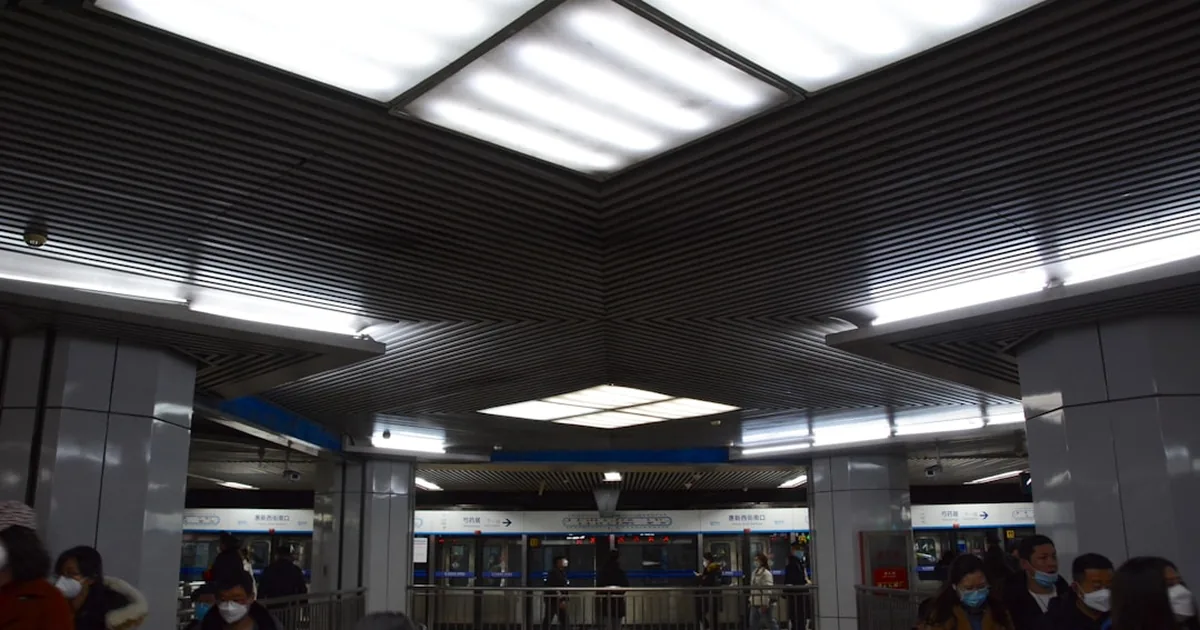
Every major Chinese city metro runs from roughly 05:30 or 06:00 to 22:30 or 23:30. Later on weekends. Bag scanners at every entry. CCTV every car. Station staff at every platform. Solo female riding is completely normal at all hours within service time.
Last-train times vary by city and line. Check Amap (高德地图) for the exact last-train on your line.
Women-only carriages exist on a few lines during rush hour (Shenzhen Metro Line 1 and 3, Guangzhou Metro Line 1) - look for pink signage. Not required, just available.
If you miss the last train, Didi works 24/7 in every major city.
Overnight trains
Overnight sleeper trains (卧铺) are safe for women and a huge bargain. Book a soft sleeper (软卧) if you want a 4-berth compartment with a door that locks from inside. Hard sleeper (硬卧) is an open-plan 6-berth with no door but constant staff presence. Both are safer than many European night trains in my experience.
Book the lower berth if you want to see out the window but know that the upper or middle berth is better for privacy.
Bring earplugs. Chinese train passengers are enthusiastic conversationalists.
Your passport is checked by the conductor on boarding and again at destination.
Hotels: the check-in reality
Not every Chinese hotel can legally accept foreign guests. Hotels need a special police registration setup to process foreign passports, and small family-run guesthouses often do not have it. This is the single biggest friction point for solo female travelers going off the beaten track.
What to do
Book through Trip.com, Booking.com, or Agoda. Hotels listed on these platforms almost always accept foreign passports. The in-app filter "foreign-friendly" or "accepts foreign passports" is reliable.
Avoid WeChat-only guesthouses in remote areas unless you have confirmed by phone that they accept foreign passports.
Chain hotels are the safest bet. Hanting (汉庭), Home Inn (如家), JI Hotel (全季), Atour (亚朵), and 7 Days (7天) all register foreigners without issue. Rates run ¥180-¥450 per night.
If you are refused at check-in, the hotel staff are not trying to discriminate. They literally cannot process your passport on their system. Ask them to call a nearby hotel that can.
Always bring your passport, not a photocopy. Every legal check-in requires scanning the original.
Hotel safety once inside
Any licensed Chinese hotel has a 24-hour front desk, CCTV on corridors, and an electronic door lock. In 6+ years of solo travel across China I have never experienced a hotel safety issue, and the few friends who have had creepy late-night door knocks got a full refund and police response within minutes of calling the desk.
Scams you will actually see
The tea ceremony scam
Wangfujing in Beijing, the Bund in Shanghai, and Chunxi Road in Chengdu. Young, well-dressed, friendly English-speaking "art students" approach and ask to practice English over tea. Tea costs ¥3000 at the end. Walk away immediately - even a 30-second conversation lets them escalate.
The art gallery scam
Similar setup, ends at an "exhibition" where you are pressured to buy a painting. Again: do not engage at all. Say "bu xing" (不行, "no") and walk.
The fake taxi at train stations
Unlicensed drivers at Beijing Railway Station, Xi'an North, Guilin train station. They quote a ridiculous fare, drive in circles, then demand cash. Use Didi or the official taxi queue only.
The "helpful" porter
At overnight train stations, men in fake uniforms grab your bag and demand ¥100 for carrying it ten meters. Keep your hand on your bag and a firm "bu yong" (不用, "not needed").
The QR-code donation scam
Outside temples, older women or monks push a red notebook with a QR code at you. Do not scan. Legitimate temple donations are made at designated donation boxes inside.
The common thread: no scam in China involves violence. Every one of them dissolves the moment you walk away.
Dress, harassment, and stares
Dress norms are relaxed in every major city. In Shanghai and Chengdu, women wear mini skirts, crop tops, and sleeveless tops freely. Beijing, Hangzhou, Shenzhen the same.
Second-tier cities and rural areas are slightly more conservative. Knee-length dresses and covered shoulders attract less attention. No one will stop you for showing more skin - you will just draw more stares.
Religious sites (temples, mosques, Tibetan monasteries) expect covered shoulders and knees. A light scarf does the job.
Xinjiang and parts of Gansu are more conservative. A long tunic and loose trousers is the most comfortable kit there.
Physical harassment (groping, unwanted touching) is genuinely rare. The one place to be aware is crowded subway cars in Guangzhou and Shenzhen at rush hour - push back firmly and loudly, the entire carriage will help you. The cultural norm is to back you up, not look away.
Night walking, bars, solo dining
Night walking in every major city is normal. Parks are full of line-dancing aunties until 22:00. Street food night markets (Muslim Quarter in Xi'an, Kuanzhai Alley in Chengdu) are packed until midnight. Solo women are everywhere.
Solo dining is not weird. Hot pot chains (Haidilao, 海底捞) are set up for solo diners with dedicated single-seat counters and free snacks.
Bars in Sanlitun (Beijing), Xintiandi (Shanghai), and Lan Kwai Fong (Hong Kong) range from chill wine bars to very loud clubs. Standard international-city caution applies: do not leave your drink unattended, stick with women you know, take Didi home.
Packing list for solo female travelers in China
Passport + two photocopies in separate bags
Physical debit card (Visa or Mastercard) for the rare moments Alipay Tour Pass fails
A cross-body bag with a zipped main pocket - pickpockets target backpack side pockets
Lightweight scarf for temples and cooler evenings
Portable battery pack - ticket apps, maps, Didi, payment QR codes all drain your phone
Tampons and pads - bring your own for the first week. Pads are easy to find at any 7-Eleven or Watsons, but tampons (especially without applicator) are harder to find outside Shanghai and Beijing. Watsons in any first-tier mall carries OB and Tampax.
Ibuprofen and loperamide (Imodium) - the painkiller you are used to from home, and the anti-diarrhea pill for inevitable food adventures
Personal door alarm (optional, very cheap insurance if you are a budget traveler and use hostels)
Power adapter with USB-C - China uses the same Type A (flat two-prong) and Type I (angled three-prong) as Australia, no adapter needed from the US
Essential apps and numbers
Alipay (支付宝) - Tour Pass mini-program inside Alipay lets you link an international card. This is your primary payment method.
WeChat (微信) - for chat, mini-programs, and backup payment
Didi (滴滴出行) - ride hailing, works inside Alipay too
Amap (高德地图) - maps, real-time public transit, beats Google Maps in China by a wide margin
Trip.com - flights, trains, hotels, the only English-native travel app that accepts foreign cards
Pleco - offline Chinese-English dictionary with OCR, essential for menu reading
Emergency numbers to save before you land:
110 - police (general)
120 - ambulance
119 - fire
12301 - national tourism hotline (English available during Beijing business hours)
Your embassy's duty consular number - write it down on paper in your wallet
Frequently Asked Questions
Is it safe to walk alone at night in Beijing or Shanghai?
Yes. Both cities have very low violent crime rates against foreigners and heavily surveilled public areas. Solo women walking at 22:00 or 23:00 is completely normal. Use standard urban common sense - stick to main streets, stay off your phone at intersections, and take a Didi if you feel tired or unsure.
Can I book a hotel without a Chinese phone number?
Yes. Trip.com, Booking.com, and Agoda all accept an international phone number and email address. Chinese hotel platforms like Meituan and Ctrip's Chinese app may not - use the international versions.
What should I do if a hotel refuses my passport at check-in?
Stay calm - it is not personal discrimination. Show them the Trip.com booking on your phone. If they still cannot process it, call Trip.com customer service (24/7 English line, listed in your booking confirmation) and they will rebook you at a nearby foreign-friendly property at no charge. Hanting, JI Hotel, and Atour chains are always safe.
Do I need a VPN?
To access Google, Instagram, WhatsApp, Facebook, and most Western news sites, yes. Download Astrill, ExpressVPN, or Let's VPN onto your phone before arriving in China - these apps cannot be downloaded from the Chinese App Store once you land. A travel eSIM from Airalo, Nomad, or Holafly also routes through non-Chinese servers and bypasses the firewall without a separate VPN app.
Will I be harassed for being a solo foreign woman?
No - at least, not in the way Western headlines suggest. You will get stares, photo requests, and the occasional "where are you from" from curious locals. Unwanted touching, catcalling, and street harassment are very rare. If anything happens on a subway or in a bar, yell "zou kai" (走开, "go away") loudly; locals around you will intervene.
Is it safe to go to Xinjiang or Tibet as a solo woman?
Xinjiang is safe but logistically complex: expect multiple police checkpoints, more conservative dress expectations, and occasional restrictions on specific areas. Tibet requires a Tibet Travel Permit and a guided tour by law - solo independent travel is not allowed, but small-group tours are safe and very common. Both regions are fine for women as long as you follow the rules.
Related: how safe China is for tourists · surviving China's public restrooms · what to do if you get sick in China
Tags
Heading to China soon?
Take every guide offline — translation, payments, maps, and emergency help in one free app.
Travelers also asked
View all →- What should a solo older woman prepare for a long China trip?
- How difficult is independent travel in China regarding transport and payments, and are local guides necessary?
- For a first solo female China trip in September, what route and preparation make sense?
- Is China worth visiting despite negative media portrayals?