Hangzhou Grand Canal Water Bus: A ¥3 History and Museum Day
On this page14 sections
- 01The day at a glance
- 02Step 1: verify that the boat is running
- 03Which line and dock?
- 04What the ride is like
- 05Gongchen Bridge
- 06Qiaoxi Historic District and museums
- 07Xiaohe Park
- 08Xiaohe and Dadou Road historic neighborhoods
- 09Why this is not a West Lake replacement
- 10Weather, water levels and seasonal risk
- 11Payment and phone setup
- 12A realistic schedule
- 13Frequently asked questions
- 14Sources
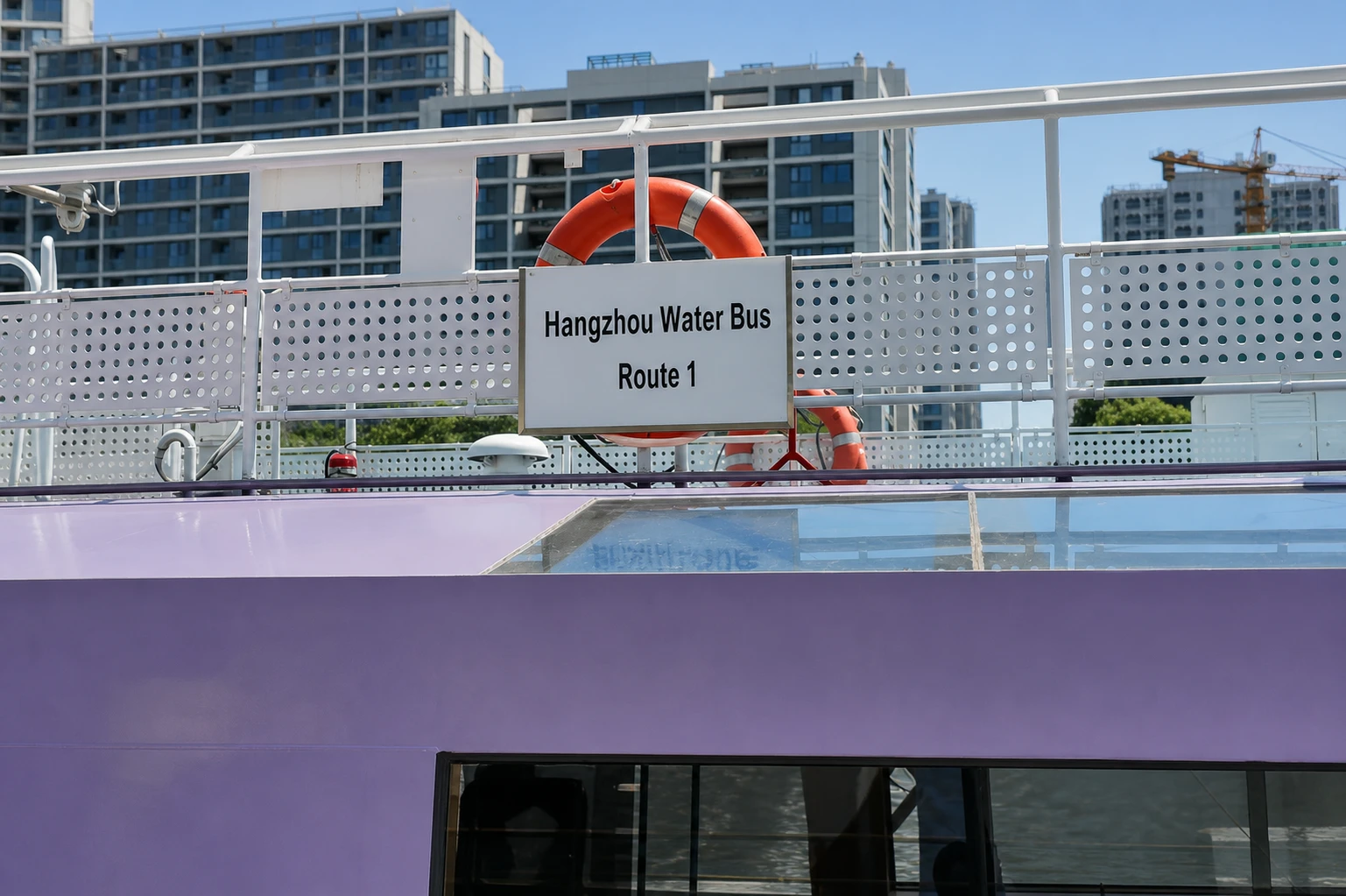
Hangzhou's public water bus can turn the Grand Canal into the organizing line for a full day. Take the current Line 1 service toward Gongchen Bridge, then explore Qiaoxi Historic District, canal-related museums, Xiaohe Park and the Xiaohe or Dadou Road neighborhoods on foot. Current 2026 local transport information lists the basic water-bus fare at ¥3, but routes and operations can change with water levels, weather and service notices.
This is public transport, not a sightseeing cruise. The low fare is part of the appeal, but it also means limited capacity, ordinary commuter stops and no guaranteed commentary or panoramic seat.
The day at a glance
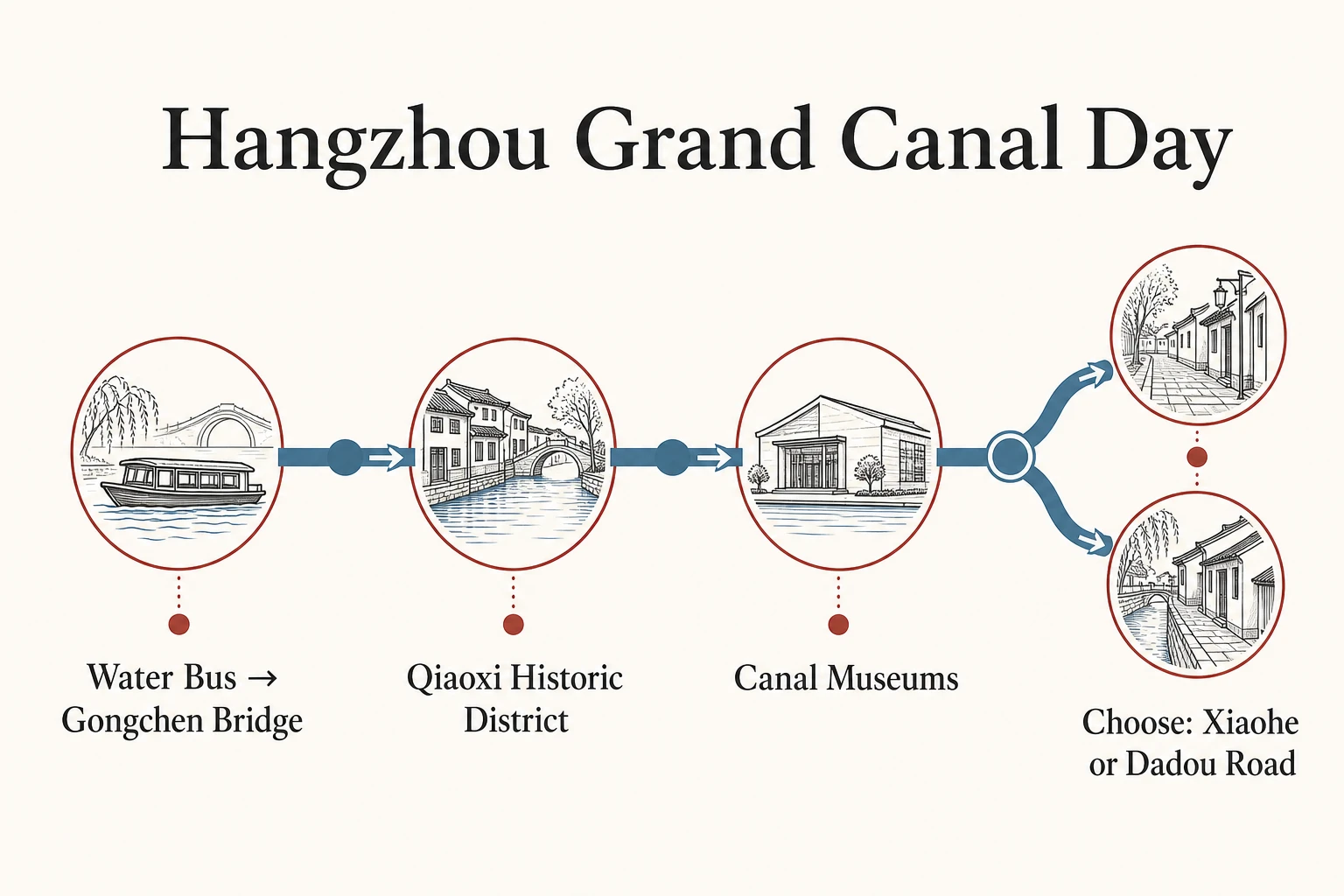
Morning: board a current Grand Canal water-bus service toward Gongchen Bridge Midday: Gongchen Bridge and Qiaoxi Historic District Afternoon: museums, Xiaohe Park and one historic neighborhood Optional finish: Xiangji Temple/Dadou Road area Time: six to eight hours with museums Best for: transport, industrial history, urban design and a break from West Lake crowds
A 2026 XHS post about the ¥3 water bus received roughly 3,900 likes and 5,500 saves. Its route idea is strong. The exact sailing time is not copied because water-bus suspensions and adjustments occur, including weather- and water-level-related notices.
Step 1: verify that the boat is running
Check the operator's current official WeChat notice, dock display or service hotline on the morning of travel. A map app can show a route without knowing that navigation has been suspended for water conditions.
Confirm:
the line is operating;
the boarding dock and direction;
the current fare and payment methods;
the next departure and practical capacity;
the last service relevant to your plan.
Current 2026 local guidance lists cash, transit card, Alipay and contactless UnionPay among payment methods, with a service hotline of `0571-88024618`. Treat those as checkable current information, not a guarantee for every dock or future date.
If service is suspended, keep the same canal itinerary and travel by metro, bus or DiDi to Gongchen Bridge. The day should not collapse because one transport segment is unavailable.
Which line and dock?
Line 1 is the classic Grand Canal service associated with Wulinmen and Gongchen Bridge. Stops and dock usage can be adjusted, so search the Chinese names in AMap and follow the current operator notice rather than an old English blog diagram.
Some social routes start from Pujia or another dock because it suits the writer's location or a particular service pattern. That does not make it the universal best start. Choose the operating dock that creates a direct trip toward Gongchen Bridge from your hotel.
Arrive early enough to find the boarding point. A “water bus” pin may refer to a ticket office, dock entrance or nearby road rather than the exact queue.
What the ride is like
The value is the change in perspective. From water level, bridges, warehouses, residential blocks and new public landscapes form a continuous corridor. It is a moving introduction to why the Grand Canal shaped Hangzhou beyond the West Lake image.
Do not expect an English guide, reserved seat or luggage storage. Keep bags compact, let passengers exit before boarding and avoid blocking the window for the entire ride. If the boat is full, wait for the next confirmed departure or use land transport.
The ride itself is only the first chapter. The most useful heritage stops are reached on foot after Gongchen Bridge.
Gongchen Bridge
Gongchen Bridge is the visual and geographic anchor of the northern canal area. Cross it slowly and look both along the waterway and into the surrounding street network. The bridge can be busy, so photographs should not block pedestrian flow.
The name is useful to save in Chinese: `拱宸桥`. Confirm which side gives easiest access to Qiaoxi Historic District and the museums you have selected.
Do not treat the bridge as a five-minute photo stop. It connects the canal, historic commercial district and modern public space that make the day coherent.
Qiaoxi Historic District and museums
Qiaoxi preserves and reuses canal-side buildings west of the bridge. Several museums in the wider area deal with the Grand Canal and traditional crafts. Current opening days, reservations and exhibition access vary.
Choose at most two museums. A practical combination is:
one museum about the Grand Canal's history and infrastructure;
one craft-focused museum based on your interest, such as knives/scissors/swords, umbrellas or fans.
Do not attempt every museum simply because admission is free or inexpensive. Two focused visits leave time to read the neighborhood and waterway.
Eat nearby before the afternoon walk. Museum cafés and visitor streets may be convenient, but walk one or two blocks away if the main lane is crowded.
Xiaohe Park
Xiaohe Park is a contemporary reuse landscape associated with former industrial space. It makes a useful contrast with the historic bridge and museums: the canal is not frozen in one dynasty, and its industrial land continues to acquire new public uses.
The park is best for a rest, architecture photography and a slower river edge. It is not a major indoor attraction. In summer heat or heavy rain, shorten this section and protect museum time.
Use a current walking route from Qiaoxi. Construction and riverside access can change, and the visually closest bank is not always the connected one.
Xiaohe and Dadou Road historic neighborhoods
Choose one neighborhood after the park.
Xiaohe Historic District
Choose Xiaohe for smaller lanes, canal-side houses and a quieter walking finish. Cafés and shops are part of the current district, but private homes remain. Ask before photographing residents closely.
Dadou Road and Xiangji Temple
Choose Dadou Road if you want to continue south toward Xiangji Temple and a more linear finish. Check current temple access and closing time before arriving. Temple etiquette applies even when the surrounding street is commercial.
Trying to do Xiaohe, Dadou Road and every museum creates backtracking. Pick the branch that best matches your hotel and evening plan.
Why this is not a West Lake replacement
West Lake and the Grand Canal tell different stories. West Lake is a designed cultural landscape with famous views and causeways; the canal is transport infrastructure, working neighborhoods, industry and adaptive reuse. A first Hangzhou trip benefits from one day in each if time allows.
If you have only one day and have never seen West Lake, choose based on interest rather than social-media novelty. The water-bus day is strongest for travelers who value urban history and public transport.
Weather, water levels and seasonal risk
Water-bus operation can be suspended or adjusted because of heavy rain, high water, low water, fog or other navigation conditions. Hangzhou published such temporary suspension notices in 2025, so this is an operational reality rather than generic caution.
Have a land-transport backup:
travel to Gongchen Bridge by metro/bus/DiDi;
keep the Qiaoxi and museum plan;
walk toward Xiaohe or Dadou Road;
remove the boat from the title of your day, not the entire itinerary.
Payment and phone setup
Carry several small RMB notes in case cash is accepted but change is limited. Also keep a working Alipay/UnionPay option. A foreign physical credit card is not a useful expectation at a small dock.
Save the dock, bridge and hotel in Chinese. Our best map apps for China guide explains AMap Global and Apple Maps, while the DiDi guide covers a foreign-number setup for the backup ride.
A realistic schedule
08:30: check official service status.
09:30: reach the confirmed dock and queue.
Late morning: arrive around Gongchen Bridge.
11:00–12:00: bridge and Qiaoxi streets.
12:00–13:00: lunch.
13:00–15:00: one or two museums.
15:00–16:00: Xiaohe Park.
16:00–18:00: Xiaohe or Dadou Road/Xiangji Temple.
Actual boat timing determines the morning. Do not attach a timed museum reservation to an unrealistically tight transfer.
Frequently asked questions
Is the Hangzhou water bus really ¥3?
Current 2026 local transport information lists a ¥3 fare. Confirm the amount and payment method with the operator for your date and line.
Is it the same as a Grand Canal cruise?
No. The public water bus is transport with limited capacity and no guaranteed sightseeing service. Tourist cruises are separate products.
Can I take luggage?
Use compact day bags. Public water buses are not designed as hotel-transfer boats with large-luggage storage.
What if tickets sell out?
Capacity can fill. Wait for another confirmed service or use land transport to Gongchen Bridge; do not buy an unverified resale ticket.
Sources
Hangzhou current water-bus routes, fare and payment reference, updated 2026.
Hangzhou water-bus Line 1 and Grand Canal route reference, checked 2026-07-16.
Hangzhou water-bus weather/water-level suspension example, published 2025-06-13.
XHS route inspiration, note 6a157e630000000037036f57, published 2026-05-26; engagement collected 2026-07-16.