China Itinerary 2 Weeks: Day-by-Day Route That Actually Works
On this page11 sections
- 01What This Guide Covers
- 02The Route at a Glance
- 03Day 1-4: Beijing (Forbidden City, Great Wall, Hutongs)
- 04Day 5-6: Xi'an (Terracotta Army, City Wall, Muslim Quarter)
- 05Day 7-8: Chengdu (Pandas, Hotpot, People's Park)
- 06Day 9-10: Guilin and Yangshuo (Li River, Karst Peaks)
- 07Day 11-14: Shanghai (The Bund, French Concession, Recovery)
- 08Budget Breakdown (Per Person, 14 Days)
- 09Visa Setup: 240-Hour Transit or Regular L Visa
- 10Payments and Apps You Need Before Landing
- 11FAQ
Two weeks is the sweet spot for a first China trip. Long enough to see the Great Wall without sprinting, short enough that your employer will actually approve the vacation. The route below is what I give friends when they ask, and it has survived every rewrite since I first ran it in 2018. Prices are updated for 2026 based on bookings made through 12306 and Trip.com in the last quarter.
This is not a "see 12 cities in 14 days" itinerary. Those exist, and they ruin people. This one gives you time to eat a second bowl of dandan noodles in Chengdu, watch the morning mist lift off the Li River, and actually sit down on the Bund for an hour.
What This Guide Covers
Exact 14-day route with overnight counts per city
High-speed rail and flight options between cities with 2026 yuan prices
Hotel bands (budget / mid / luxury) with real brand examples
Must-see sights per city with ticket fees and booking notes
Daily food and transport budget at three spend levels
Visa logic for the 240-hour transit waiver vs. regular L visa
Packing and payment setup you need before landing
Heading to China soon?
Take every guide offline — translation, payments, maps, and emergency help in one free app.
The Route at a Glance
Five cities, four transport legs, one buffer day in Shanghai before you fly home. The route flows west to east and then south, which matches the weather arc in spring and fall (the two best seasons).
Leg | Days | Overnight | Getting There |
|---|---|---|---|
Beijing | 1-4 | 4 nights | Arrive by international flight |
Xi'an | 5-6 | 2 nights | G-train Beijing West → Xi'an North, ~4.5h, ¥515 2nd class |
Chengdu | 7-8 | 2 nights | G-train Xi'an North → Chengdu East, ~3h, ¥263 2nd class |
Guilin / Yangshuo | 9-10 | 2 nights | Flight CTU → KWL ~2h ¥400-800, or sleeper train ~22h ¥280 |
Shanghai | 11-14 | 4 nights | Flight KWL → SHA ~2.5h ¥600-1000, or D-train ~11h ¥400 |
Departure | 14 | — | Fly out from PVG or SHA |
If your international ticket is round-trip from Shanghai, fly PEK → PVG inbound and finish at PVG outbound. If it's Beijing round-trip, flip the direction and start in Shanghai. The content below assumes Beijing-in, Shanghai-out.
Day 1-4: Beijing (Forbidden City, Great Wall, Hutongs)
Four nights in Beijing is not a luxury, it's the minimum. The city eats time. You lose half a day just crossing from the airport to your hotel, and another half day to jet lag.
Day 1: Arrival and Wudaoying Hutong
Land at Beijing Capital (PEK) or Daxing (PKX). Capital Airport Express runs to Dongzhimen for ¥25 in ~20 minutes, then transfer to subway Line 2. From Daxing, take the subway airport line to Caoqiao for ¥35. Taxis run ¥120-180 depending on traffic and terminal.
Check into your hotel near Dongcheng or Qianmen so you can walk to the main sights. Spend the rest of the day in Wudaoying Hutong or Nanluoguxiang, both walkable alley networks. Eat early at Xiao Diao Li Tang or any hutong noodle shop for ¥30-50. Sleep early, the Great Wall comes tomorrow.
Day 2: Great Wall (Mutianyu or Jinshanling)
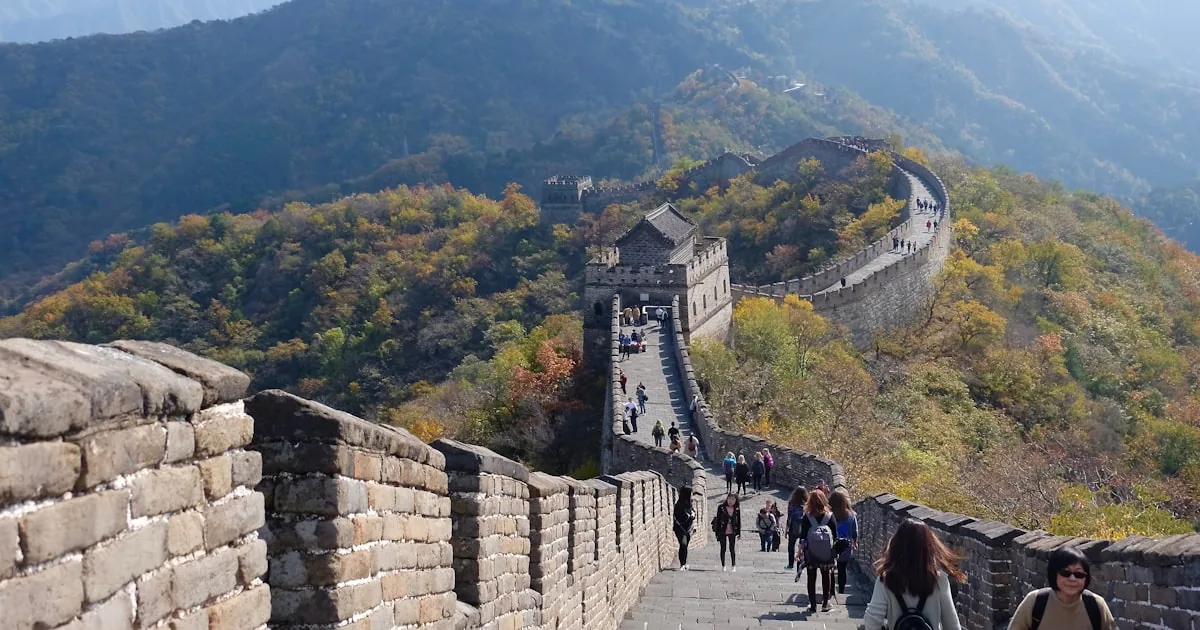
Mutianyu is the realistic choice. It's restored, has a cable car up and a toboggan down, and reaches for around ¥400-500 per person for a private driver round-trip plus ¥40 entry, ¥120 cable car combo. Budget travelers use the 916 Express bus from Dongzhimen to Huairou (¥12) then a local shuttle. Total out-of-pocket can drop to ¥150 including tickets, but you lose 2-3 hours in transit.
Jinshanling is wilder, less restored, and you get an unrestored hike with almost no other tourists. It's 2.5h each way by private car (¥700-900 round trip). Worth it if you've already done Mutianyu or want photos with zero crowds.
Back in Beijing by 6pm. Dinner: Peking duck at Siji Minfu (¥200-300 per person) or the cheaper Quanjude branch.
Day 3: Forbidden City and Jingshan Park
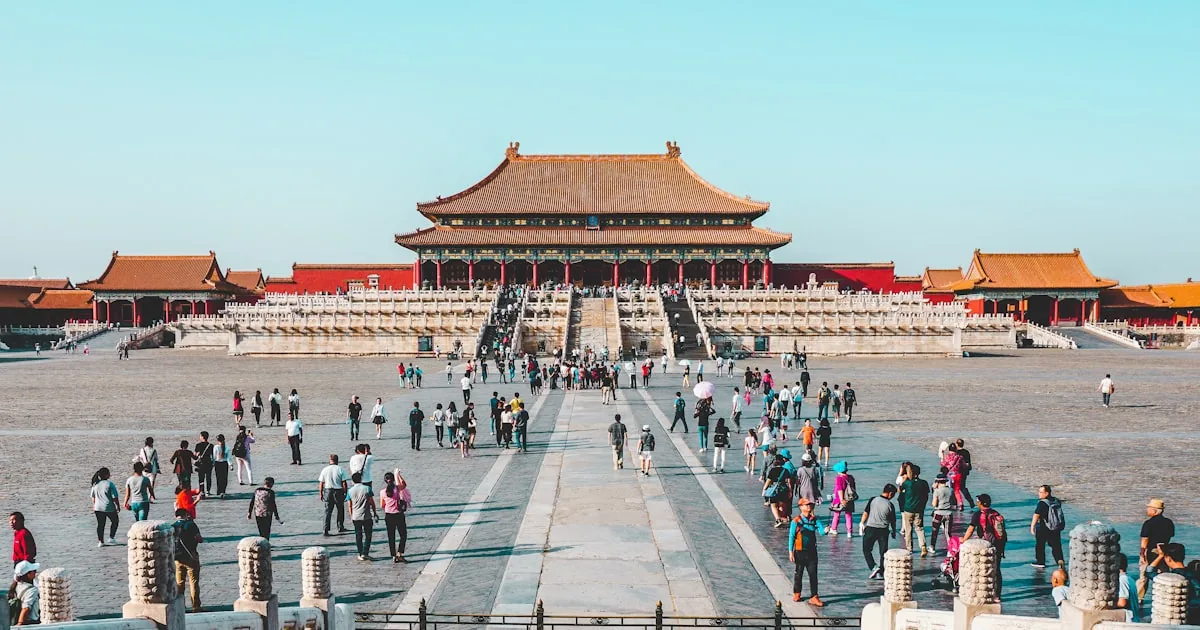
Book Forbidden City tickets on the official mini-program (故宫博物院) at least 3 days in advance. Entry is ¥60. Enter from Tiananmen South and exit from the North Gate. Plan 3-4 hours inside. Cross the street to Jingshan Park (¥10) and climb the central hill for the only good photo angle of the Forbidden City rooftops.
Lunch inside is overpriced and mediocre. Eat before you go in, or hold out until Jingshan. Afternoon: walk the Shichahai lake area and Drum Tower district. Dinner at Haidilao hot pot or a jianbing street stall.
Day 4: Temple of Heaven and Summer Palace
Temple of Heaven (¥35) opens at 6:30am. If you can drag yourself out early, the morning park is full of locals doing tai chi, playing diabolo, and ballroom dancing. It's the most alive sight in Beijing. Then subway out to the Summer Palace (¥30) for the afternoon. Total walking: 8-12km. Rest your feet before the train to Xi'an tomorrow.
Day 5-6: Xi'an (Terracotta Army, City Wall, Muslim Quarter)
Day 5: HSR to Xi'an, Muslim Quarter
G-train from Beijing West (北京西) to Xi'an North (西安北) runs ~4.5 hours at ¥515 2nd class or ¥824 1st class. Book on 12306 app 7-14 days ahead. From Xi'an North, take subway Line 2 to Zhonglou (Bell Tower) for ¥6, your hotel should be within walking distance.
Drop bags and head to Muslim Quarter (Huimin Jie, 回民街). This is the single best street food zone in China. Try yang rou pao mo (bread soup, ¥35), rou jia mo (meat sandwich, ¥12), biang biang noodles (¥25), and persimmon cakes (¥5). Come hungry, eat in small portions across multiple stalls.
Day 6: Terracotta Warriors and City Wall
Terracotta Army is 1.5h outside the city. Bus 915 or 游5 from Xi'an Railway Station (¥7) drops you at the site. Entry ¥120. Plan 3-4 hours. Hire a licensed guide at the entrance for ¥150-200, the site makes zero sense without explanation.
Back in Xi'an by 3pm. Rent a bike and ride the top of the City Wall (¥54 entry, ¥45 bike rental for 2 hours). The 14km loop takes about 90 minutes at an easy pace. Sunset from the south gate is the photo everyone comes for. Dinner back in Muslim Quarter or at Lao Sun Jia for a formal pao mo experience.
Day 7-8: Chengdu (Pandas, Hotpot, People's Park)
Day 7: HSR to Chengdu, People's Park
G-train Xi'an North → Chengdu East (成都东) runs ~3 hours through the Qinling tunnels at ¥263 2nd class. Chengdu East is on subway Line 2, ¥4 to the center.
Afternoon: People's Park (free). Find the Heming Teahouse, order a bamboo-leaf tea for ¥20, get your ears cleaned by a wandering ear cleaner for ¥60, and watch the mahjong tables. This is Chengdu's default rhythm. Dinner: hotpot at Shu Da Xia or Xiao Long Kan, ¥120-180 per person for mid-range.
Day 8: Panda Base and Jinli Street
Chengdu Research Base of Giant Panda Breeding opens at 7:30am. Get there by 8am to catch feeding time when pandas are active. Entry ¥55, taxi from downtown ~¥60. Plan 2.5 hours. They sleep by 11am.
Afternoon: Wuhou Shrine (¥50) and Jinli Ancient Street (free), a touristy but walkable Qing-dynasty-style lane with good snacks. Try three-cannon rice cakes (san da pao, ¥15), spicy rabbit head (¥25, yes really), and sweet tangyuan. Evening: Shufeng Yayun Sichuan opera show with face-changing act (¥200-400). Skip if you're tired, the face-changing is the only part that matters and clips are all over YouTube.
Day 9-10: Guilin and Yangshuo (Li River, Karst Peaks)
Day 9: Fly or Train, Head Straight to Yangshuo
Fastest option: flight from Chengdu Shuangliu (CTU) or Tianfu (TFU) to Guilin Liangjiang (KWL), ~2 hours, ¥400-800 booked 2+ weeks out. Budget option: overnight sleeper train K2605 Chengdu → Guilin, ~22 hours, ¥280 hard sleeper. The train saves a hotel night but kills a full day.
From Guilin airport, take the shuttle bus (¥30) to Guilin city, then direct bus to Yangshuo (¥50, 80 minutes). Or book a private car straight to Yangshuo for ¥350. Check into a hotel on West Street (Xi Jie) or along the riverfront at Xing Ping for a quieter base.
Afternoon: rent an e-bike (¥50/day) and ride through Yulong River valley. Free, flat, and has the karst-peak rice paddy views the whole region is famous for.
Day 10: Li River Cruise and Ten Mile Gallery
Classic Li River boat cruise runs Guilin → Yangshuo. The scenic stretch is actually the Xingping → Yangshuo section (the one on the old ¥20 note). If you're already in Yangshuo, take a bamboo raft from Yangdi to Xingping (¥180-240 per person, 90 minutes). Avoid the full Guilin-Yangshuo boat cruise if you're short on time, it's 4+ hours and the first half is underwhelming.
Afternoon: hike or bike Moon Hill (¥15) for a 30-minute climb to the arch viewpoint. Dinner on West Street, try beer fish (啤酒鱼, ¥80-120).
Day 11-14: Shanghai (The Bund, French Concession, Recovery)
Day 11: Fly or HSR to Shanghai
Flight KWL → SHA (Hongqiao) or PVG (Pudong) runs 2.5 hours at ¥600-1000. D-train Guilin North → Shanghai Hongqiao takes ~11 hours at ¥400-450, overnight not recommended.
Check into a hotel in Jing'an or the former French Concession for walkability. Spend the afternoon walking Xintiandi (¥0) and the surrounding plane-tree streets (Shaoxing Lu, Wukang Lu, Anfu Lu). Dinner at Jia Jia Tang Bao for soup dumplings (¥40-60) or Fu 1088 for fancy Shanghainese (¥500+).
Day 12: The Bund and Yu Garden
Morning: Yu Garden (¥40) and the surrounding Old City. Entry fee is real, skip the tours and walk it yourself in 90 minutes. Lunch at Nanxiang Mantou Dian for xiaolongbao, expect a queue.
Afternoon: walk Nanjing Road East to The Bund. This is touristy but unavoidable. Cross the Huangpu River by ferry (¥2) or metro to Lujiazui for the Pudong skyline view. Shanghai Tower observation deck is ¥220, the view from the Bund side at sunset is better and free.
Day 13: Former French Concession, M50 or Power Station of Art
Slow day. Coffee at Seesaw or Manner (¥25-40), lunch at a small bistro on Xiangyang Road, afternoon at M50 art district (free) or Power Station of Art (free), evening drink at a speakeasy on Julu Road. This is the "why I'll come back to China" day. Do not over-schedule.
Day 14: Fly Out
Pudong Airport is 45km from downtown. Maglev from Longyang Road takes 8 minutes to PVG for ¥50, but you need a taxi or metro to Longyang first. Metro Line 2 direct to PVG takes ~70 minutes for ¥8. Taxi from central Shanghai runs ¥180-250 depending on traffic. Budget 3.5 hours door-to-gate for international departures.
Budget Breakdown (Per Person, 14 Days)
Three bands, everything in CNY. International flights and visa not included.
Category | Budget | Mid-range | Comfort |
|---|---|---|---|
Hotels (14 nights) | ¥4,200 (¥300/night hostel or 3-star) | ¥8,400 (¥600/night 4-star) | ¥21,000 (¥1,500/night international brand) |
Trains + 2 flights | ¥2,800 | ¥3,500 (1st class + flex tickets) | ¥5,500 (1st class + business flights) |
Food | ¥3,500 (¥250/day) | ¥6,300 (¥450/day) | ¥11,200 (¥800/day) |
Sights + guides | ¥1,500 | ¥2,400 | ¥4,000 |
Local transport | ¥500 | ¥800 | ¥1,500 |
Total | ¥12,500 (~$1,720) | ¥21,400 (~$2,940) | ¥43,200 (~$5,950) |
Exchange rate used: ¥7.25 per USD, 2026 Q1 average.
Visa Setup: 240-Hour Transit or Regular L Visa
Check visa requirements before booking. As of 2026, travelers from 55 countries qualify for the 240-hour (10-day) visa-free transit, as long as:
You enter from one of 65 approved ports (Beijing PEK, Shanghai PVG/SHA, Chengdu CTU/TFU, Xi'an XIY, Guilin KWL all qualify)
You hold an onward ticket to a third country (not your origin)
You stay within the permitted administrative regions
The 10-day window fits a 14-day itinerary tightly, so most travelers apply for a regular L tourist visa (single entry ¥140-¥1,100 depending on nationality, 10-year multi-entry available for US citizens at ¥1,100). Apply 6-8 weeks before departure. See our China visa cost guide for the full US citizen breakdown.
Payments and Apps You Need Before Landing
Alipay (支付宝): install, verify with passport, link international card. Used for 90% of transactions.
WeChat (微信): same setup, needed for mini-programs and QR menus.
Trip.com: English-friendly booking for trains and hotels.
12306: official China rail app, cheapest train tickets.
Didi (滴滴): ride-hailing, works through Alipay mini-program too.
Amap (高德) or Baidu Maps: Google Maps does not work reliably inside China without a VPN.
Meituan: food delivery and shared bikes, accessible through Alipay mini-program.
FAQ
Is 2 weeks enough for China?
Enough for a great first trip covering the north-south cultural arc, yes. Not enough for Tibet, Xinjiang, or deep Yunnan. If you can extend to 21 days, add a 3-day detour to Zhangjiajie or Huangshan between Chengdu and Guilin.
What's the best time of year for this 14-day route?
Mid-April to mid-May and mid-September to late October. Shoulder seasons give you dry weather in Beijing, mild days in Xi'an, and the Li River without the summer haze. Avoid July-August (too hot, too crowded) and Chinese New Year (everything closes).
Can I do this itinerary with a 240-hour transit visa?
Yes, but you must exit within 10 days, and your onward flight must go to a third country (not home). You'll also need to clear transit registration at each stop outside your entry city. Most travelers find the regular L visa simpler for a full 14-day plan.
How much does the whole trip cost including international flights?
From the US East Coast, round-trip economy runs $900-1,400 in shoulder season. Add the mid-range in-country budget of ¥21,400 (~$2,940) and you're looking at $3,800-4,400 total per person. Budget travelers doing hostels and 2nd class rail can land near $2,600 all-in.
Is the Chengdu to Guilin sleeper train worth it?
Only if you genuinely enjoy trains. It saves ¥300-500 versus flying, and one hotel night, but you give up a full day. The 2.5-hour flight is the pragmatic choice for a 14-day trip. Book through Trip.com or the airline app 14+ days out for the best prices.
Related: a slower 30-day rural China route · a China survival guide for tourists · first-timer China travel tips · picking a China tour company
Tags
Heading to China soon?
Take every guide offline — translation, payments, maps, and emergency help in one free app.
Travelers also asked
View all →- Is the proposed itinerary duration suitable for a first trip, and are there specific stopover recommendations?
- How should I allocate 14 nights between Beijing, Guilin, Shanghai, and Hong Kong for a first trip to China?
- What is the recommended strategy for booking domestic flights and optimizing a long-term China itinerary?
- Is China worth visiting despite negative media portrayals?