Best Local Food in China for Tourists: Regional Dishes, Prices & How to Order
On this page13 sections
- 01What this guide covers
- 02Why regional Chinese food is nothing like Chinese food back home
- 03Sichuan: numbing spice and the ma la fever dream
- 04Cantonese: the dim sum and roast meat capital
- 05Shanghai and Jiangnan: sweet, soy-rich, dumpling-obsessed
- 06Beijing and the north: duck, noodles, street breakfast
- 07Xinjiang: the Silk Road cuisine most tourists miss
- 08Yunnan, Dongbei, and the regions worth a detour
- 09Real 2026 prices: what your food budget actually buys
- 10How to order food when you don't speak Mandarin
- 11Dietary restrictions: the honest reality
- 12Food safety: what I actually do after 15 years in China
- 13FAQ
Most first-timers land in Beijing expecting the Chinese food they grew up with back home. Orange chicken, fortune cookies, beef and broccoli. None of that exists here. What exists is better, cheaper, and wildly more regional than a single menu can capture. A bowl of hand-pulled laghman in Urumqi has nothing in common with a plate of dim sum in Guangzhou, and neither resembles the cumin lamb skewers you'll grab from a street cart in Xi'an at 11pm.
The good news: eating well in China is almost impossibly cheap if you know where to look. ¥15 gets you a bowl of noodles that will ruin chain restaurants for you forever. ¥80 gets you a full sit-down meal for two with meat, vegetables, rice, and a beer. The bad news: most menus are Chinese-only, servers rarely speak English outside luxury hotels, and the three tourist food courts you'll see in every major city charge triple and serve the worst version of everything.
This guide is the cheat sheet I wish someone had handed me on my first trip. Real dishes, real 2026 prices, and a pointing strategy that works even if you can't say "hello."
What this guide covers
Region-by-region breakdown of seven major Chinese cuisines
15 must-try dishes with 2026 prices in yuan
Street stall vs sit-down restaurant price comparison
How to order without speaking Mandarin (picture menus, pointing, Pleco)
The three mistakes tourists make at every meal
Dietary restrictions: vegetarian, halal, gluten-free reality check
Food safety rules I actually follow after 15 years here
Heading to China soon?
Take every guide offline — translation, payments, maps, and emergency help in one free app.
Why regional Chinese food is nothing like Chinese food back home
The cuisine westerners call "Chinese food" is a 1950s American invention loosely descended from Cantonese immigrant cooking. Actual Chinese food splits into at least eight major regional schools, and those split further by city. A Sichuan restaurant in Chengdu serves almost nothing a Cantonese restaurant in Guangzhou would recognize. Spice levels, staple grains, cooking techniques, even how the chopsticks sit on the table change between regions.
For a two-week trip, that means your food game plan should follow geography. Eat Peking duck in Beijing, not in Chengdu. Eat mapo tofu in Chengdu, not in Shanghai. Eat xiao long bao in Shanghai, not in Xi'an. The dishes below are grouped by where they're best, and I'll tell you what ¥50 actually buys in each city.
The eight great cuisines (and the four you'll actually eat)
Traditional Chinese culinary tradition recognizes eight regional schools: Sichuan, Cantonese, Shandong, Jiangsu, Zhejiang, Fujian, Hunan, and Anhui. For most tourists on a first trip, you'll realistically encounter four: Sichuan (Chengdu), Cantonese (Guangzhou, Hong Kong), Jiangsu-Zhejiang hybrid (Shanghai, Hangzhou, Suzhou), and northern Mandarin-belt cooking (Beijing, Xi'an). Add Xinjiang and Yunnan if your itinerary stretches west, and Dongbei if you hit Harbin in winter.
Sichuan: numbing spice and the ma la fever dream
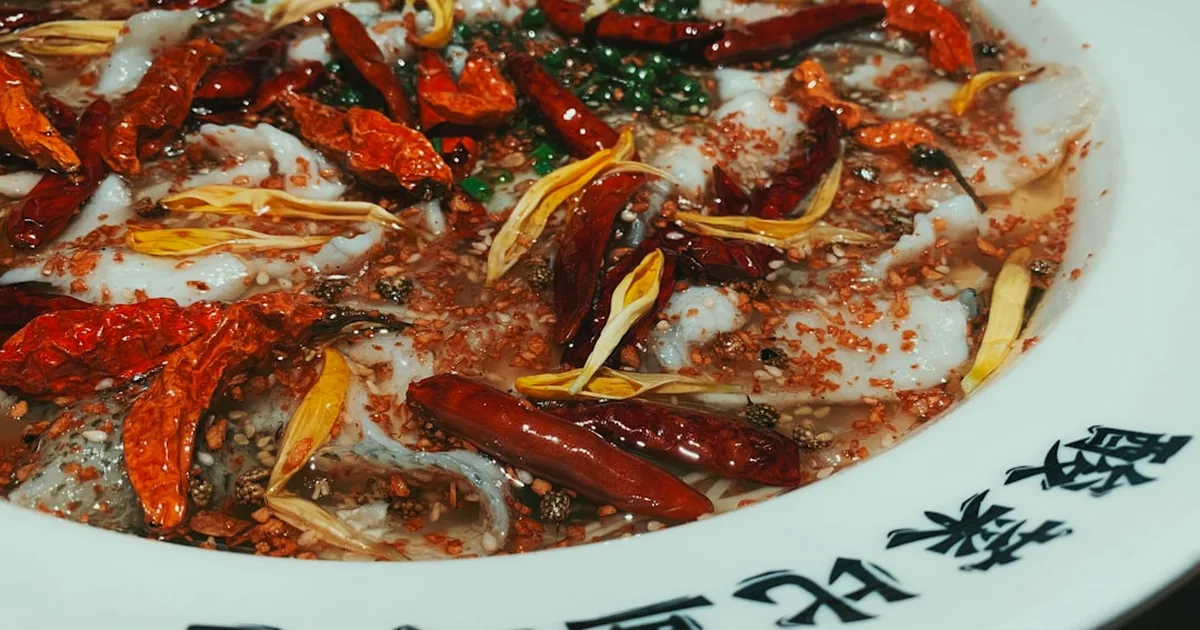
Sichuan cooking is built around two sensations: la (chili heat) and ma (the tingling numbness from Sichuan peppercorns). Together they're called ma la, and once your tongue adjusts, going back to regular spicy food feels like drinking water. Chengdu is the obvious base for this cuisine, but you'll find solid Sichuan restaurants in every major city.
Must-try Sichuan dishes
Mapo tofu (麻婆豆腐) — silken tofu in chili-bean sauce with fermented black beans and ground pork. ¥28 to ¥45 at a neighborhood restaurant, ¥80+ at upscale spots. Non-negotiable for your Chengdu trip.
Kung pao chicken (宫保鸡丁) — diced chicken, peanuts, dried chili, Sichuan pepper. ¥38 to ¥55. The real version is dry, not goopy.
Dan dan mian (担担面) — noodles in a sesame-chili-pork oil sauce you mix yourself. ¥15 to ¥22 at a noodle shop. Breakfast food in Chengdu.
Twice-cooked pork (回锅肉) — boiled then stir-fried pork belly with leeks and fermented bean paste. ¥45 to ¥65.
Chongqing hotpot (重庆火锅) — a cauldron of chili oil you cook your own meat and vegetables in. ¥120 to ¥180 per person including drinks. Go hungry.
Ordering tip for Chengdu
Picture menus are rare in authentic Sichuan joints. Point at the char-shaped ma la symbols on the menu (usually red chili icons) to gauge spice level. One chili is mild by Sichuan standards. Three chilies will hurt. Ask for "wei la" (slight spice) if you're not sure.
Cantonese: the dim sum and roast meat capital
Cantonese cuisine from Guangdong province is what most Chinese immigrants exported to the West, which is why it feels the most familiar to North American and European tourists. The original version is lighter, fresher, and built around seafood, delicate sauces, and the art of not overcooking anything.
Must-try Cantonese dishes
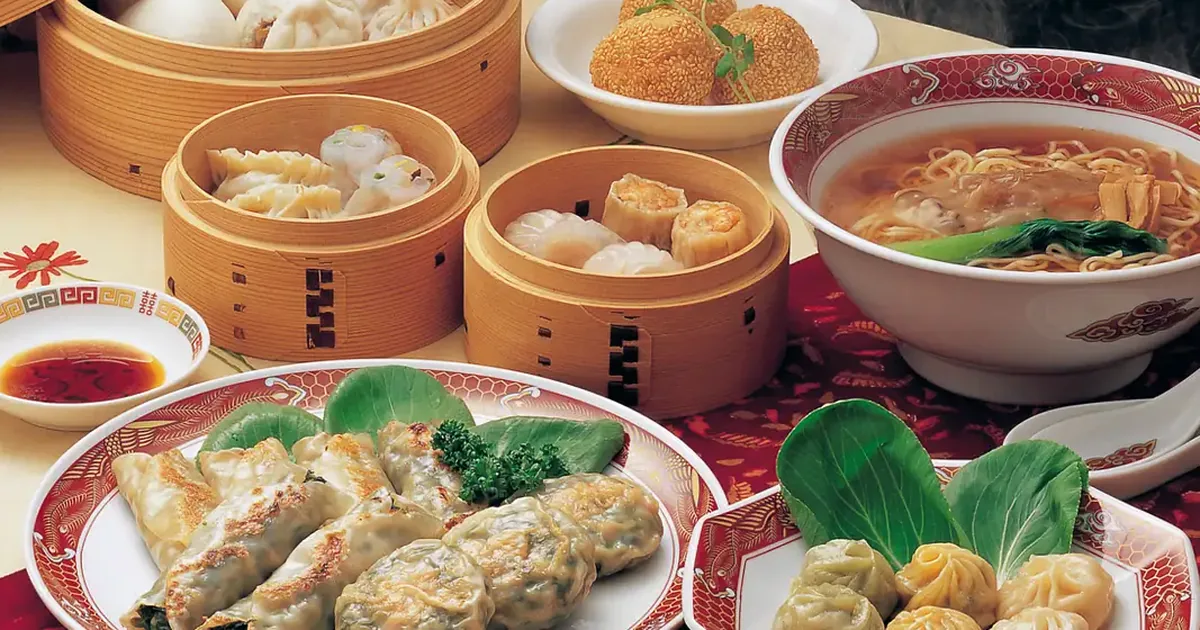
Dim sum (点心) — the small-plate cart meal you eat for breakfast or lunch. Order har gow (shrimp dumplings), siu mai (pork dumplings), char siu bao (barbecue pork buns), cheung fun (rice noodle rolls). ¥25 to ¥45 per plate, ¥80 to ¥150 per person for a full meal.
Char siu (叉烧) — sweet-glazed roast pork. ¥35 to ¥60 per portion. Order it over rice (char siu fan) at a roast meat shop.
Roast goose (烧鹅) — Hong Kong and Guangzhou specialty. ¥65 to ¥120 for a portion. Yung Kee in HK is the famous tourist version; local shops in Sham Shui Po are half the price.
Clay pot rice (煲仔饭) — rice cooked in a clay pot with Chinese sausage, chicken, or eel. ¥35 to ¥55. The crispy rice at the bottom is the prize.
Shanghai and Jiangnan: sweet, soy-rich, dumpling-obsessed
Shanghai cuisine leans sweet and soy-heavy. The surrounding Jiangnan region (Suzhou, Hangzhou, Wuxi) shares this DNA. This is dumpling country, and it's also where hongshao rou (red-cooked pork belly) was perfected.
Must-try Shanghai dishes
Xiao long bao (小笼包) — soup dumplings. Bite, sip, devour. ¥18 to ¥38 per steamer of 8. Din Tai Fung is reliable but overpriced (¥75+). Jia Jia Tang Bao and Nanxiang Mantou Dian are better.
Sheng jian bao (生煎包) — pan-fried pork buns with crispy bottoms and soup inside. ¥15 to ¥25 for four. Yang's Fry Dumpling (Xiao Yang Sheng Jian) has locations everywhere.
Hongshao rou (红烧肉) — red-cooked pork belly glazed in soy, rock sugar, and rice wine. ¥58 to ¥88. Chairman Mao's favorite, allegedly.
Scallion oil noodles (葱油拌面) — simple, cheap, perfect. ¥12 to ¥18 at a noodle shop.
Beijing and the north: duck, noodles, street breakfast
Beijing food lives in the shadow of Peking duck, but the real daily eating here is wheat-based: noodles, dumplings, flatbread, and street breakfast.
Must-try Beijing dishes
Peking duck (北京烤鸭) — roast duck carved at your table, wrapped in pancakes with scallion and hoisin. ¥168 to ¥280 for a half duck at a mid-range spot like Siji Minfu or Duck de Chine. Quanjude is the tourist version (skip). Bianyifang is the old-school oven-roasted alternative.
Zhajiang mian (炸酱面) — thick wheat noodles in fermented soybean sauce with cucumber and radish. ¥22 to ¥35.
Jianbing (煎饼) — the Beijing street breakfast crepe with egg, scallion, fried cracker, and chili sauce. ¥8 to ¥15 from a cart. The best travel breakfast in China.
Lamb hot pot (涮羊肉) — Beijing-style brass pot with thinly sliced lamb and sesame dipping sauce. ¥120 to ¥180 per person.
Xinjiang: the Silk Road cuisine most tourists miss
Xinjiang food in Urumqi or Kashgar is unlike anything east of the Taklamakan. It's halal, built around lamb, wheat, and cumin, with clear central Asian influences. You can find Xinjiang restaurants in every major Chinese city — look for green Uyghur script on the sign.
Must-try Xinjiang dishes
Laghman (拉条子) — hand-pulled noodles tossed with stir-fried lamb, bell peppers, tomato, and cumin. ¥25 to ¥38.
Da pan ji (大盘鸡) — "big plate chicken" — bone-in chicken stewed with potato, chili, and wide belt noodles. ¥88 to ¥140 for a plate that feeds three.
Samsa (烤包子) — tandoor-baked lamb pastries. ¥6 to ¥10 each.
Naan (馕) — clay oven flatbread with sesame, ¥3 to ¥8.
Yang rou chuan (羊肉串) — cumin lamb skewers. ¥3 to ¥8 per skewer at a street cart, ¥12 to ¥20 at a sit-down spot.
Yunnan, Dongbei, and the regions worth a detour
Yunnan in the southwest brings wild mushrooms, across-bridge rice noodles (guoqiao mixian, ¥28 to ¥45), and flowers used as vegetables. Dongbei in the northeast means massive dumpling plates, sour cabbage stew with pork (suan cai dun pai gu, ¥68 to ¥95), and Harbin-style sausages. Hunan overlaps Sichuan but leans dryer and hotter with less ma. Hong shao yu (red-braised fish), smoked pork with dried long beans, and Chairman Mao's braised pork belly are Hunan staples.
Real 2026 prices: what your food budget actually buys
Eating in China is cheap by Western standards but varies enormously by venue. Here's what ¥100 (about $14 USD) realistically buys for one person in different settings:
Venue type | ¥100 gets you | City example |
|---|---|---|
Street stall / breakfast cart | 3 full meals | Jianbing, noodles, baozi in Beijing |
Neighborhood sit-down | 1 generous meal with beer | Sichuan joint in Chengdu |
Shopping mall food court | 1 meal with drink | Raffles City, Shanghai |
Popular restaurant | Half a meal | Din Tai Fung, Haidilao |
Tourist-trap food street | 1 overpriced plate | Wangfujing snack street, Beijing |
Fine dining / hotel | A fancy cocktail | The Peninsula, Beijing |
A realistic daily food budget for a comfortable but not fancy trip is ¥150 to ¥250 per person. That covers a street breakfast (¥10 to ¥20), a midday noodle or rice bowl (¥25 to ¥45), a proper dinner with one meat dish, one vegetable, rice, and a drink (¥80 to ¥150), plus snacks.
How to order food when you don't speak Mandarin
This is the single biggest anxiety I hear from first-timers. Here's the honest answer: it's easier than you think, and Pleco plus a phone camera solves 90 percent of the problem.
The pointing and Pleco strategy
Install Pleco (free). It has an OCR feature that reads Chinese menu text through your camera and translates it instantly.
At the restaurant, ask for "cai dan" (菜单, menu) — most places have laminated menus.
Open Pleco, hit the camera OCR icon, aim at the dish name. Read the English, decide, tap to select.
Point at what you want on the menu. The server will write it down.
If they ask a clarifying question (spice level, meat type) they'll usually mime or hold up fingers. Respond with gestures.
Picture menus exist — find them
Chain restaurants and shopping mall spots almost always have picture menus. Hotpot chains like Haidilao, xiao long bao chains like Din Tai Fung, Yoshinoya-style rice bowl spots, and any restaurant in a mall food court will have photos. If you're anxious about a particular meal, pick one of these. The food is good, prices are fair, and you can literally point at a photo.
The three ordering mistakes tourists always make
Ordering too much. Chinese dishes are served family-style. Two people need two dishes plus rice, not four. Three people need three dishes plus rice. Over-ordering is polite in Chinese culture but wastes your money and your stomach.
Skipping rice. Rice (mi fan, 米饭) is a separate order in most places, usually ¥3 to ¥5 per bowl. It's not automatic. Ask for it at the start.
Assuming spicy means your spicy. Sichuan "medium" spice will make most westerners cry. Ask for wei la (slight spice) first time, work up from there.
Dietary restrictions: the honest reality
Vegetarian
Strict vegetarianism is harder than it looks. Many "vegetable" dishes are cooked in pork broth or have meat bits for flavor. Your reliable options: Buddhist vegetarian restaurants (su cai, 素菜) near temples, Yunnan mushroom dishes, most dim sum vegetable buns, and cold tofu dishes. Learn to say "wo chi su" (I eat vegetarian) and "bu yao rou" (no meat).
Halal
Excellent. Every major city has Muslim Quarter (Hui Min Jie) or Xinjiang restaurant clusters. Look for qingzhen (清真) signs in green. Halal food is often the best street food in Xi'an, Beijing, and Lanzhou.
Gluten-free
Hard. Soy sauce contains wheat. Most noodles are wheat. Safe bets: rice dishes, plain congee, boiled eggs, and fresh fruit. Rice noodle dishes in Guangzhou and Yunnan (mifen) are naturally gluten-free but often served with soy sauce.
Food safety: what I actually do after 15 years in China
Street food is generally safe in major cities — vendors cook at high heat in front of you. The rules I follow: eat where locals eat (crowds mean turnover, turnover means fresh food), avoid raw vegetables and ice in places with questionable water, stick to bottled or boiled water, and don't eat sushi or sashimi in tier-three cities. Hot, freshly cooked food from a busy stall is safer than a cold salad from an empty tourist restaurant.
FAQ
What is the most popular Chinese food for tourists?
Peking duck in Beijing and xiao long bao in Shanghai are the two most requested dishes by first-time visitors. Both live up to the hype if you go to a non-tourist-trap restaurant. For Peking duck, try Siji Minfu or Duck de Chine. For xiao long bao, try Jia Jia Tang Bao or Nanxiang Mantou Dian rather than Din Tai Fung.
How much should I budget for food per day in China in 2026?
A comfortable daily food budget is ¥150 to ¥250 per person (roughly $21 to $35 USD). That covers street breakfast, a casual lunch, and a proper sit-down dinner with beer. You can eat well for as little as ¥80 a day if you stick to noodle shops and street food, or spend ¥500+ a day at mid-range restaurants and hotel buffets.
Is Chinese street food safe for foreigners?
Yes, in major cities, if you choose busy stalls where food is cooked hot in front of you. Turnover is your friend — a crowded jianbing cart at breakfast is safer than a quiet restaurant. Avoid raw vegetables, skip ice in smaller cities, and stick to freshly cooked items. Use bottled water everywhere.
How do I order food in China if I don't speak Chinese?
Install Pleco (free app) and use its camera OCR to translate menu text in real time. Look for picture menus in mall restaurants and chain spots. Point at what you want. Learn five phrases: cai dan (menu), wei la (slight spice), bu yao rou (no meat), mi fan (rice), mai dan (bill). Most meals don't require more than that.
What Chinese food should I avoid as a tourist?
Skip any restaurant on Wangfujing Snack Street in Beijing (overpriced tourist trap), avoid buffets in three-star hotels (low turnover), and be cautious of "exotic" snacks sold specifically to tourists (scorpions on sticks, etc. — these are staged for photos, not a local delicacy). Stick to regional specialties in the region they come from.
Related: how much street food actually costs in China · a region-by-region guide to Chinese food · Chinese dining etiquette for tourists
Tags
Heading to China soon?
Take every guide offline — translation, payments, maps, and emergency help in one free app.