How Much Does Street Food Cost in China? Real Snack Prices by Type
On this page13 sections
- 01Quick answer
- 02What counts as a street food meal in China
- 03Breakfast snacks: jianbing, baozi, youtiao, cifan
- 04Noodles and rice noodles: dan dan mian, xiaomian, biangbiang, mixian
- 05Dumplings, buns and pan-fried snacks: shengjian, xiaolongbao, guotie
- 06Skewers, chuan chuan and late-night barbecue
- 07Cold snacks and spicy bowls: liangpi, boboji, malatang
- 08Sweet snacks and drinks
- 09City price multipliers
- 10How to avoid tourist prices
- 11Payment and ordering tips
- 12A realistic daily street food budget
- 13FAQ

How Much Does Street Food Cost in China? Real Snack Prices by Type
Quick answer
For most travelers, a realistic street food meal in China costs ¥15-35. A small breakfast can be ¥5-18, a bowl of noodles or rice noodles is usually ¥10-30, dumplings or pan-fried snacks are often ¥8-30, and a casual skewer or malatang meal can reach ¥20-60. Hotpot is not street food; treat it as a sit-down meal and budget ¥70-150+ per person.
The old idea that every Chinese street snack costs ¥5 is out of date. You can still find ¥3 baozi and ¥6 soy milk. You can also spend ¥45 on a tourist-street jianbing with sausage, cheese, and a glossy menu. Both happen. The useful question is not "Is China cheap?" It is: what kind of snack are you ordering, and where are you standing when you order it?
This guide breaks prices down by street food type first, then adjusts for cities like Beijing, Shanghai, Chengdu, Xi'an, Chongqing, and Kunming.
Heading to China soon?
Take every guide offline — translation, payments, maps, and emergency help in one free app.
What counts as a street food meal in China
In China, "street food" is not only a cart on the sidewalk. Many local meals that foreigners call street food are sold from tiny shops with one counter, a few stools, and a QR code taped near the cashier.
For this price guide, street food includes:
Breakfast carts and small breakfast shops
Noodle, rice noodle, wonton, and dumpling counters
Baozi, jianbing, shengjian, guotie, and other quick snacks
Skewer stalls, chuan chuan shops, barbecue stands, and late-night food streets
Malatang, boboji, liangpi, bingfen, milk tea, and fruit tea shops
It does not include full-service restaurants, premium hotpot chains, Peking duck restaurants, hotel dining, airport food courts, or themed tourist streets where the main product is the experience, not the snack.
If you are planning a food budget, think in three levels:
Meal type | Realistic price | What it feels like |
|---|---|---|
Small snack | ¥3-12 | One baozi, one skewer, soy milk, fried dough, fruit tea add-on |
Quick meal | ¥15-35 | Jianbing with extras, noodle bowl, dumplings, rice noodles, malatang |
Casual sit-down upgrade | ¥50-150+ | Hotpot, barbecue dinner, Peking duck, seafood, chain restaurant meal |
Breakfast snacks: jianbing, baozi, youtiao, cifan
Breakfast is still the cheapest way to eat well in China. It is also the best category for travelers who want a local experience without committing to a heavy meal.
Typical prices:
Item | Chinese name | Usual price |
|---|---|---|
Steamed bun | baozi / 包子 | ¥2-5 each |
Soy milk | doujiang / 豆浆 | ¥3-8 |
Fried dough stick | youtiao / 油条 | ¥2-5 |
Savory crepe | jianbing / 煎饼 | ¥7-18 |
Sticky rice roll | cifan / 粢饭 | ¥6-16 |
Rice noodle roll | changfen / 肠粉 | ¥8-20 |
Tea egg | chaye dan / 茶叶蛋 | ¥2-4 |
A normal local breakfast might be two baozi and soy milk for ¥8-15, or one jianbing with egg and crispy cracker for ¥8-18. Add sausage, extra egg, cheese, or a tourist-area location, and the same breakfast can move toward ¥20-30.
City notes:
Beijing: jianbing near subway exits is usually reasonable; landmark food streets cost more.
Shanghai: cifan, shengjian, and coffee-shop breakfast combos can raise the morning budget.
Guangzhou/Shenzhen: changfen can be cheap in neighborhood shops but higher in polished dim sum spaces.
Xi'an/Chengdu/Chongqing: breakfast stays good value if you avoid scenic-area streets.
For a traveler, the easiest breakfast order is: point to what locals are buying, say yi ge ("one"), and pay by QR code.
Noodles and rice noodles: dan dan mian, xiaomian, biangbiang, mixian
Noodle bowls are the backbone of cheap meals in China. If you want one filling meal without thinking too hard, this is the category to trust.
Typical prices:
Type | Where you see it | Usual price |
|---|---|---|
Dan dan noodles | Chengdu / Sichuan shops | ¥10-22 |
Chongqing xiaomian | Chongqing / Sichuan-style shops | ¥8-20 |
Beef noodles | Nationwide chains and local shops | ¥18-35 |
Biangbiang noodles | Xi'an / Shaanxi shops | ¥18-35 |
Rice noodles | Yunnan, Guangxi, Hunan, nationwide | ¥12-32 |
Wonton noodles / wonton soup | Cantonese and Shanghai-style shops | ¥16-35 |
This is where ¥25 is still a useful benchmark. In Chengdu, Chongqing, Xi'an, Kunming, Nanning, Lanzhou-style noodle shops, and many residential neighborhoods, ¥25 is enough for a real bowl. In Shanghai or Beijing malls, the same category often moves to ¥28-45.
Do not judge a noodle shop only by the English name. A small shop with a handwritten menu and a busy lunch line often beats a polished chain on value. Chains are still useful for foreigners because they usually have photos, digital menus, cleaner seating, and predictable payment.
Good traveler orders:
Chengdu: dan dan mian, zajiang mian, hongyou chaoshou
Chongqing: xiaomian, wanza mian, suanlafen
Xi'an: biangbiang mian, youpo mian, liangpi
Kunming: mixian, guoqiao mixian in a simple neighborhood shop
Shanghai: wonton soup, scallion oil noodles, yellow croaker noodles if you want to spend more
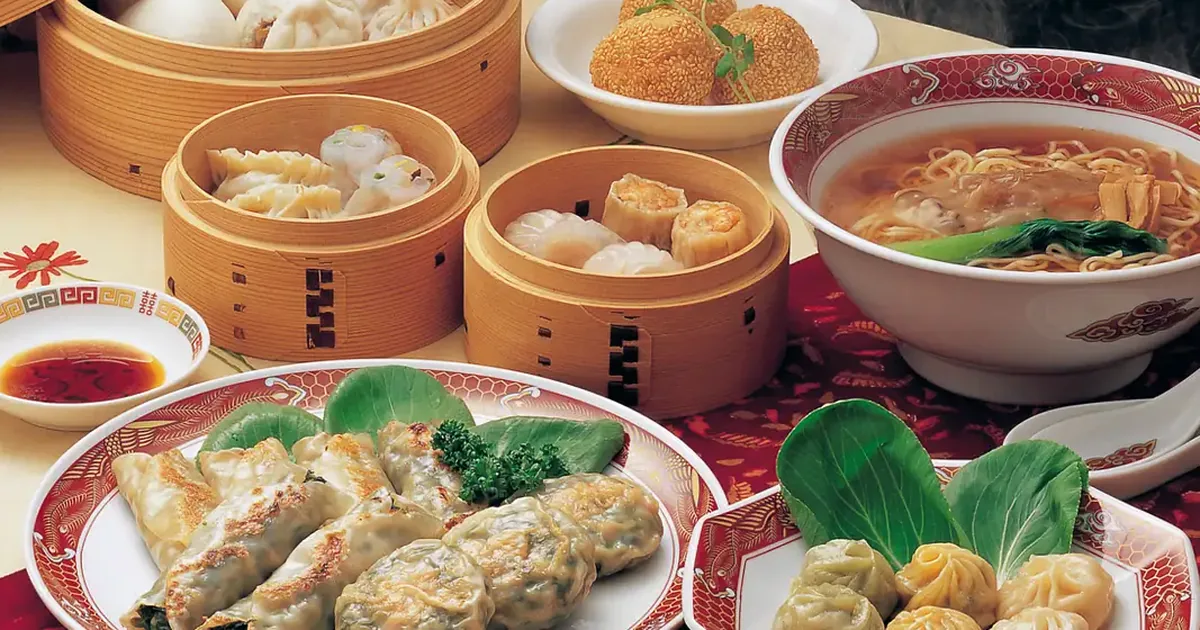
Dumplings, buns and pan-fried snacks: shengjian, xiaolongbao, guotie
This category is easy to over-order because the menu looks cheap per basket. Four shengjian might be ¥10-20, but two baskets plus soup and a drink becomes a meal.
Typical prices:
Item | Chinese name | Usual price |
|---|---|---|
Pan-fried soup buns | shengjianbao / 生煎包 | ¥10-25 for 4 |
Soup dumplings | xiaolongbao / 小笼包 | ¥18-45 per basket |
Potstickers | guotie / 锅贴 | ¥10-28 |
Steamed dumplings | jiaozi / 饺子 | ¥15-35 |
Wontons | huntun / 馄饨 | ¥12-30 |
Meat bun / flatbread sandwich | roujiamo / 肉夹馍 | ¥8-22 |
Shanghai is the obvious city for shengjian and xiaolongbao, but it is also where the price range stretches the most. A local counter can be reasonable. A famous chain or tourist-heavy old street can cost much more. Xi'an is better value for roujiamo and other wheat-based snacks.
One practical rule: if a snack is sold by piece, count how many pieces make a meal. A ¥6 baozi is cheap, but you may need two or three. A ¥18 roujiamo can be a full lunch. Four ¥16 shengjian are a snack; eight plus soup become a meal.
Skewers, chuan chuan and late-night barbecue
Skewers look cheap because the unit price is small. The bill depends on how many sticks you eat, whether meat is priced differently, and whether the place adds a soup base, dipping sauce, or table fee.
Typical prices:
Type | Usual price |
|---|---|
Simple vegetable skewers | ¥1-3 per stick |
Meat skewers | ¥3-8 per stick |
Lamb skewers | ¥4-10 per stick |
Chuan chuan basket meal | ¥25-70 per person |
Late-night barbecue meal | ¥40-100 per person |
In Chengdu and Chongqing, chuan chuan can be excellent value if you eat lightly. It can also stop being cheap once you add beef, tripe, duck intestine, beer, and multiple dipping sauces. In northern cities, lamb skewers are often the late-night classic. In Beijing or tourist-heavy areas, the same stick can cost noticeably more than in a residential neighborhood.
If you are on a tight budget, order slowly. Do not load the whole basket before you know the pricing system.
Cold snacks and spicy bowls: liangpi, boboji, malatang
These are some of the best traveler foods because you can see the ingredients before ordering.
Typical prices:
Item | Chinese name | Usual price |
|---|---|---|
Cold noodles | liangpi / 凉皮 | ¥8-18 |
Hot and sour noodles | suanlafen / 酸辣粉 | ¥10-22 |
Spicy soup bowl | malatang / 麻辣烫 | ¥20-50 |
Cold skewers | boboji / 钵钵鸡 | ¥25-60 |
Wonton in chili oil | hongyou chaoshou / 红油抄手 | ¥12-28 |
Malatang and boboji are priced by weight, stick, or bowl depending on the shop. This is where travelers accidentally overspend: vegetables look light, meatballs and tofu products add up, and some shops have a minimum charge.
Before you start choosing ingredients, look for:
Whether the price is by jin (500g), by bowl, or by stick
Whether meat and vegetables have different prices
Whether rice, dipping sauce, or soup base is included
Whether the shop has a minimum spend
For most travelers, ¥25-40 is a normal malatang meal. If you build a huge bowl, expect more.
'Modern malatang chains like Yangguofu and Zhangliang price by weight — around ¥29.9 per jin (500g), i.e. roughly ¥60 per kilo — and they weigh everything raw, together, including broth-soaked tofu, wide noodles and leafy greens that hold water and get heavy fast. That's why a bowl that looks like a ¥15 snack rings up at ¥40–70. To keep it cheap: load up on lighter, denser items (meatballs, thin noodles, mushrooms), go easy on water-logged greens and frozen tofu, and watch the scale at checkout. Old-school per-bowl (按份) malatang stalls still exist and are far cheaper — but they're getting rare.'
Sweet snacks and drinks
Desserts and drinks are small individually, but they are the easiest category to add on every day.
Typical prices:
Item | Usual price |
|---|---|
Tea egg / small sweet snack | ¥2-8 |
Tanghulu | ¥8-20 |
Bingfen | ¥8-18 |
Milk tea / fruit tea | ¥10-25 |
Fresh fruit cup | ¥10-25 |
Ice cream in tourist area | ¥15-35 |
Chengdu and Chongqing are good places to try bingfen, a cold jelly dessert with brown sugar syrup and toppings. Beijing is known for tanghulu, candied fruit on a stick. These are snacks, not meals, but they matter for budget because one drink a day can add ¥100-200 across a two-week trip.
City price multipliers
Use this table as a correction layer after you understand the food type.
City / area type | Price feel | How to budget |
|---|---|---|
Xi'an, Chengdu, Chongqing, Kunming | Best value among major food cities | ¥50-90/day for street-food-heavy eating |
Hangzhou, Nanjing, Wuhan, Guangzhou | Mid-range, depends heavily on district | ¥60-110/day |
Beijing local neighborhoods | Fair if you avoid landmark streets | ¥70-120/day |
Shanghai local neighborhoods | Higher baseline, still manageable | ¥80-140/day |
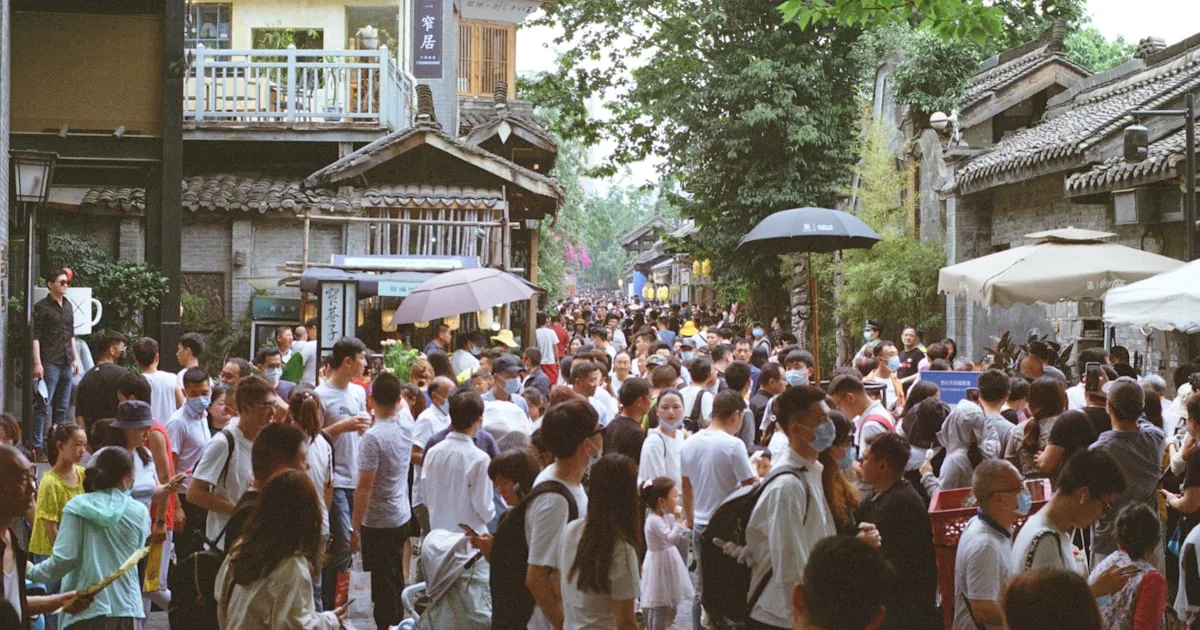
Landmark food streets and scenic areas | Often poor value | Budget separately or avoid meals there |
Airports, train stations, malls | Convenient but not street-food pricing | Expect restaurant or chain prices |
The same snack type can jump because of rent, queue fame, or a famous location. A local jianbing near a residential compound and a jianbing next to a landmark are not competing in the same market.
If you want better prices, walk away from the landmark first. Two side streets can be enough.
'The bigger trap isn't the city — it's the brand. Across China, plain snacks have roughly doubled in the last few years as traditional cheap stalls get replaced by wanghong ('internet-famous') branded chains with uniform decor, franchising and influencer marketing. A jianbing that was ¥5–8 is now commonly ¥12–18 at a branded stall; a shouzhuabing (hand-grabbed pancake) that was ¥5 is now ¥12–15. The food is the same — you're paying for the packaging. Look for the unbranded cart with a queue of locals, not the photogenic storefront.'
How to avoid tourist prices
You do not need to hunt for secret stalls. You just need to avoid the obvious traps.
Better signs:
Locals are eating there before work or during lunch
Menu is Chinese-first, even if photos help
Prices are posted clearly
Food is cooked hot and turns over quickly
Staff are busy rather than calling people in
The shop is near homes, offices, schools, or a wet market
Weaker signs:
English-only menu
Staff standing outside pulling tourists in
Big laminated photo board with every "famous Chinese snack"
Location directly beside a landmark exit
Food sitting under heat lamps for a long time
Prices that feel rounded for tourists rather than normal local pricing
The simplest move: do not eat your main meal on the most famous snack street in the city. Go there to look, try one thing if you want, then eat dinner somewhere local.
For broader food planning, pair this guide with our best local food in China for tourists and how to order food in China without speaking Chinese.
Payment and ordering tips
Most street-food-style places now expect QR payment. Foreigners can usually manage this with Alipay or WeChat Pay linked to an eligible international card, but do not assume every card or every merchant will work every time.
Practical setup:
Set up Alipay before arrival and bind an eligible international card.
Set up WeChat Pay as a backup if possible.
Keep small cash notes: ¥5, ¥10, ¥20, ¥50.
Do not rely on a ¥100 note at a tiny breakfast stall.
If payment fails, try another app, another card, or ask whether cash is okay.
Useful ordering phrases:
English | Mandarin | Pinyin |
|---|---|---|
One of this | 一个这个 | yi ge zhe ge |
Not spicy | 不辣 | bu la |
A little spicy | 微辣 | wei la |
Take away | 打包 | da bao |
How much? | 多少钱? | duo shao qian? |
If the menu is only in Chinese, use camera translation, point at another customer's order, or choose a place with photos. Most small shops are used to quick orders and will not expect a conversation.
For payment setup, read our Alipay for foreigners guide.
Correct the widespread '3% fee on everything' myth and give the exact rule: 'If you pay with a foreign Visa/Mastercard linked to Alipay or WeChat Pay, you do NOT pay the 3% foreign-card fee on small purchases. Both platforms waive the 3% on any single transaction of ¥200 or less — the platform absorbs it — so virtually all street food is effectively fee-free. The 3% only kicks in above ¥200 per transaction. First-time card binders also get an extra promo: the 3% is waived on up to ¥1,000/day for the first 60 days. Single-transaction caps are about ¥3,000 (Alipay) and ¥6,000 (WeChat), well above any street snack.'
'Most street vendors now show a merchant QR code (商户码) rather than a personal one — China tightened personal-collection-code rules in 2022, so legitimate stalls use a business code you scan with Alipay or WeChat. Practically, many vendors no longer keep change, so paying cash for a ¥7 jianbing with a ¥100 note can stall you. Cash is still legal tender and refusing it is technically not allowed (the central bank has reiterated this), but the path of least resistance is to scan. Carry a few ¥1, ¥5 and ¥10 notes as backup for the rare cash-only cart.'
A realistic daily street food budget
Here is a useful daily budget for a traveler who mostly eats quick local food:
City style | Breakfast | Lunch | Dinner | Daily total |
|---|---|---|---|---|
Lower-cost food cities | ¥8-18 | ¥15-30 | ¥25-45 | ¥50-90 |
Mid-range major cities | ¥10-22 | ¥20-40 | ¥35-60 | ¥70-120 |
Beijing / Shanghai local areas | ¥12-28 | ¥25-50 | ¥40-75 | ¥80-140 |
Tourist-street day | ¥20-40 | ¥45-80 | ¥80-150+ | ¥150-280+ |
For a two-week trip, a street-food-heavy traveler can eat well on ¥900-1,600 total if they mix cities and avoid landmark pricing. Add hotpot, Peking duck, cocktails, cafe brunches, hotel breakfasts, or famous restaurants, and the budget moves up quickly.
That is the realistic answer: Chinese street food is still good value, but it is not magically ¥5 for every meal. Budget by food type, watch the neighborhood, and keep one payment backup.
why street food feels pricier' summarizing the shift for readers who remember (or read about) ¥5 snacks: 'If a friend told you China street food is ¥5 a snack, that advice is dated. Two things changed: general food inflation, and the rise of branded wanghong snack chains that took beloved cheap foods, standardized and franchised them, and roughly doubled the price. You can still eat a full day of street food for ¥40–60 — but only if you skip the influencer storefronts and the weighed-by-the-jin chains, and eat where locals queue.'
FAQ
Is ¥25 enough for a street food meal in China?
Yes, in many cities ¥25 is enough for one simple street-food-style meal, especially a bowl of noodles, rice noodles, dumplings, baozi, jianbing, malatang, or a few skewers. In Shanghai, Beijing tourist areas, airport areas, and sit-down restaurants, ¥25 may only cover a small snack.
What is the cheapest type of street food in China?
Breakfast items are usually the cheapest: baozi, youtiao, soy milk, jianbing, rice rolls, and sticky rice rolls commonly sit in the ¥3-18 range depending on the city and toppings.
Is hotpot considered street food in China?
No. Hotpot is better treated as a sit-down meal. It can be casual and local, but the usual per-person cost is closer to ¥70-150+ than to a quick street snack.
Can foreigners pay for street food in China?
Usually yes, but the easiest path is Alipay or WeChat Pay with an eligible international card. Keep small cash notes as a backup because tiny stalls may not have change for large bills.
Are tourist food streets in China overpriced?
They can be. Food streets near major landmarks often charge more because of rent and tourist traffic. Walk into neighborhood lanes, morning markets, or areas near residential compounds for more normal local prices.
How much should I budget per day for street food in China?
For a street-food-heavy day, budget around ¥50-90 in Chengdu, Xi'an, Chongqing, Kunming, and similar cities; ¥80-140 in Beijing and Shanghai if you avoid landmark tourist streets; and more if you add hotpot, Peking duck, cocktails, or restaurant meals.
Do foreign cards work for street food, and do I pay a fee?
Answer: 'Yes. Once your foreign Visa or Mastercard is linked to Alipay or WeChat Pay, you scan the vendor's QR code like a local. There is no 3% foreign-card fee on transactions of ¥200 or less — and almost no street food meal exceeds that — so in practice you pay zero fees on snacks.'
Why did my malatang cost ¥50 when it looked cheap?
Answer: 'Most malatang chains charge by weight (about ¥30 per jin / 500g) and weigh everything raw and wet — broth-soaked tofu, wide noodles and greens absorb water and get heavy. Pick dense, light items and check the scale to keep it under ¥30.'
Tags
Heading to China soon?
Take every guide offline — translation, payments, maps, and emergency help in one free app.