Quanzhou Old City Walk: Temples, Lanes and Maritime Silk Road History
On this page12 sections
- 01Route at a glance
- 02Stop 1: Kaiyuan Temple before West Street gets busy
- 03Stop 2: read West Street beyond the storefronts
- 04Stop 3: Zhongshan Road, the old city's working spine
- 05Stop 4: leave the main street for neighborhood lanes
- 06Stop 5: Yuanmiao Temple
- 07What this walk says about the Maritime Silk Road
- 08Food without turning the day into a queue
- 09Practical planning
- 10A more realistic one-day schedule
- 11Frequently asked questions
- 12Sources
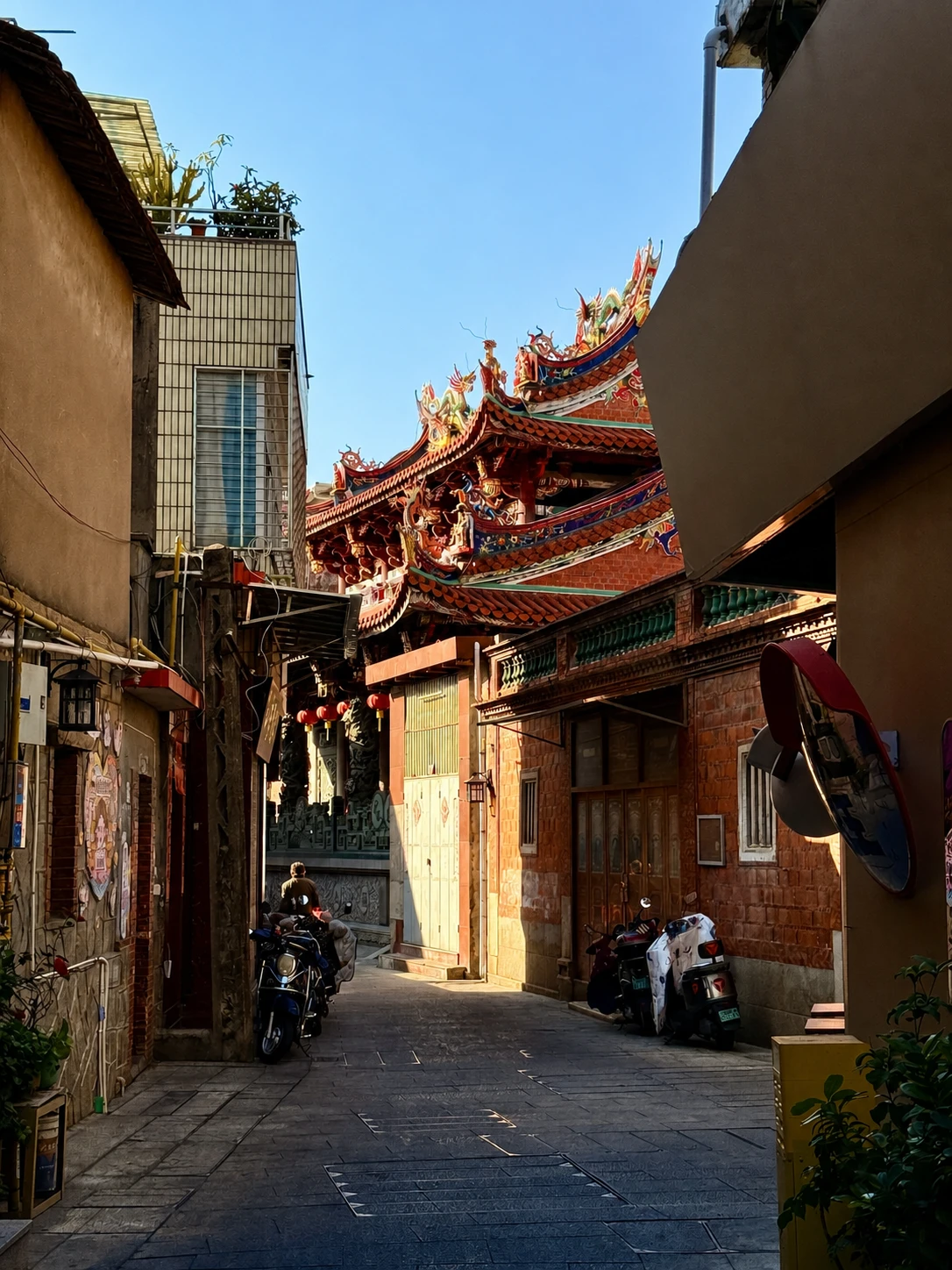
The best first day in Quanzhou is an unhurried walk across the old city: start around Kaiyuan Temple and West Street, cross the historic commercial spine near Zhongshan Road, then continue through smaller lanes toward Yuanmiao Temple and East Street. The core route fits into one day, but its value comes from stopping—at a temple courtyard, an old house or a snack counter—rather than racing between pins.
Quanzhou was known to overseas traders as Zayton. UNESCO describes it as a major maritime emporium during the Song and Yuan periods, with a heritage system that linked religious buildings, administrative sites, docks, bridges, pagodas and production areas. The walk below does not claim to cover all 22 World Heritage components. It gives you a readable old-city introduction, then shows which larger heritage sites deserve a separate trip.
Route at a glance
Start: Kaiyuan Temple and West Street Middle: Zhongshan Road and the lanes east of it Finish: Yuanmiao Temple, Guandong Lane and East Street Time: four to six hours with temple visits and food stops Best for: architecture, street food, religious history and photography Not ideal for: travelers trying to cover Quanzhou's coastal UNESCO sites on the same day
Pin every stop in AMap or Apple Maps before leaving the hotel. English names vary, and an old residence may be easier to locate with its Chinese name. Keep the route flexible: small shops change, but the temples, streets and urban fabric are the durable reason to walk here.
Stop 1: Kaiyuan Temple before West Street gets busy
Begin at Kaiyuan Temple, one of Quanzhou's most important religious and architectural landmarks. Its twin pagodas rise above the old-city roofline and make an immediate visual link between the monumental and the everyday. Go early enough to experience the grounds before the busiest part of the day.
Treat the temple as a functioning religious place, not only a photo stop. Keep voices low, follow signs about photography and do not block worshippers. Clothing does not need to be ceremonial, but shoulders and behavior should suit a sacred site.
Outside the temple, West Street shifts the mood from stone courtyards to food counters, souvenir shops and local traffic. It is tempting to eat everything immediately. A better strategy is to choose one small item and keep walking; Quanzhou food is easier to appreciate as several small stops than as one oversized lunch.
Stop 2: read West Street beyond the storefronts
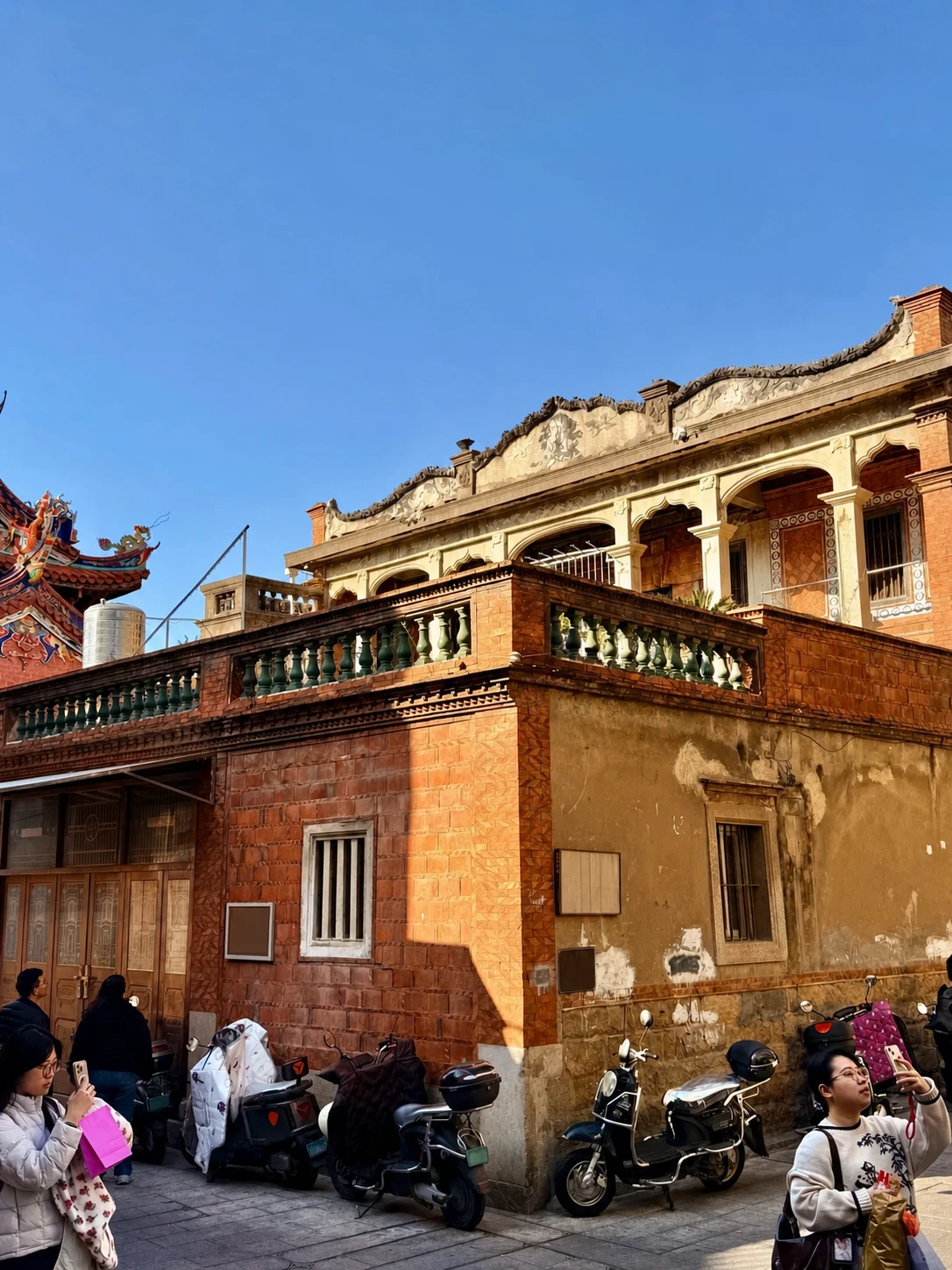
West Street is popular because it compresses several versions of Quanzhou into one frame: old houses, temple towers, neighborhood businesses and a busy visitor economy. Look above the shop signs. Upper floors, rooflines and narrow side lanes often retain more architectural character than the most photographed ground-level storefront.
The street is also where a social-media route can become misleading. A café or snack shop may be excellent, but it is not historical evidence by itself. Use current queues and hygiene as your guide. If one recommended shop has closed or become crowded, move on. The old city offers many substitutes.
For a first snack, look for a portion you can finish while walking or sitting briefly. Quanzhou specialties commonly associated with the city include oyster omelet, meat dumplings, noodle paste and sweet or savory local cakes. Names and recipes vary by shop; ask what is freshly prepared rather than ordering only from a translated “must-eat” list.
Stop 3: Zhongshan Road, the old city's working spine
Continue toward Zhongshan Road. Its arcaded streetscape shows a later commercial layer of the city, where covered sidewalks and shop-houses adapted to Fujian's climate and street life. This is a useful transition: Kaiyuan Temple represents one historic component, while the commercial street shows how the old city continued to function around those monuments.
Slow down at intersections. Scooters, delivery vehicles and pedestrians share space, and the most direct line on a map is not always the calmest walking line. If the weather is hot, use the shade under the arcades and make this your longer rest stop.
You can detour to Quanzhou's Confucian Temple area if time and opening conditions allow. It adds a different institutional tradition to a day that already includes Buddhist and Daoist spaces. The point is not to collect religions; it is to see why UNESCO's description of Quanzhou emphasizes a diverse maritime society.
Stop 4: leave the main street for neighborhood lanes
The smaller lanes east of the main commercial axis are where this walk becomes more than a standard West Street visit. The 2026 XHS route that inspired this section highlighted Guandong Lane, old residences and small independent shops. Its strong save count—about 10,000 at collection time—suggests that travelers valued the route's sequence, not just a single viral storefront.
Use the route idea, but do not copy every shop. Choose two or three lane stops with different purposes:
one historic house or exterior architectural detail;
one quiet tea, coffee or dessert break;
one local shop where the product is actually made or explained.
Avoid photographing residents through windows or treating a lived-in lane as a studio set. A doorway that looks “historic” may still be someone's home.
Stop 5: Yuanmiao Temple
Yuanmiao Temple introduces Quanzhou's Daoist heritage and gives the route a strong eastern anchor. Check current opening access before going, and remember that English map labels can vary. Searching the Chinese name `元妙观` is often more reliable.
The temple's atmosphere is different from the commercial energy of West Street. Give it enough time to notice the spatial order and ritual details instead of taking a doorway photo and leaving. If a ceremony is underway, stand back and follow the instructions of temple staff.
From here, Guandong Lane and East Street work well as a final wander. This part of the route is less about completing a checklist and more about seeing the transition from heritage core to ordinary city.
What this walk says about the Maritime Silk Road
Quanzhou's maritime story did not happen only at a harbor. A port city needed administrative oversight, religious institutions, commercial communities, production sites and transport links. UNESCO's listed components extend well beyond the old-city route, including coastal and infrastructure sites.
That is why one day on foot should be framed honestly: it explains the urban culture that maritime trade helped create, but it does not replace a second day for sites such as Luoyang Bridge, the coastal pagodas or other components outside the center.
If World Heritage history is your main reason for visiting, spend the first day on this walk and reserve the next day for two or three outlying components chosen by geography. Hiring a car for a coherent loop can be more sensible than forcing them into fragmented public-transport transfers.
Food without turning the day into a queue
Quanzhou rewards grazing. Use three rules:
Eat one small serving at a time.
Prefer a shop preparing the dish now over a famous name with an hour-long queue.
Keep one sit-down break for the hottest or wettest part of the afternoon.
For allergies or dietary restrictions, show the requirement in Chinese. Broths, dumplings and sauces may contain pork, seafood, peanuts or lard even when the visible ingredient looks simple. “Vegetable” describes the filling, not necessarily the stock or cooking fat.
Practical planning
Getting there
Quanzhou's old city is best approached by taxi/DiDi or local bus from your hotel or railway station. Set up the app with the DiDi guide for international numbers and cards. Do not search only “Quanzhou station”; confirm the exact station printed on your ticket and the old-city drop-off point. If you arrive by rail, the 12306 guide for foreign travelers covers passport-linked tickets and station-name checks. Road restrictions may make a gate or nearby street a better pin than the temple center.
Best time
Start in the morning for temples and quieter streets. In hot or humid weather, plan the arcaded-road section for midday and keep a rain layer. After dark, commercial streets stay lively, but religious sites may no longer be accessible.
Navigation
Save Chinese names and use a current China map. Our guide to map apps that work in China explains the simplest iPhone and Android setup.
How long to stay in Quanzhou
One full day is enough for this old-city introduction. Two or three days are better if you want the broader UNESCO landscape, coastal sites or a slower food trip.
A more realistic one-day schedule
9:00–10:30: Kaiyuan Temple.
10:30–12:00: West Street and one snack.
12:00–13:30: Zhongshan Road, lunch and shade.
13:30–15:30: neighborhood lanes and one rest stop.
15:30–16:30: Yuanmiao Temple.
After 16:30: East Street, dinner or return to the hotel.
The times are pacing guides, not opening-hour promises. Check temples and museums on the day, especially around holidays or religious events.
Frequently asked questions
Is Quanzhou old city walkable?
Yes, the central sights are suited to a day on foot, but traffic and uneven lane surfaces require attention. Use a ride for outlying UNESCO sites.
Is West Street the whole old city?
No. It is the best-known visitor street. The lanes, religious sites and commercial streets around it provide a broader picture.
Can I do Quanzhou as a day trip?
You can complete this central walk as a day trip if train times are practical. An overnight stay gives you a less rushed evening and time for outlying heritage sites.
Sources
UNESCO: Quanzhou, Emporium of the World in Song-Yuan China, checked 2026-07-16.
Quanzhou government: old-city food and heritage update, 2025.
XHS route inspiration, note 69a0f2ac000000002603f1fc, published 2026-02-27; engagement collected 2026-07-16.
Ninety minutes down the line, Xiamen is the obvious pairing and has one trap worth knowing in advance: visitors cannot use the Gulangyu ferry pier in the city centre during the day and must sail from Dongdu instead.