Independent Travel in China: The Real Guide (2026)
On this page13 sections
- 01What this guide covers
- 02What is easy in 2026
- 03What is still hard
- 04The apps you install before you fly
- 05Payments in practice
- 06High-speed rail: the backbone of independent travel
- 07Hotels and the foreign passport issue
- 08Visa and entry in 2026
- 09Connectivity and the Great Firewall
- 10Sample 14-day independent budget (mid-range)
- 11Destinations to consider beyond the golden triangle
- 12Practical final tips
- 13Frequently Asked Questions

Independent travel in China is easier in 2026 than at any point in the past decade. High-speed trains connect 40+ cities at 350 km/h, ride-hailing works in every major urban area, Trip.com books hotels in English, and Alipay Tour Pass lets foreign cards pay for almost everything. The friction that still exists - the Great Firewall, hotel registration, occasional refusal of foreign passports at budget guesthouses - is all predictable and all solvable if you prepare before you fly.
I have spent about eight months total traveling in China independently over the past four years, from solo weekend trips in the Yangtze River Delta to a month across Yunnan and Sichuan. This is what I actually do and what I wish every first-timer knew before landing.
What this guide covers
What is easy and what is hard in 2026
The exact apps you must install before you fly
Payments: Alipay Tour Pass, WeChat Pay, credit cards, cash
High-speed rail, metros, taxis, and Didi
Hotels, registration, and foreign-friendly chains
Visa, transit visa, and recent mutual visa-free expansions
Connectivity: eSIM, local SIM, VPN, and the Great Firewall
Sample 14-day budget for an independent trip
FAQs on 12306, offline maps, and emergencies
What is easy in 2026
High-speed rail. The G and D trains are world-class - clean, on-time, affordable, and they run every 15-30 minutes between major city pairs. Beijing to Shanghai in 4 hours 18 minutes for about ¥660 second class.
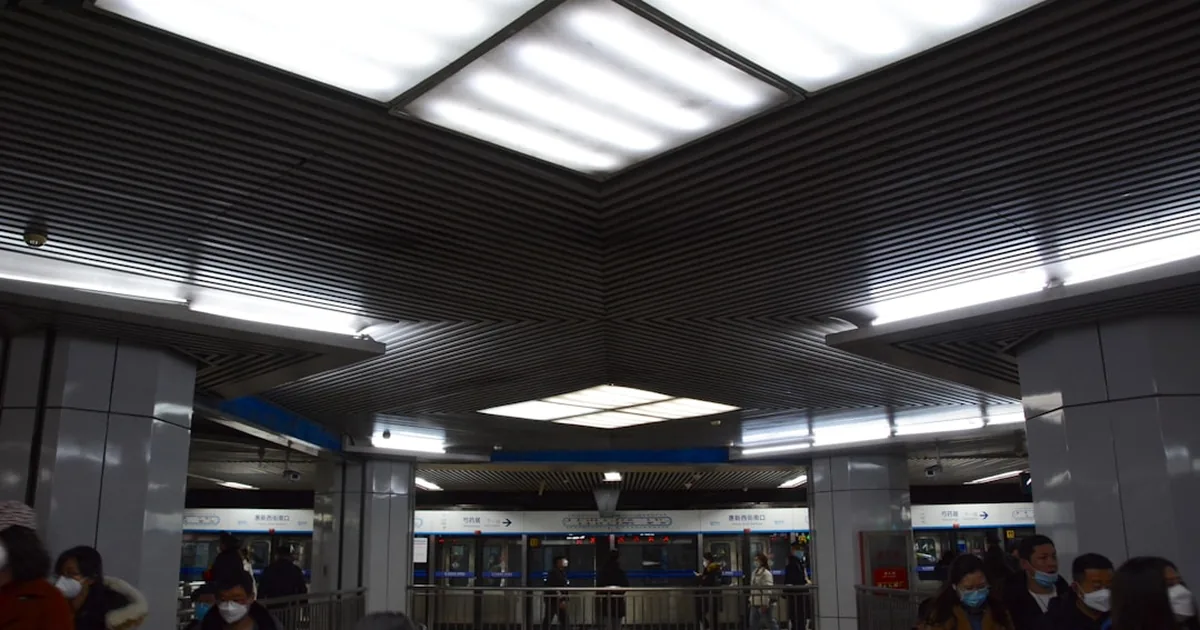
Urban metros. Every first-tier and most second-tier cities have a clean, air-conditioned metro with English signage and Alipay/WeChat QR-code entry. Fares run ¥3-¥10 per ride.
Hotels on Trip.com. You can book 40,000+ properties in English with international cards, including most chain hotels that legally accept foreign passports.
Ride hailing. Didi works in every city, integrates inside Alipay and WeChat, accepts international cards.
Restaurants and street food. QR-code payment is universal. Pleco's offline OCR translates any menu by camera.
Visa-free entry (for many). As of 2025-2026, dozens of nationalities now have 15-30 day unilateral visa-free access or 240-hour transit visa-free, cutting out the pre-trip visa process entirely.
What is still hard
12306 direct registration. The official Chinese rail booking site requires a Chinese phone and a Chinese bank account for registration. Foreigners route through Trip.com instead (which charges a small service fee and works perfectly).
The Great Firewall. Google, Gmail, YouTube, Facebook, Instagram, WhatsApp, Signal, and most Western news sites are blocked. You need a VPN or a travel eSIM that routes through non-Chinese servers to access them.
Hotel refusals in rural areas. Family-run guesthouses and small inns in remote regions often are not licensed to accept foreign passports. Stick to Trip.com listings filtered for "accepts foreign passport."
Paper-map culture is dead. Every piece of travel info is on apps. No-signal moments are rare but prepare offline maps just in case.
English fluency is low outside of 5-star hotels and flagship tourist sites. Taxi drivers, metro staff, and most restaurant servers speak basic tourist English at best. Pleco and the Baidu Translate live-audio mode are essential.
The apps you install before you fly
Install, register, and test every one of these at home before boarding. Some cannot be downloaded from within China.
App | What it does | Priority |
|---|---|---|
Alipay (支付宝) | Payment, ride-hailing, food delivery, metro QR | Required |
WeChat (微信) | Messaging, payment, mini-programs | Required |
Trip.com | Flights, trains, hotels, attractions in English | Required |
Amap (高德地图) | Navigation, real-time transit, beats Google Maps in China | Required |
Didi (滴滴出行) | Ride-hail standalone (also works inside Alipay) | Recommended |
Pleco | Offline Chinese-English dictionary with OCR | Required |
Baidu Translate | Live voice translation with offline packs | Recommended |
Meituan (美团) | Food delivery, local deals, bike rental | Optional |
A VPN app (Astrill, ExpressVPN, Let's VPN) | Access blocked sites | Required if you need Google |
Before you board, inside Alipay, open the "Tour Pass" mini-program. This activates a link between your Alipay wallet and an international Visa or Mastercard. You upload your passport photo and a selfie, wait about 5 minutes for verification, and your wallet is ready. Alipay Tour Pass lets you pay Alipay QR codes anywhere in China using your home credit card. This is the single most important 5-minute setup you will do.
Payments in practice
China is almost entirely cashless, but the cashless system runs on QR codes, not cards. Here is the 2026 reality.
The primary method: Alipay Tour Pass
Works at virtually every shop, restaurant, street vendor, metro, taxi, and ticketed attraction.
Accepts Visa, Mastercard, Amex, JCB, Discover. Foreign fees are built in (roughly 3% above the exchange rate), slightly worse than a direct card but worth the convenience.
Daily and monthly transaction limits apply - roughly ¥6,000 per day and ¥35,000 per month. For most travelers this is more than enough.
The backup: WeChat Pay for Foreigners
WeChat Pay now allows international cards through the "Wallet > Services > Real-Name Verification" flow, similar to Alipay Tour Pass. Use WeChat Pay as a backup when Alipay has an occasional issue (rare but happens).
Credit cards (plastic)
International-brand Visa and Mastercard are accepted at:
International airport lounges and airport shops
Western chain hotels (Marriott, Hilton, Hyatt, InterContinental)
Luxury shopping malls in first-tier cities
Trip.com, Ctrip, Klook, and other international booking platforms
They are not accepted at:
Most Chinese chain hotels (Hanting, JI, Atour) unless pre-authorized
Street food, convenience stores, most restaurants
Metro ticket machines (some accept international cards but the interface is clunky)
Taxis and Didi (Didi accepts card only through the app, not cash in vehicle)
Cash
Cash is legal tender and every Chinese vendor must accept it by law, but in practice some clerks are unfamiliar with older bills or cannot make change. Carry ¥500-¥1000 as backup split between your wallet, backpack, and hotel safe. ATMs at Bank of China, ICBC, and China Construction Bank accept international cards (daily withdrawal limit around ¥3,000).
High-speed rail: the backbone of independent travel
China Railway runs the largest high-speed network in the world. For independent travelers, it is the single best way to move between cities.
How to book
Trip.com is the easiest route for foreigners. Enter your passport number, choose your train and seat class, pay with an international card. Trip.com charges a service fee of ¥10-¥30 per ticket - worth every yuan.
12306 (the official site) is technically cheaper but requires a Chinese phone and bank account for full registration. Skip it unless you have local support.
Book 3-7 days ahead for most routes. Book 14 days ahead for Golden Week (Oct 1-7), Spring Festival, and May Day weekend.
Seat classes
Class | Chinese | Approx cost | Notes |
|---|---|---|---|
Second class | 二等座 | Base fare | 5-across, comfortable, 98% of travelers |
First class | 一等座 | +50-70% | 4-across, wider seats, power outlets |
Business class | 商务座 | +200-300% | 3-across lie-flat, free snacks |
Sleeper (night train) | 软卧 / 硬卧 | Varies | Soft sleeper is 4-berth with door |
Second class is fine for 95% of trips. First class makes sense on journeys over 5 hours.
At the station
Arrive 45 minutes early. Major stations (Shanghai Hongqiao, Beijing South) are enormous and require bag scanning, ID check, and a walk to the platform.
Use the foreign passport ticket window if you booked a physical ticket. Most train tickets are now e-ticket, tied to your passport - just scan the passport at the gate and walk through.
Bring water and snacks or use the mini-mart before boarding. In-train trolley food is expensive and limited.
Hotels and the foreign passport issue
Chinese hotels require a special police registration system to accept foreign guests. Most three-star and above can do it. Many budget guesthouses in remote areas cannot. Here is how to avoid problems.
Use Trip.com or Booking.com
Both platforms filter out hotels that cannot legally accept foreign passports. If it is listed in English on Trip.com, it works.
Reliable chains
JI Hotel (全季) - mid-range, very clean, ¥280-¥450 per night
Atour (亚朵) - slightly upmarket, great beds, ¥400-¥600 per night
Hanting (汉庭) - budget-friendly, ¥180-¥300 per night
Home Inn (如家) - basic but clean, ¥150-¥250 per night
Holiday Inn Express - familiar Western standard, ¥450-¥700 per night
Every one of these chains in every city I have visited processed my foreign passport without issue.
Registration
When you check in, the front desk scans your passport and uploads your stay to the local police system within 24 hours. You get a receipt - keep it. If you stay at a non-hotel accommodation (Airbnb, a friend's apartment, a rural homestay not on Trip.com), you are personally responsible for going to the local police station within 24 hours to register. They will fill out a Temporary Residence Form and stamp it.
Visa and entry in 2026
As of 2026, China's entry policy is much more open than it was in 2023. Three main paths:
Unilateral visa-free
Dozens of nationalities - including France, Germany, Italy, Spain, Netherlands, Switzerland, Austria, Belgium, Ireland, Luxembourg, Hungary, Malaysia, and Japan - now hold 15-30 day unilateral visa-free access for tourism and business. No visa, no application, just show up with a valid passport and an onward ticket. Check your current nationality status at your Chinese embassy website since the list has been expanding.
240-hour transit visa-free
If your nationality is not on the mutual list but is among the 54 eligible countries (including US, UK, Canada, Australia), you qualify for 240-hour Transit Without Visa if you have a confirmed onward ticket to a third country. Apply at the approved port on arrival.
Regular tourist visa (L visa)
If neither of the above fits, apply through your nearest Chinese visa center. Processing takes 4-10 business days, fees vary by nationality (roughly US$140 for US citizens). Your visa is a sticker in your passport, single or multiple entry, typically 30-90 days per stay.
Connectivity and the Great Firewall
Expect Google, Gmail, Facebook, Instagram, WhatsApp, YouTube, Signal, Twitter/X, Bing, Wikipedia (partially), and most Western news sites to be inaccessible on mainland Chinese networks without a workaround.
Option A: Travel eSIM (simplest)
Buy a China-specific travel eSIM from Airalo, Nomad, Holafly, or Ubigi before you fly. These eSIMs route through non-Chinese servers (usually Hong Kong or Singapore), which means Google and social media work as normal with no VPN. Expect $15-$50 for 5-20 GB of data valid 7-30 days.
Option B: Local SIM + VPN
Buy a China Unicom or China Mobile SIM at the airport (~¥100 for 10 GB / 30 days).
Download a VPN app (Astrill, ExpressVPN, Let's VPN, or one of the free trial options) before you arrive. Download links are blocked from inside China.
Connect to the VPN whenever you need a blocked service.
I prefer the eSIM route for short trips under 2 weeks. For longer trips, a local SIM plus Astrill is cheaper per day.
Sample 14-day independent budget (mid-range)
This covers a typical circuit of Beijing, Xi'an, Chengdu, Shanghai with HSR between cities.
Category | Cost (CNY) | Cost (USD approx) |
|---|---|---|
Hotels (14 nights at mid-range chains) | ¥4,900 | $680 |
HSR tickets between 4 cities, second class | ¥1,500 | $210 |
Metros, taxis, Didi (14 days) | ¥700 | $100 |
Attractions and tickets (Forbidden City, Terracotta Warriors, pandas, etc.) | ¥1,200 | $170 |
Food (mid-range meals, street snacks) | ¥2,100 | $290 |
SIM / eSIM + small extras | ¥300 | $40 |
Total | ¥10,700 | ~$1,490 |
This is comfortable, not luxury. Budget travelers can do the same circuit for around ¥6,000 by using Home Inn and hostels. Luxury travelers can easily triple this on hotels alone.
Destinations to consider beyond the golden triangle
Most first-timers do Beijing, Xi'an, Shanghai, maybe Guilin. Consider adding:
Chengdu - pandas, spicy Sichuan food, laid-back city vibe, gateway to the Tibetan plateau
Pingyao - a genuinely intact Ming Dynasty walled city in Shanxi Province, 1 hour by HSR from Taiyuan
Yunnan (Lijiang, Dali, Shangri-La) - mountains, ethnic-minority villages, tea plantations
Huangshan (Yellow Mountain) - cloud-drenched granite peaks, the Chinese landscape-painting setting
Xiamen and Gulangyu - colonial-era seaside, best weather in the country between March and May
Zhangjiajie - the Avatar mountains, good for hikers but requires a driver or guide for the scattered attractions
Jiuzhaigou / Huanglong - turquoise lakes and travertine pools, September to October is peak
Practical final tips
Set up Alipay Tour Pass at home. The verification step is the single most common pre-trip bottleneck.
Download offline Amap maps of every city you will visit. Google Maps does not have accurate Chinese addresses and is blocked anyway.
Screenshot your hotel name in Chinese characters - show it to taxi drivers when your Didi fails.
Carry a physical passport at all times. Every hotel, every HSR station, every airport, and every major attraction ticket requires passport verification.
Assume 1-1.5 hours per train station transfer in first-tier cities.
Keep a paper backup of key numbers. Your embassy duty line, your hotel, Trip.com customer service.
Frequently Asked Questions
Can I really travel independently in China without speaking Mandarin?
Yes. Pleco (offline dictionary with OCR), Baidu Translate's live audio mode, and Alipay Tour Pass cover 95% of language friction. Learn three phrases: "ni hao" (你好, hello), "xie xie" (谢谢, thank you), and "duo shao qian" (多少钱, how much). Everything else can be done by pointing at a phone screen.
Do I need a VPN to book hotels and trains?
No. Trip.com, Booking.com, and most international travel platforms work on Chinese networks. You only need a VPN for Google, Gmail, social media, and Western news sites.
How far in advance should I book HSR tickets?
Three to seven days ahead for most routes. Two to three weeks ahead for Golden Week (Oct 1-7), Spring Festival, and any day connecting to or from Beijing and Shanghai on a Friday evening. Trip.com lets you set a price alert for specific trains.
Can I use my foreign credit card to pay directly, without Alipay?
At large hotels, yes. At almost everywhere else, no. Alipay Tour Pass is the bridge between your card and the Chinese QR-code system. Setting it up takes 10 minutes and saves hundreds of awkward moments.
Is Uber available in China?
No. Uber exited the China market in 2016 when Didi bought its Chinese operations. Didi is the only major ride-hail service. It works like Uber, has a clean English interface, and accepts foreign cards.
Is independent travel cheaper than group tours?
Almost always yes. A 14-day circuit of Beijing-Xi'an-Chengdu-Shanghai costs roughly ¥10,000 independently versus ¥18,000-¥25,000 on a group tour. The tour adds a guide, a bus, and forced shopping stops. For travelers under 60 who are comfortable with a smartphone, independent is both cheaper and more flexible.
Three things turn that cost gap into an actual trip. Booking trains on 12306 with a foreign passport removes the single biggest reason people hire a tour, WeChat Pay with a foreign card removes the second, and a fifteen-day five-city route with the costs checked shows what the ¥10,000 actually buys, day by day.
Tags
Travelers also asked
View all →- How difficult is independent travel in China regarding transport and payments, and are local guides necessary?
- Is China worth visiting despite negative media portrayals?
- What essential digital preparations should I make before arriving in China as a first-time visitor?
- What digital tools do I absolutely need before landing in China to avoid getting stuck?