The Hutong Walk That Stays Ahead of the Crowd

Most hutong tours put you at the Nanluoguxiang metro exit at ten in the morning, walk you down 500 metres of stinky tofu and plastic pandas, and call it done. You have seen a bazaar, not a hutong.
This route runs west to east — Shichahai to Yonghegong, 4.2 km, three to four hours — and the order is the point. Walked in this direction you arrive at each place before the crowd does and leave as it builds. Reverse it and you spend the day in other people's photographs.
What a hutong actually is
胡同 (hútòng) is a narrow alley between rows of courtyard houses (四合院). Beijing had over 3,000 of them gridded around the Forbidden City; about 1,200 survive, and the best-preserved run north of the centre between Houhai and the Second Ring Road.
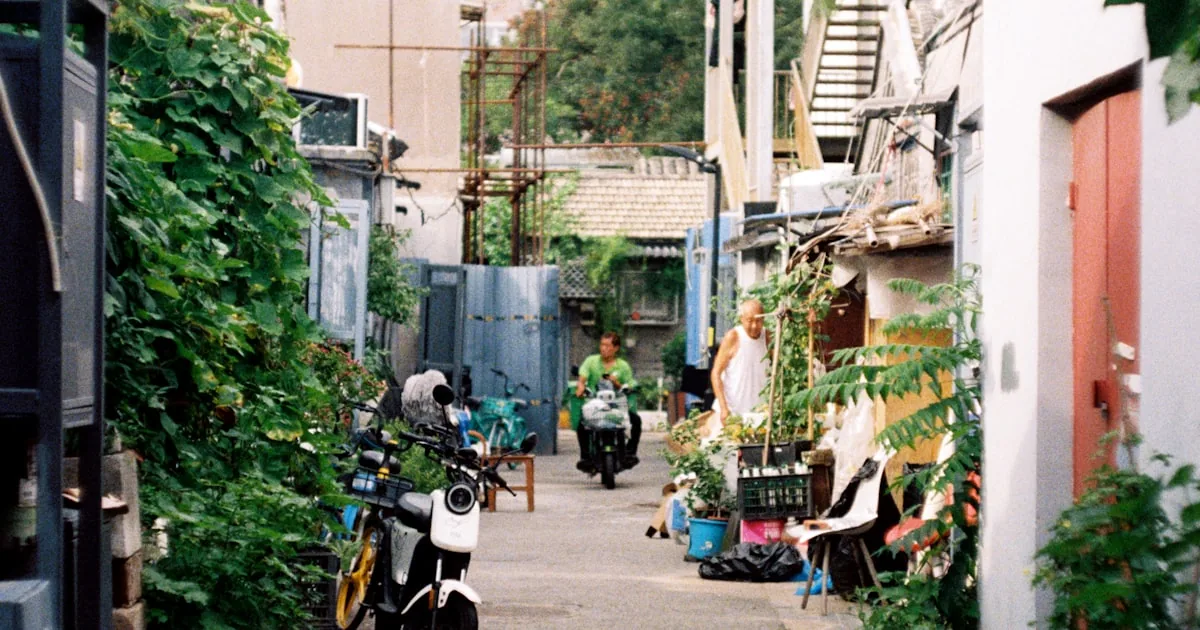
Each hutong is a street, not a district. People live behind those gates — bins outside, laundry on poles, children cycling to school. You are walking through a residential neighbourhood that happens to be nine hundred years old, and the etiquette follows from that rather than from any list.
The route
Stop | From start | Stay | Cost |
|---|---|---|---|
Shichahai station, Line 8, Exit A2 | 0 km | — | ¥4 metro in |
Yandai Xiejie | 0.6 km | 15–20 min | Free |
Silver Ingot Bridge and the Houhai east shore | 1.0 km | 10 min | Free |
Mao'er Hutong | 1.6 km | 30 min | Free |
Nanluoguxiang, north to south | 2.2 km | 40 min | Free |
Coffee on Beiluoguxiang | 2.6 km | 20 min | ¥38 |
Fangjia Hutong | 3.6 km | 25 min | Free |
Yonghegong Lama Temple | 4.2 km | 45–75 min | ¥25 |
Yonghegong station, Line 2 and 5 | 4.3 km | — | ¥4 metro out |
¥71 all in, with one coffee and the temple. Flat the whole way, no stairs except inside the temple.
Walking it
Out of Shichahai Exit A2 onto Di'anmenxi Dajie, with the lake to the north. Ten minutes east along the south shore. In winter it freezes and people rent skates; in summer rowing boats are ¥60 an hour. You need neither.
Yandai Xiejie — Tobacco Pipe Slanting Street — is the one touristy stretch, and at this hour it is empty. Four hundred metres in a slight S curve between original Ming and Qing grey brick. Move through it in twenty minutes without stopping at the stalls, but do look for the Guangfu Temple (广福观) at the midpoint, a small Daoist shrine behind a red gate.
The alley delivers you onto the Silver Ingot Bridge (银锭桥), the dividing line between Houhai and Qianhai. Stand on it for a minute — on a clear day the Western Hills frame the lake, which is one of the classical Eight Scenes of Yanjing. Then south along the east shore past the bar street, which at this hour is shuttered and at any hour is a tourist trap, and left into the first proper hutong.
Mao'er Hutong (帽儿胡同) runs 600 metres east to west and is among the best-preserved Ming residential streets left. Wider than most, grey walls, carved stone lintels, gingkos that turn in October. Numbers 7 to 15 were the family residence of Wan Rong, China's last empress. Number 35 still has its original 抱鼓石 — the stone drums either side of the gate, which marked the household's rank. There is a kindergarten and a grocery on the same street. Nothing here charges admission because it is simply a street.
Mao'er ends at Nanluoguxiang. Walk it north to south, which is the quiet half first: sixteen side hutongs branch off, each worth a thirty-second look, and the commercial density climbs as you go. By the time it becomes a scrum you are at the southern end and leaving.
Cut west into Beiluoguxiang (北锣鼓巷) for the parallel alley where the local cafés are — Metal Hands has a courtyard branch, flat whites ¥38, and %Arabica, Soloist and a few bookshops with tea are on the same stretch. Twenty minutes off your feet while residents cycle past with the morning's vegetables.
Then east about 800 m on Jiaodaokou Nan Dajie to Fangjia Hutong (方家胡同) on your left. Fangjia is the one to remember: gently gentrified, design studios and small theatres and ceramic workshops behind unchanged grey walls, and a fraction of Nanluoguxiang's crowd. 方家46号 is a creative compound with a bookshop, gallery and performance space. The noodle shops here are ¥18–25 a bowl and run by people who live on the street.
Fangjia comes out on Yonghegong Dajie directly opposite the south gate of the Lama Temple.
Yonghegong
Beijing's largest working Tibetan Buddhist temple, ¥25, open 09:00 to 16:30 for last admission, 45 to 75 minutes for the full complex. Bring the passport; tickets are real-name.
Walk it south to north. The thing to see is the 18-metre standing Maitreya carved from a single piece of white sandalwood — it holds a Guinness record, which undersells it. Also the Yongzheng Emperor's throne hall, and the incense in the front courtyard, which is not a display: people are there to pray.
Exit the north gate and you are at Yonghegong station on Lines 2 and 5. Ten minutes to Dongzhimen for dinner, fifteen to Wangfujing.
Timing, which is the whole trick
Start between 09:00 and 10:00. This route only works ahead of the crowd, and the crowd starts at Nanluoguxiang.
Be inside Yonghegong before 14:00, when the domestic coach groups arrive.
Avoid weekend afternoons between 14:00 and 18:00 entirely. Nanluoguxiang stops being walkable.
Late April, May, September and October. Summer is brutally humid; winter is cold but the alleys look extraordinary under snow. Skip Spring Festival week, when residents leave and the shops shut, and the first week of October.
Wear flat shoes with grip — the flagstones are uneven and hold puddles. Layers in spring and autumn, a hat in summer, something windproof in winter, because hutongs funnel wind.
Etiquette that is not obvious
Do not photograph people without asking. A smile and a gesture at the camera is usually enough; a silent close-up is not.
Keep your voice down. Sound bounces hard off grey brick and carries into courtyards.
Do not step through a gate unless it is open and there is a shop sign. An open gate is not an invitation.
Yield to bikes, scooters and the delivery van that will absolutely squeeze past you.
Public toilets are at most intersections, marked 公共厕所, free and usually squat. Carry tissues. The Beiluoguxiang cafés and the temple have Western ones.
Cycling it instead
You can, but not this route. Both Yandai Xiejie and the Nanluoguxiang main lane ban riding outright, and Nanluoguxiang also refuses to let the app close the lock, so two of the six stops here have to be walked either way.
There is a good cycling loop in this district and it is a different shape — the hutong cycling guide covers the bans, the ¥20 geofence fee and the passport verification you have to do the night before. Rental is ¥1.50 per 30 minutes on any of the three systems.
What not to take is a rickshaw. The drivers at the Drum Tower and along Nanluoguxiang want ¥180–300 for an hour of being pushed through alleys more slowly than you would walk them. A licensed English-speaking guide is ¥400–800 for a half day and is worth it only if you want the history at each gate. The Beijing guide covers the rest of the city, and Mutianyu is the day trip to pair it with.
FAQ
Can I do a Beijing hutong walk without a guide?
Yes. The route is linear, signage across central Beijing is bilingual, and Amap in English mode handles the rest. A guide only adds historical depth — book a licensed one through your hotel rather than taking a rickshaw driver's offer.
How long does the Shichahai to Yonghegong walk take?
4.2 km and three to four hours with a coffee stop and the temple. About ¥71 all in, including both metro rides and the ¥25 temple ticket.
Are the hutongs safe to walk alone?
Yes, including alone at night and as a solo woman. Central Beijing has close to no reported crime against visitors and residents will help if you get lost. Ordinary care applies and nothing beyond it.
Can children do this walk?
Yes — it is flat, with frequent café stops, and the bustle of Nanluoguxiang and the incense at Yonghegong both land well. Under six, cut it in half and finish at Nanluoguxiang station. A pushchair is fine on the paved alleys and awkward on the old flagstones near Houhai.
Tags
Travelers also asked
View all →- Where can I find the best traditional Chinese architecture and aesthetics in Beijing?
- Is it necessary to hire a tour guide for the Great Wall and Summer Palace, or is a private driver sufficient for a family visit?
- Which section of the Great Wall did you visit near Beijing, and what was the most convenient transportation method to get there?