Is China Safe for Tourists in 2026? An Honest Assessment
On this page11 sections
- 01What this guide covers
- 02The Numbers: What Crime In China Actually Looks Like
- 03The Five Tourist Scams You Will Actually Meet
- 04The Biggest Real Safety Risk In China Is Traffic
- 05Solo Travel And Solo Female Travel In China
- 06Health Safety: Food, Water, Air, Medical
- 07Political And Cultural Sensitivities
- 08Emergency Numbers And What To Do
- 09China Safety At A Glance: 2026 Risk Table
- 10Pre-Trip Safety Checklist
- 11Frequently Asked Questions
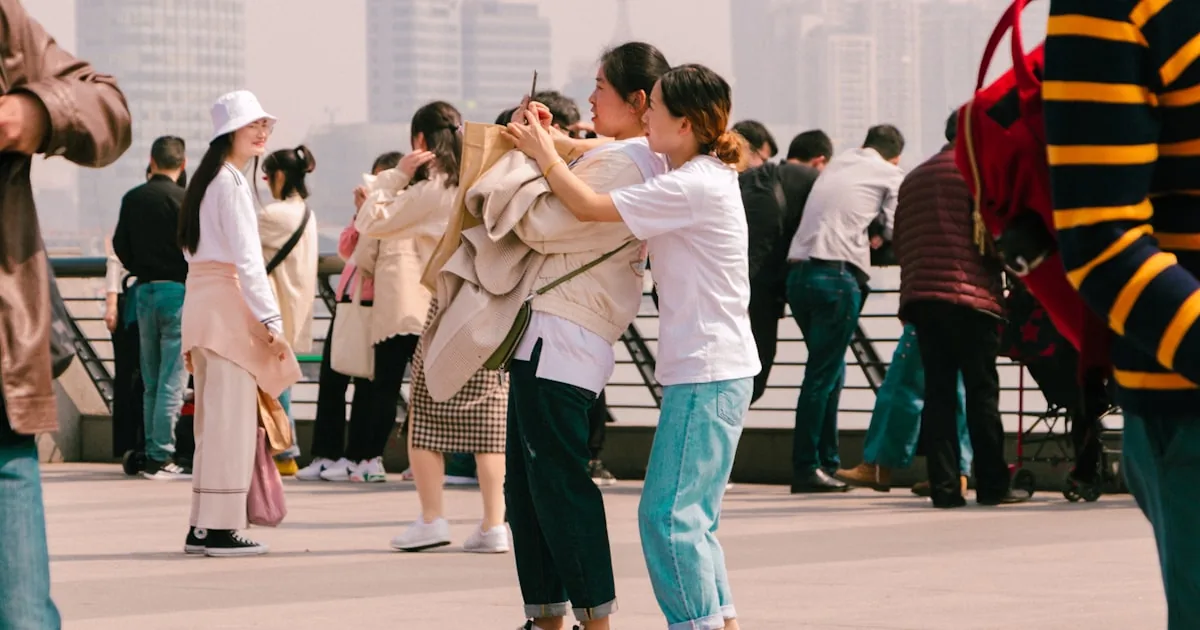
China is one of the safest major travel destinations in the world for personal safety. Violent crime against foreigners is extremely rare. The actual risks you need to plan for are tourist scams in a handful of famous zones, chaotic traffic, air quality on bad days, and a short list of topics you should not discuss with strangers. That is the honest answer.
Most of the fear around travel to China is imported from headlines about geopolitics, not from travelers who actually went. This guide walks through the real numbers, the specific scams you will meet in Beijing and Shanghai, how solo and solo female travel actually plays out, and the 5-minute prep that keeps a trip boring in the best possible way.
What this guide covers
China's actual violent crime rates versus the perception
The five tourist scams you will actually encounter and how to shut them down
Traffic, the biggest real safety risk
Solo travel and solo female travel
Food, water, air quality, and medical care
Political and cultural sensitivities
Emergency numbers, apps, and embassy contacts
A 2026 pre-trip safety checklist
FAQ on scams, payment fraud, night safety, and language barriers
Heading to China soon?
Take every guide offline — translation, payments, maps, and emergency help in one free app.
The Numbers: What Crime In China Actually Looks Like
China's violent crime rate is among the lowest in the world. The homicide rate sits around 0.5 per 100,000, compared with roughly 6.0 in the United States, 1.2 in the United Kingdom, and 1.3 in France. Robbery and violent assault against tourists are genuinely rare, and armed street crime is effectively nonexistent in major cities.
Why? A combination of heavy urban surveillance (the CCTV density is real), strict penalties for violent crime, and cultural factors that discourage street confrontation. Whether you approve of the methods is a separate conversation. The result on the ground is city streets that feel remarkably safe at 11 pm on a Tuesday.
This is backed up by what female solo travelers report consistently. A common line from travelers I know who spent 4-6 weeks in China in 2026: "I felt safer walking in Beijing at midnight than in my home city."
None of this means nothing can ever go wrong. It means the baseline is high.
The Five Tourist Scams You Will Actually Meet
Crime against tourists in China is about deception, not force. Five scams account for the vast majority of cases, and all five happen in the same short list of locations: Wangfujing and Qianmen in Beijing, People's Square and the Bund in Shanghai, the area around the Terracotta Army entrance in Xi'an, and West Lake in Hangzhou.
1. The Tea House Scam
How it works. Two or three friendly young people approach you on a touristy street, usually with "Can we practice our English?" or "We are art students from Sichuan visiting Shanghai". They suggest a tea house "just around the corner". You have tea. The bill comes and it is ¥1,500-3,000 for "rare" teas you did not order by name. Your new friends leave. The house expects you to pay.
How to shut it down. Decline any unsolicited invitation to a cafe, tea house, or "gallery" from a stranger who approached you. Polite and firm: "No thank you" and walk. If you have already sat down and the bill looks wrong, refuse to pay anything beyond a normal tea rate (¥30-60 per person) and call 110 from your phone. Police will side with you, tea house scams are well-known to local police and they actively prosecute operators.
2. The Art Student Scam
Same opening ("I am an art student, come see my exhibition"). The "gallery" is a back room with a pile of overpriced prints and two people running high-pressure sales. You are expected to buy something "as a souvenir" before you leave.
How to shut it down. Same as above. Decline the invitation at the street level and you never walk into the room.
3. The Jade / Pearl Market Scam
Mostly in Beijing's Pearl Market and parts of Shanghai. A "certified" jade or pearl is marked at ¥3,000, you bargain down to ¥800 feeling clever, and the item is worth ¥40. This is not illegal, it is the market price for uninformed buyers. You are just the last person holding the bag.
How to shut it down. Do not buy jade, pearls, or "antiques" at tourist markets in China. If you want jade, buy from a proper jewelry chain (Chow Tai Fook, Lao Feng Xiang) at fixed prices.
4. The Fake Monk Donation
A man in monk robes approaches you near a famous temple and hands you a small amulet or bracelet. Before you can refuse he is already telling you about the temple's "rebuilding project" and pulling out a donation book with ¥200-500 figures in it. Walking away is surprisingly hard once the bracelet is in your hand.
How to shut it down. Real Chinese monks do not solicit donations on the street. Refuse the bracelet. If it is already in your hand, hand it back and walk. If he follows you, walk into a shop.
5. The Taxi Meter "Broken"
Airport and major station taxi drivers sometimes claim the meter is broken and offer a "flat rate" of ¥300-500 for what should be a ¥150 ride. They may also offer the "scenic route" or try to swap your ¥100 note for a counterfeit as "change".
How to shut it down. Use Didi (China's Uber) for 99% of city rides. It accepts international phone numbers, is cheaper than taxis, and the fare is fixed before you board. If you must take a taxi, use the official queue, insist on the meter ("dabiaoqi please"), and never accept "flat rate" quotes.
The Biggest Real Safety Risk In China Is Traffic
Honestly, not scams. Traffic.
Chinese city traffic is chaotic in a way that catches Western pedestrians off guard. Green walking signals do not mean cars yield. Electric scooters appear silently on sidewalks and from the wrong direction. Some drivers treat red lights as suggestions on right turns. The rate of pedestrian incidents is meaningfully higher than in most Western cities.
Rules that keep you safe:
Even on a green walk signal, check for turning vehicles before stepping off the curb.
Electric scooters use sidewalks. Walk predictably and do not suddenly change direction.
Cross at marked crosswalks, and ideally cross with a crowd of locals. Drivers yield more reliably to groups.
Look both ways even on one-way streets. Scooters go the wrong way often.
Eye contact with drivers makes them marginally more likely to brake.
Every traveler I know who has had a close call in China had it with traffic, not with people.
Solo Travel And Solo Female Travel In China
China is a popular destination for solo travelers and consistently ranks among the safest for solo female travelers in global surveys. The infrastructure supports it: cheap transit, dense cities, 24-hour convenience stores, well-lit streets in most tourist zones, and a genuine lack of street harassment.
Solo female travel specifics
Street catcalling is near-zero. The cultural norm against public harassment of women is strong in Chinese cities.
Night walks in tourist and business districts are safe. I know women who regularly walk back to their hotels in Beijing, Shanghai, Xi'an, and Chengdu after 11 pm without incident.
Rural areas may bring curiosity, not danger. Older villagers sometimes stare at foreign women, especially blond hair, but "stares, not danger" is the consistent reporting.
Dress. Cities are casual and modern. Skirts, shorts, tank tops are all fine in urban China. Rural areas and religious sites warrant more modest dress as courtesy.
Hostels. Beijing, Shanghai, Xi'an, Chengdu, and Kunming all have active backpacker scenes if you want social interaction. Dorm theft exists and is the same risk as anywhere else, use a locker.
LGBTQ+ travelers
Being LGBTQ+ is not illegal in China, and violence against LGBTQ+ travelers is extremely rare. Public displays of affection for any couple (same-sex or not) are uncommon culturally, so a low-key demeanor is the norm. There is no legal same-sex marriage, which sometimes creates hotel booking awkwardness (booking two beds solves it). Shanghai has the most developed LGBTQ+ scene in mainland China.
Health Safety: Food, Water, Air, Medical
Food safety
Street food in China is generally safe if you apply common sense. Eat at stalls with high turnover, favor cooked food over raw, avoid shellfish unless the restaurant clearly specializes, and drink bottled water. Most experienced China travelers eat street food daily and have food poisoning rates similar to any other major travel destination.
The one category I avoid is "cold dishes" (凉菜, liáng cài) at low-turnover restaurants, because they sit out. In a busy restaurant at noon, cold dishes are fine.
Water
Tap water is not drinkable anywhere in China. Use bottled water or boil it. Hotels and restaurants automatically provide hot water and bottled water. A ¥2 bottle of water is available at any convenience store. Do not drink from the tap, and rinse your toothbrush with bottled water if you are sensitive.
Air quality
Beijing and northern Chinese cities have winter air quality issues, particularly December through February during heating season. AQI above 150 is common on bad days and occasionally spikes above 300.
Download an AQI app (IQAir or the built-in Alipay air quality widget) and check daily.
Wear an N95 or KN95 on days above AQI 150 if you have any respiratory sensitivity.
Plan outdoor sightseeing for AQI <100 days. Beijing in April-May and September-October is usually clean.
Southern and western China (Kunming, Chengdu, Xi'an, Yunnan, Guilin) generally have better air year-round than the north.
If you have asthma or COPD, bring your medication and consider southern routes.
Medical care
Major Chinese cities have excellent hospitals. English-speaking doctors are available at international clinics (Beijing United Family Hospital, Shanghai United Family, Parkway Health). Chinese public hospitals provide world-class emergency care but usually require payment upfront before treatment. Travel insurance with medical coverage is essential for a China trip. Bring prescription medications with you, foreign medications are hard to replace.
Political And Cultural Sensitivities
Political tensions between China and Western countries exist. They do not affect tourist safety. I have never heard of a foreign tourist being harassed for their nationality in China, and Chinese people overwhelmingly separate foreign governments from foreign individuals. Hospitality culture is strong.
That said:
Do not discuss sensitive topics (Taiwan, Tibet, Xinjiang, Hong Kong, Tiananmen) with strangers. This is less about danger and more about making everyone uncomfortable.
Do not photograph military installations, police, or sensitive government buildings. Airports, train stations, and obvious "no photos" signs apply. When in doubt, put the camera away.
Do not participate in protests or political activity. You are there as a tourist.
Respect religious sites. Dress modestly at temples and mosques, remove hats, do not touch statues.
VPN status. Western apps (Google, Instagram, WhatsApp, Facebook, most Western news) are blocked. Install a VPN before you arrive, because you cannot download one once you are in China. This is not a safety issue, it is a convenience issue, but it trips up every first-time traveler.
Emergency Numbers And What To Do
Core numbers:
Police: 110
Medical emergency: 120
Fire: 119
Traffic police: 122
Tourist hotline: 12301 (English support in major tourist cities)
In practice, these lines may not have English speakers at the regional level. Your best bet in a real emergency:
Contact your hotel first if you are not in immediate danger. The front desk will translate, call the right number, and dispatch help.
Use a translation app (Google Translate camera + voice, or Microsoft Translator) to communicate.
Find a nearby Chinese person to help. Most Chinese people will genuinely drop what they are doing to assist a foreigner in trouble.
Your embassy handles serious emergencies (lost passport, arrest, major medical issue, death in family). Save their address and number before you travel.
For lost passports, the process is: police report at the nearest station (police issue the report, this is what triggers the embassy replacement), then embassy visit with the report and photo ID. Budget 2-5 days for a replacement.
China Safety At A Glance: 2026 Risk Table
Risk | Likelihood | Severity | Prevention |
|---|---|---|---|
Violent crime against tourists | Very low | High | Standard street awareness |
Pickpocketing | Low | Low | Front pockets, zipped bag in crowds |
Tea house / art student scam | Medium in tourist zones | Financial (¥500-3,000) | Refuse unsolicited "friend" offers |
Taxi meter scam | Low-medium at airports | Financial (¥200-500) | Use Didi, insist on meter |
Traffic incidents | Medium | High | Watch for scooters, cross with crowds |
Food poisoning | Low-medium | Low-medium | Busy stalls, cooked food, bottled water |
Air pollution (Beijing winter) | High in Dec-Feb | Medium | Mask, AQI app, plan outdoor days |
Political/visa issues | Very low | High | Avoid sensitive topics, respect laws |
Earthquake (Sichuan, Yunnan) | Low | High | Know hotel emergency exits |
Pre-Trip Safety Checklist
VPN installed before you arrive (ExpressVPN, Astrill, Mullvad, install before landing)
Travel insurance with medical and evacuation cover
Prescription meds in original packaging with a doctor's note
Photocopy of passport + visa stored separately from the originals, plus a photo on your phone
Embassy contact saved in your phone contacts
Didi, Alipay, WeChat downloaded and Alipay Tour Pass linked to your Visa/Mastercard
Offline maps (Amap or Maps.me) with your hotels and main sights saved
Emergency contact card in Chinese with your hotel address, useful for taxi drivers and emergencies
Small cash reserve of ¥500-1,000 in small bills for edge cases
Two-factor auth backup codes for email and banking, in case your phone is lost
Frequently Asked Questions
Is China safe for American tourists in 2026?
Yes. American tourists face no specific safety risk in China beyond what any other foreign tourist would encounter. Political tensions exist at the government level but do not translate into risk for individual visitors. Chinese hospitality culture is strong and Chinese people overwhelmingly separate foreign governments from foreign individuals.
Is China safe for solo female travelers?
Very safe. China consistently ranks among the safest countries for solo female travelers in global surveys. Street harassment is near-zero, violent crime is rare, and public transit is well-lit and crowded late into the evening. Standard precautions apply (avoid dark empty areas alone at 3 am), but the baseline is significantly safer than most Western cities.
What is the biggest safety risk in China for tourists?
Traffic, not crime. Chinese city traffic is chaotic, electric scooters use sidewalks and run red lights, and drivers do not always yield to pedestrians on green signals. Watch for scooters, cross with crowds of locals, and make eye contact with drivers at turning lanes.
Can I drink tap water in China?
No. Tap water is not drinkable anywhere in China. Use bottled water, boiled water, or a filter. Hotels provide bottled water and hot water on request. Boiled water (热水, rè shuǐ) is free at most restaurants and is what locals drink.
What should I do if I get scammed in a tea house in China?
Refuse to pay the inflated bill. Call 110 immediately, police actively prosecute tea house scams and will side with you. Stay put until police arrive, and have a friend or your hotel on the phone as backup. The scam relies on tourists feeling trapped into paying. Police intervention ends it quickly.
Tags
Heading to China soon?
Take every guide offline — translation, payments, maps, and emergency help in one free app.
Travelers also asked
View all →- Is China worth visiting despite negative media portrayals?
- What is the single best destination to prioritize for a first trip to China?
- How difficult is independent travel in China regarding transport and payments, and are local guides necessary?
- Are 'zero-dollar' or free tour packages in China safe for elderly travelers?