China Night Bus Travel Guide for Budget Travelers (2026)
On this page11 sections
- 01What this guide covers
- 02What a Chinese night sleeper bus actually is
- 03Real 2026 routes and prices
- 04Which night buses are worth taking
- 05Booking a night bus as a foreigner
- 06Bunk assignment and what to ask for
- 07Safety on a Chinese night bus
- 08Night bus versus night train
- 09Essential phrases for the bus counter
- 10What to pack for a Chinese sleeper bus
- 11FAQ
China's high-speed rail network is stunning, but it does not reach every valley, border town, or mountain city a budget traveler wants to visit. When the train runs out of track and flights cost ¥1,200, the night sleeper bus (卧铺车, pronounced wo pu che) remains the cheapest way to cover 400-1,000 km overnight while saving a hotel night. If you are willing to sleep in a 180 cm bunk alongside 39 strangers, a night bus will often move you across a province for under ¥200.
Most foreign travelers never try one because the booking, the terminology, and the safety reputation all feel opaque. Here is how night buses actually work in 2026.
What this guide covers
What a sleeper bus (卧铺车) is, and how it differs from a regular long-distance bus
Real 2026 routes, distances, durations, and prices
Bunk dimensions, amenities, and what to actually expect on board
How to book at a bus station with no English
Safety, theft, and how to protect your passport and phone overnight
Night bus versus night train: when each one wins
A bus terminal phrase list you can screenshot
Getting around China without Chinese?
Save routes and key phrases offline — show your driver the address in Chinese with one tap.
What a Chinese night sleeper bus actually is
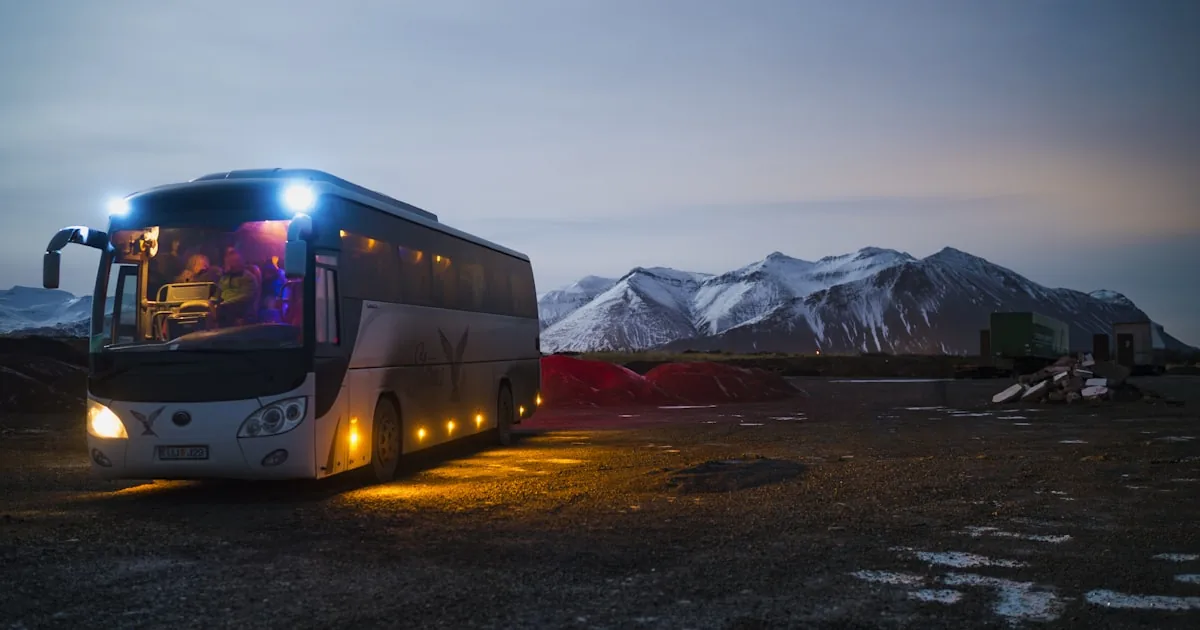
A sleeper bus is a full-size coach retrofitted with three rows of stacked bunks instead of seats. Two aisles separate the rows, and each bunk is a narrow, slightly reclined platform with a thin pillow, a flat blanket in winter, and a shoe net. The bunks are stacked in upper and lower pairs, so each bus sleeps around 36-40 passengers in roughly the same footprint as a 55-seat regular coach.
A few key facts that catch foreigners off guard:
Bunks are 180-185 cm long, which is tight for anyone over 5'11"
Bunks are 55-60 cm wide, which is tighter than a train hard sleeper
You remove your shoes at boarding and put them in a bag under your bunk
The toilet on board is for emergencies; the driver stops every 2-3 hours at service areas
Smoking is banned nationwide on sleeper buses but enforcement is uneven
Upper bunks are colder in winter and warmer in summer; windows are tinted but rarely openable
Sleeper buses dominate routes between 400 and 1,000 km where no high-speed rail exists or where the rail route is indirect. They are most common in Yunnan, Sichuan, Guizhou, Xinjiang, northeastern China, and across the Tibetan plateau's feeder corridors.
Real 2026 routes and prices
Prices change with fuel cost and holiday surcharges but the 2026 range below reflects standard off-peak tickets. Expect a 20-30 percent bump during Spring Festival, Labor Day, and October's Golden Week.
Route | Distance | Duration | 2026 Price |
|---|---|---|---|
Kunming to Lijiang (昆明 to 丽江) | 520 km | 9 h | ¥180-220 |
Chengdu to Dali (成都 to 大理) | 750 km | 14 h | ¥240-300 |
Xi'an to Chongqing (西安 to 重庆) | 680 km | 11 h | ¥160-200 |
Urumqi to Kashgar (乌鲁木齐 to 喀什) | 1,470 km | 24 h | ¥260-340 |
Lhasa to Shigatse (拉萨 to 日喀则) | 280 km | 6 h | ¥90-130 |
Harbin to Mohe (哈尔滨 to 漠河) | 900 km | 15 h | ¥220-280 |
Chengdu to Kangding (成都 to 康定) | 320 km | 8 h | ¥140-180 |
Guilin to Zhangjiajie (桂林 to 张家界) | 480 km | 10 h | ¥150-200 |
Night buses typically depart bus stations between 6 PM and 9 PM and arrive between 5 AM and 9 AM. The driver pulls over for a mandatory rest at government-enforced highway rest stops, which is why even a 500 km route can take nine hours.
Which night buses are worth taking
Some sleeper bus routes are excellent. Others exist mostly because no better option does. The honest breakdown:
Worth taking
Kunming to Lijiang: No high-speed rail direct, regular train is slower and harder to book, overnight flight is ¥700+
Chengdu to Kangding and further into western Sichuan: No rail at all; the only alternatives are daytime buses that lose you a full day
Chengdu to Dali: High-speed rail exists but requires a change; the direct night bus saves a hotel plus the transfer headache
Urumqi to Kashgar: Train is fine but sells out in summer; bus is the reliable backup
Skip unless you are desperate
Beijing to Shanghai: Take the Fuxing high-speed train in 4.5 hours for ¥553, or a night train for ¥500 in a soft sleeper
Guangzhou to Shenzhen: Any short-hop high-speed rail route under 200 km
Shanghai to Hangzhou: 45 minutes by high-speed rail for ¥73
The general rule: if a city pair has a direct Fuxing or Hexie Hao high-speed train, take the train. Sleeper buses only make sense where the rail network has gaps.
Booking a night bus as a foreigner
This is the part most travelers dread, and with good reason. Almost no night bus routes are sold on Trip.com or Ctrip's English interface. The Chinese-language booking app 客运无忧 and the WeChat mini-program 巴士365 list most routes but require Chinese ID or a verified Chinese phone number. For foreigners, the realistic path is:
Arrive at the bus station during the afternoon of your departure day (1-3 hours before)
Find the 售票处 sign, which means "ticket window"
Show the counter agent a written card with the destination in Chinese characters and today's date
Pay cash, Alipay, or WeChat Pay — foreign Visa/Mastercard are rarely accepted at rural bus counters
Collect a paper ticket with your bunk number and departure time
Walk-up tickets for sleeper buses rarely sell out outside of national holidays, so the day-of approach works for almost every route. If you are traveling during Golden Week or Chinese New Year, book two or three days ahead by asking your hostel or hotel front desk to buy the ticket on the Chinese app.
Major bus stations with foreign-friendly signage in 2026 include Kunming West Bus Station (昆明西部客运站), Chengdu Chadianzi Bus Station (成都茶店子客运站), Xi'an Three Fu Wan (西安三府湾), and Urumqi Nianzigou Bus Station (乌鲁木齐碾子沟客运站). All four have either English counters or cast staff who will patiently work with Google Translate.
Bunk assignment and what to ask for
When you buy the ticket, the agent will usually let you choose 上铺 (upper bunk, shang pu) or 下铺 (lower bunk, xia pu). A few rules of thumb that experienced travelers follow:
Lower bunks are easier to access, easier to use with luggage, and warmer in winter. They are also right next to the aisle, which means more noise and the occasional accidental kick from passing passengers.
Upper bunks are quieter, more private, and offer a window view on daytime portions. They are harder to climb into if you have a bad knee, and they sway more in mountain corners.
Front of the bus is quieter for sleep but catches every hard brake.
Rear of the bus is bumpy and close to the toilet (which in 2026 still often smells).
Middle of the bus is the sweet spot most experienced bus travelers request.
If you have a preference, tell the counter agent 前面 (qian mian, front), 后面 (hou mian, back), or 中间 (zhong jian, middle) and point to the desired position on their seat map.
Safety on a Chinese night bus
Night buses in China are broadly safe in 2026 — accident rates have fallen sharply since mandatory GPS monitoring and driver shift limits were enforced in 2018-2020. The real risks are petty theft and losing track of your belongings during sleep, not crashes. A few rules that keep your trip uneventful:
Keep your passport, phone, and wallet in a small bag clipped or tied to your body while you sleep — never leave them in a shoe net or jacket pocket on the bunk
Lock your main backpack with a small TSA padlock and store it under your bunk or in the overhead net
Do not leave anything in the overhead net you cannot afford to lose — this is where most theft happens
Do not take anything the driver or assistant offers to hold for you — keep your valuables with you
Save the bus company's phone number from the back of your ticket in case of a breakdown
Sleeper bus fires were a real problem in the early 2010s but the current generation of buses has metal luggage bins, enforced no-smoking rules, and fire suppression equipment. The biggest remaining safety issue is that night buses do not have seatbelts on the bunks, so any hard stop sends you sliding forward.
Night bus versus night train
On routes where both exist, experienced travelers almost always pick the train. Here is the honest comparison:
Factor | Night Bus | Night Train Hard Sleeper |
|---|---|---|
Typical price | ¥150-280 | ¥250-450 |
Sleeping space | 180 cm bunk, 55 cm wide | 190 cm bunk, 75 cm wide |
Toilet | On board, often rough | On board, cleaner |
Stops | Every 2-3 hours at rest areas | Stations but you stay on board |
Booking difficulty for foreigners | High (no English apps) | Low (Trip.com in English) |
Arrival location | Bus station (often far from center) | Train station (usually central) |
Delays | Weather, traffic, checkpoints | Rare, mostly on-time |
Night bus wins on price and occasionally on directness (no transfer needed on routes like Chengdu-Kangding). Night train wins on comfort, space, booking ease, arrival location, and safety. Most travelers who try both end up preferring the train unless the route genuinely has no rail option.
Essential phrases for the bus counter
Screenshot these before you arrive — the bus station staff will not speak English outside the biggest cities.
Ticket to [destination], today — 今天去[destination]的票 (jin tian qu ... de piao)
Night bus, please — 夜班车 (ye ban che)
Upper bunk — 上铺 (shang pu)
Lower bunk — 下铺 (xia pu)
Middle of the bus — 中间 (zhong jian)
What time does the bus leave? — 几点发车 (ji dian fa che)
How long is the trip? — 要多久 (yao duo jiu)
Where is gate number 3? — 3号门在哪里 (san hao men zai na li)
I am a foreigner — 我是外国人 (wo shi wai guo ren)
Here is my passport — 这是我的护照 (zhe shi wo de hu zhao)
Where does the bus arrive? — 到哪里 (dao na li)
Screenshot the destination city name in Chinese characters separately so you can point to it at the counter without scrolling through your phone. Most travelers find this is the single most useful preparation step before a bus station visit.
What to pack for a Chinese sleeper bus
The bunk comes with a thin blanket and an even thinner pillow, no matter what season you ride in. Everything else you need to bring yourself. A minimal packing list that experienced backpackers rely on:
Eye mask and earplugs — the interior lights stay on at some highway checkpoints and your neighbors will talk past midnight
A small inflatable neck pillow — stacks on top of the bus pillow for much better support
A warm layer even in summer — the AC on upper bunks can drop below 18 C at night
A bottle of water and dry snacks — the rest stops sell instant noodles and overpriced crisps, little else
A charging cable plus a small power bank — some newer sleeper buses have USB ports at each bunk, but many do not
Wet wipes and hand sanitizer — the rest stop toilets are often squat style with no soap
A flashlight or phone torch — for finding your shoes and luggage in the dark
Avoid bringing food with strong smells (hot pot seasoning, dried fish, stinky tofu) because the enclosed space means every passenger will remember you for the next ten hours. Fresh fruit, crackers, and sealed packaged snacks are the polite choice.
FAQ
Are Chinese night buses safe for solo travelers in 2026?
Yes, with reasonable precautions. Accident rates have dropped significantly since mandatory driver monitoring was enforced. The real risk is petty theft while you sleep, which is prevented by keeping your passport, phone, and wallet in a body-worn bag. Solo female travelers report sleeper buses feel safer than overnight hostels on most popular backpacker routes.
Can I book a night bus in English online?
Almost never. The major Chinese bus booking apps and WeChat mini-programs require Chinese ID and verified domestic phone numbers. Trip.com and Ctrip list a small number of tourist-oriented routes but coverage is patchy. Plan on buying at the counter on the day of travel, or ask your hostel front desk to book for you.
How big is the bunk on a Chinese sleeper bus?
Standard bunks are 180-185 cm long and 55-60 cm wide. If you are over 5'11" (180 cm), your feet will hang off and the bunk will feel cramped. The bunks are also slightly reclined rather than flat, which helps in mountains but is not as comfortable as a lie-flat sleeper train berth.
Do night buses accept foreign credit cards?
Rarely. Payment at rural bus counters is usually cash, Alipay, or WeChat Pay. Load Alipay Tour Card or WeChat Pay for Tourists before your trip — both accept foreign Visa and Mastercard credit cards with a 3 percent top-up fee.
Is a night bus cheaper than a night train in China?
Slightly. Night buses typically run ¥80-150 cheaper than a comparable night train hard sleeper for the same city pair. The saving is real but the night train is almost always more comfortable, more punctual, and easier to book, so the price gap rarely justifies the downgrade unless no train exists.
Tags
Getting around China without Chinese?
Save routes and key phrases offline — show your driver the address in Chinese with one tap.