Xinjiang 5-Day Road Trip in April: Itinerary and Driver Guide
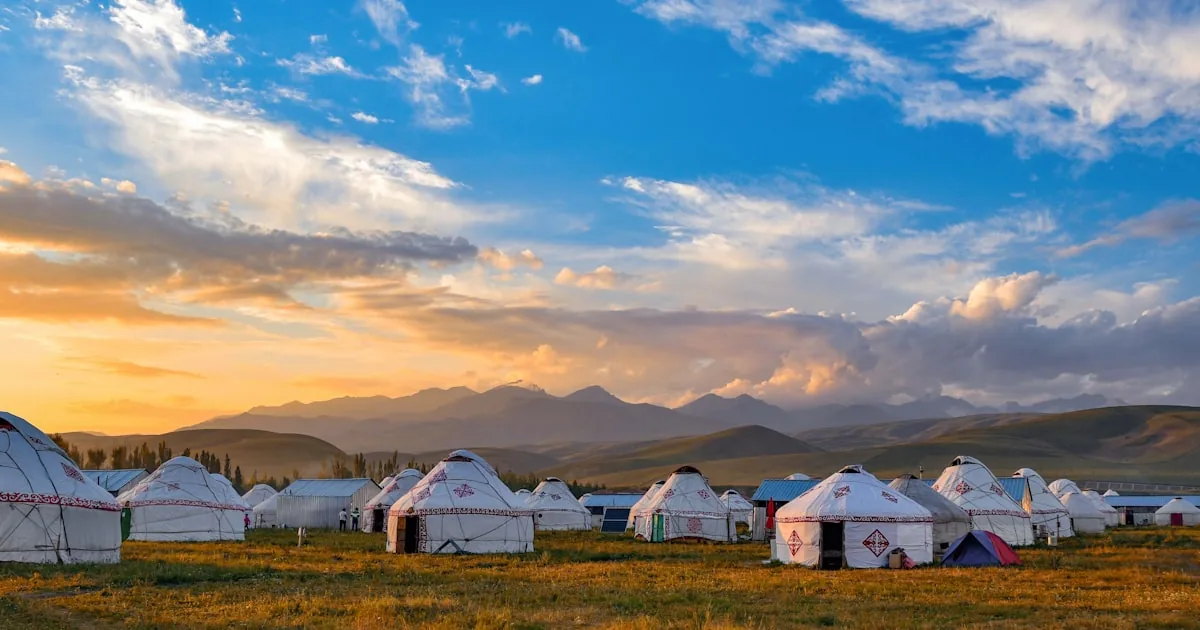
Quick answer: In April, a 5-day Xinjiang road trip loops Urumqi to Sayram Lake and Nalati. Expect apricot blossoms and snow-capped peaks, not green grassland (greening peaks late June). The Duku Highway is still snow-closed until late May. Foreigners cannot self-drive on a foreign or international license, so most hire a local driver.
A 5-day road trip out of Urumqi is doable in April if you stay on the northern route, skip the Duku Highway (closed until early summer), and build buffer time for security checkpoints. The landscape is still brown in high-altitude grasslands this early in the year, but the roads are open, the crowds are almost non-existent, and Uyghur bazaars in Urumqi and Turpan are at their calmest before the summer tourist wave.
What this guide covers
A validated 5-day Urumqi loop with realistic driving times and distances in km
Why the Duku Highway (S101/G217 Dushanzi-Kucha section) stays closed through April
Permit and checkpoint realities for foreign passport holders
Hotel registration rules — which accommodations accept foreign guests
Food stops: laghman, da pan ji, polo rice, and naan
FAQ on car rental, maps, and communication
Heading to China soon?
Take every guide offline — translation, payments, maps, and emergency help in one free app.
The 5-day loop: Urumqi → Sayram Lake → Nalati → back
Before you book anything, understand that April is early spring in Xinjiang. Nights below freezing are possible above 2,000 meters elevation. Days are dry, usually 8°C to 18°C in the valleys, colder on mountain passes. High pastures at Nalati and Sayram Lake are still brown with patches of snow. The bright green that makes Xinjiang grasslands famous arrives in late May.
The April-viable itinerary
Day | Route | Distance | Pure drive time | Realistic total | Difficulty |
|---|---|---|---|---|---|
Day 1 | Urumqi → Dushanzi | 260 km | 3 hrs | 4 hrs | Easy |
Day 2 | Dushanzi → Sayram Lake | 300 km | 3.5 hrs | 4.5 hrs | Moderate |
Day 3 | Sayram Lake → Yining area | 220 km | 3 hrs | 4 hrs | Moderate |
Day 4 | Yining → Nalati grasslands | 250 km | 3 hrs | 4.5 hrs | Moderate |
Day 5 | Nalati → Urumqi (northern route G30) | 550 km | 6-7 hrs | 8-9 hrs | Hard |
Total: roughly 1,580 km over 5 days. The Day 5 return leg is the longest single drive — plan to depart by 8:00 AM and arrive in Urumqi before 6:00 PM so you are not doing the final hour in the dark.
Why the original "add Qiongkushitai" plan does not work in April
Some travelers try to squeeze in Qiongkushitai village (琼库什台) via the narrow mountain road from Yining. In April, the approach is a rough gravel track through pastoral land that is still brown, the village accommodations are largely closed for the off-season, and the drive eats 4 hours each way for a landscape that only turns photogenic in June. Skip it unless you are traveling in high summer.
Why the Duku Highway is not an option
The famous Duku Highway (独库公路) running from Dushanzi to Kucha via high mountain passes is closed every year through April, and usually until early to mid-June. The closure is driven by snow and avalanche risk on the highest sections of the G217 / S101 route, which crosses multiple passes above 3,000 meters. Official reopening dates are announced year by year by the Xinjiang transport authority.
Any itinerary that loops south via Duku in April will not work — you will be turned back at the snow gate.
Route choices: northern vs southern
For foreign passport holders, the choice of return route is not just about distance — it is about which security and permit checkpoints you will hit.
Northern route (G30 via Dushanzi) — recommended
This is the highway used in the itinerary above. It is the main east-west expressway through northern Xinjiang, passes through no designated sensitive zones, and does not require special travel permits beyond your standard Chinese tourist visa. Checkpoint stops happen but are routine.
Southern route (G0711 via Korla/Hejing) — not recommended without permits
A shorter-distance return option in theory. In practice, the southern route passes through Hejing County and areas where foreigners have historically faced additional permit requirements enforced at police checkpoints. The exact rules change month to month, and travelers have reported being turned around at checkpoints and forced to backtrack. Unless you have arranged permits in advance through your car rental agency or a licensed guide and confirmed with the local Public Security Bureau, avoid this route.
Logistics for foreign travelers
Xinjiang has unique security protocols that do not exist in other parts of China. None of this is a dealbreaker, but you need to prepare for it.
1. Hotel registration (酒店登记)
Not every hotel is licensed to host foreign guests. In smaller towns and county seats, your options can drop to a single licensed hotel. In Urumqi, Yining, and the Nalati tourist area, major chains (Hanting, Jinjiang Inn, Vienna, and 4/5-star internationals) generally handle foreign check-ins without drama.
Book through Trip.com, Ctrip, or Booking.com and filter for "suitable for foreigners" (接待外宾)
Message the hotel directly in advance (WeChat works) to confirm they will register your passport with the local police
Always carry your passport — the registration process is done at the front desk on arrival
2. Police checkpoints
You will hit multiple security checkpoints on highways, at city perimeters, and near any tourist attraction of significance. Checkpoint procedure:
All passengers exit the vehicle with passports in hand
Each person walks through a scanner that reads the passport photo page
Officers may ask where you came from and where you are going
A routine stop takes 10 to 15 minutes, occasionally stretching to 45 minutes during busy periods or heightened security
Your phone may occasionally be inspected. Do not carry photos or map screenshots of any military installations or border zones. Never take photos of checkpoints themselves.
3. Speed limits and average speed enforcement
Xinjiang enforces average speed limits over long distances, not just at single camera points. You can get a fine weeks later if your overall time between two checkpoints translates to a speed above the limit, even if your instantaneous speed was always legal.
Expressways are typically capped at 100 km/h or 120 km/h
Construction zones drop to 60 km/h or even 40 km/h
Build in buffer time instead of trying to make up for delays
Use Amap (高德地图) or Baidu Maps — Google Maps is both blocked and wildly outdated for Xinjiang road data
4. Communication and internet
VPNs are widely reported to be unstable or blocked inside Xinjiang. Even when a VPN works, speeds can drop to nothing. Prepare for periods where you cannot reach international services.
Download offline Amap regions before you leave Urumqi
Use WeChat for all local communication (hotel bookings, drivers, restaurants)
Pre-download translation apps and common Uyghur/Mandarin phrases
Tell family and friends in advance that you may go offline for parts of the trip
Buy a Chinese SIM card in Urumqi on arrival — China Mobile or China Unicom prepaid 5G works everywhere along the northern route
Foreigners cannot legally drive in Xinjiang (or anywhere in China) on a foreign driving licence or an International Driving Permit. China is not a party to the international road-traffic conventions, so no IDP is valid here and no Chinese body issues one. To drive yourself you need either a full Chinese driving licence or a temporary driving permit (临时驾驶许可) issued by the traffic police, valid for the length of your visa up to 90 days and used together with your home licence. Because arranging this takes time and a vehicle rental in your name, the overwhelming majority of foreign visitors hire a car with a local driver instead. Budget for a driver-and-vehicle package rather than a self-drive rental when planning this loop.
What to eat along the way
Xinjiang food is one of the reasons to go. Uyghur cuisine is meat-heavy, cumin-forward, and deeply distinct from Han Chinese food. Try these as you travel:
Laghman (拉条子 / لەغمەن) — hand-pulled noodles topped with stir-fried mutton, tomatoes, peppers, and cumin. ¥25 to ¥45 a bowl at a local noodle shop.
Da pan ji (大盘鸡) — "big plate chicken" with potatoes and wide belt noodles, meant for sharing. ¥80 to ¥150 for a half portion, ¥150 to ¥250 for a full portion that feeds 3-4.
Polo rice (抓饭 / polu) — saffron-colored rice pilaf with mutton, carrots, and raisins, cooked in a huge cauldron. ¥25 to ¥40 a plate.
Samsa — baked meat pastries from tandoor ovens, ¥5 to ¥10 each. Best eaten hot near the bazaar.
Naan bread — baked in clay ovens across every town. ¥3 to ¥8 per round, incredible with tea.
Do not discuss politics, religion, or ethnic policy with strangers or your driver. The food and hospitality are the point — enjoy the meal and keep conversation light and respectful.
Practical tips
Car rental
Rent in Urumqi rather than flying into Yining or smaller airports — the variety and price of rental cars is much better in the capital. Expect ¥250 to ¥500 per day for a mid-size SUV, rising in peak summer. International drivers with only a foreign license cannot legally drive in China. You need either:
A Chinese driving license (almost impossible as a short-term visitor), or
A hired local driver through your rental agency or tour operator (¥500 to ¥900 per day including the driver's fuel and meals)
For most foreign travelers, the hired-driver option is the only practical route.
Fuel
Fill up in Urumqi, Dushanzi, Yining, and Nalati. Stations are sparse between towns and non-existent on mountain sections. Foreign passport holders sometimes face extra registration at rural gas stations — your driver will handle this.
Documents
Keep your passport in a front pocket, not buried in your luggage, for the entire trip. You will pull it out dozens of times at checkpoints and hotels.
When to cancel if rules change
Xinjiang regulations can shift with little notice. Always verify the latest restrictions with your car rental agency, local guide, or Chinese embassy advisory the week before your trip, and again on arrival in Urumqi before you start the drive.
Sayram Lake (elevation 2,073 m, Xinjiang's highest and largest alpine lake) is in a transition state in April. The famous winter blue ice melts from late March into April, pushing slabs of ice onto the shore in dramatic ice-shove (冰推) formations, but the lake is not yet ringed by summer wildflowers. The shoreline loop is about 90 km; drive it counterclockwise, entering by the East Gate and exiting by the South Gate, with the speed limit 30-50 km/h and pull-off bays every 2-3 km for photos. In peak season (1 April-31 October) entry is CNY 70 plus a CNY 75 self-drive fee, totaling about CNY 145 per person and valid 24 hours. Safety note from local drivers: leave the western shore before 16:00, as strong afternoon wind-and-snow squalls (locally called 白毛风, white-hair wind) blow up regularly.
Nalati caps self-drive entry at 300 vehicles per day. Since May 2025 you must reserve a self-drive slot in advance through the WeChat mini-program 智游那拉提 (Smart Travel Nalati), bookable up to 7 days ahead, and uploads of your driving licence and vehicle-registration photos are required; one real-name WeChat account can book only one vehicle per day, and tickets are released dynamically based on demand, road, and weather conditions. Most visitors skip self-driving inside the park and ride the shuttle buses on the three internal routes instead. Peak-season pricing (1 April-31 October): entry CNY 95, shuttle CNY 40; driving your own car all the way in costs CNY 300, which locals consider poor value. At entry you scan the electronic voucher from the mini-program.
April weather in the Yili Valley swings hard. Daytime can reach 20-28°C while mornings and evenings drop to 10-15°C or lower, and it is colder still at altitude (above roughly 1,800 m, rain often turns to sleet or snow). Pack in layers: a windproof shell plus a fleece or light down jacket is essential, especially on the exposed, windy shore of Sayram Lake. Spring is also Xinjiang's windiest, dustiest stretch: strong winds and blowing dust are common from April into the summer, occasionally reducing visibility, so build buffer time into driving days and check the local weather forecast the night before each leg.
Frequently asked questions
Is April too early to visit Xinjiang grasslands?
Yes and no. The high grasslands at Sayram Lake, Nalati, and Bayinbuluke are still brown and patchy with snow in April — they only turn bright green from late May onward. On the other hand, Urumqi, Turpan, and Yining at lower elevations are pleasant, roads are open on the northern loop, and tourist crowds are minimal. If you prioritize empty trails and bazaars over peak greenery, April works.
Can I drive myself in Xinjiang as a foreigner?
No. Foreign driving licenses are not recognized in China, and international driving permits do not bypass this. You need either a Chinese license (not realistic for short-term visitors) or a hired local driver. Most international travelers rent a car with driver through the rental agency or a licensed travel operator.
Do I need a special permit to visit Xinjiang?
For standard tourist destinations on the northern loop (Urumqi, Turpan, Sayram Lake, Yining, Nalati), your Chinese tourist visa is enough. Some border and southern areas (parts of Kashgar's surrounds, the Pamir Highway, Karakoram, Hotan south) require additional permits that your travel agency arranges in advance.
What is the Duku Highway and when does it open?
The Duku Highway is the scenic high-altitude mountain road connecting Dushanzi in the north to Kucha in the south. It crosses multiple 3,000+ meter passes and is closed every year due to snow. Official reopening dates vary — historically somewhere between early and mid-June through early October. Never plan an April or early May itinerary that depends on it.
How much does a 5-day Xinjiang road trip cost?
Rough budget per person in a group of two: ¥4,500 to ¥7,000, covering hotel (¥300-500/night), hired driver plus car (¥3,000-4,500 split two ways), fuel, food, and attraction entries. Solo travelers pay substantially more because the driver cost does not split.
April is apricot-blossom season in the Yili Valley, not green-grassland season. The grasslands at Nalati and Sayram Lake are still brown and dormant in April, often with snow on the surrounding peaks; the meadows only turn lush emerald from late June into early July, when the grass enters its rapid-growth phase. If you come in April expecting the postcard green pastures, you will be disappointed. What April does offer is the wild apricot bloom: the southern slopes of the Yili Valley hold a roughly 300 km corridor of wild fruit forest, with the most famous stands at Tulergen Apricot Valley (Xinyuan County) and the Daxigou wild fruit forest (Huocheng County). Tulergen blooms first, usually early to mid-April; Daxigou opens about a week later, often lasting into late April. Each bloom lasts only 7-10 days, so timing is tight and weather-dependent.
Tags
Heading to China soon?
Take every guide offline — translation, payments, maps, and emergency help in one free app.
Travelers also asked
View all →- Has anyone recently hired a car with a temporary license for a West Sichuan itinerary in April?
- What should I prepare before an overland Xinjiang and Qinghai trip entering China from Kyrgyzstan?
- What are the options for public transportation from Tashkurgan to Kashgar, and do I need to book tickets in advance?
- Can I get a temporary driving permit in Guangzhou and use it for a Xinjiang self-drive trip?