Hong Kong Travel Guide for First-Timers (2026): Visas, Transport, Districts & Costs
On this page10 sections
- 01Visas and entry: most people don't need one
- 02Getting from the airport to the city
- 03Districts and where to stay
- 04What to see (and the entry prices)
- 05Getting around: the MTR and Octopus card
- 06Food: where Hong Kong actually shines
- 07Best time to visit
- 08What it costs
- 09Crossing into mainland China: the Greater Bay Area
- 10FAQ
Hong Kong Travel Guide for First-Timers (2026): Visas, Transport, Districts & Costs
If you're planning travel to Hong Kong for the first time, here's the short version: most Western passport holders walk in visa-free for 90 days with zero paperwork, the airport-to-city ride is fast and cheap, and three to five days is the sweet spot. Hong Kong is small, dense, and ruthlessly efficient, so you can see a lot quickly if you don't waste time. This Hong Kong travel guide covers entry rules, getting in from the airport, where to stay, what to actually see, how to ride the MTR, food, the best months, a realistic budget, and the easy hop across the border into mainland China.
A note on geography that trips people up: Hong Kong runs on its own immigration system, currency, and rules, separate from mainland China. A Chinese visa does not get you into Hong Kong, and Hong Kong visa-free entry does not get you into Shenzhen. Treat them as two countries for planning purposes.
Visas and entry: most people don't need one
This is the part that surprises first-timers. Citizens of the US, UK, Canada, Australia, most of the EU, and dozens of other countries get visa-free entry to Hong Kong. The free stay is usually 90 days (180 days for British nationals). No application, no fee, no online form.
Hong Kong scrapped its arrival/departure cards entirely back in October 2024, so there's no paper slip to fill out on the plane anymore. There's also no ETA or pre-arrival registration for most visitors (one exception: Indian nationals and a handful of other nationalities still need Pre-Arrival Registration, which is free but takes a couple of weeks). You land, walk to immigration, show your passport and a return or onward ticket, answer a question or two if asked, and you're through.
If you hold a US passport and want the full breakdown including what counts as proof of onward travel, we wrote a dedicated piece: Hong Kong visa for US citizens.
One real gotcha: if you plan to cross into mainland China (Shenzhen, Guangzhou) and you're from a country that needs a Chinese visa, sort that out before you fly. Hong Kong's airport won't help you with it.
Getting around China without Chinese?
Save routes and key phrases offline — show your driver the address in Chinese with one tap.
Getting from the airport to the city
Hong Kong International Airport sits on Lantau Island, a fair distance from the action. You have three sane options.
Airport Express is the fast one. Trains run every 10 minutes from around 5:50am to 1:15am. A single to Hong Kong Station (Central) is HK$115 and takes 24 minutes; to Kowloon Station it's HK$105 and about 21 minutes. The killer feature: free shuttle buses connect the Airport Express stations to major hotels in Central and Tsim Sha Tsui, and if you tap in with an Octopus card you get a free MTR connection within an hour. Buy a Round Trip if you're returning within 30 days, it's cheaper than two singles.
Airport buses (Cityflyer "A" routes) are the budget pick and honestly fine. The A21 runs to Kowloon (Mong Kok, Jordan, Tsim Sha Tsui) for HK$34.60; the A11 heads to Hong Kong Island for about HK$40. Slower (45 to 70 minutes depending on traffic) but a third of the price, and you see the city on the way in. Pay with Octopus and the return leg is discounted.
Taxi is the door-to-door option. Reckon on HK$300 to HK$340 to Central or Tsim Sha Tsui including the tunnel and bridge tolls, plus a few dollars per bag. Worth it late at night or with heavy luggage, overkill otherwise.
My take: get an Octopus card at the airport first, then take the A21 bus if you're on a budget or the Airport Express if you value the 25 minutes. For more detail if you're just passing through, see our Hong Kong 8-hour layover guide.
Districts and where to stay
Hong Kong splits into Hong Kong Island (south) and Kowloon (north), with Victoria Harbour between them. The Star Ferry and the MTR connect the two in minutes.
Tsim Sha Tsui (TST), Kowloon is the default first-timer base, and it's a good one. You're walking distance to the harbourfront, the Avenue of Stars, museums, and the nightly Symphony of Lights, with a huge range of hotels from hostels to five-stars and food at every price point. We have a whole guide on choosing the perfect hotel in TST if you want to narrow it down.
Central / Sheung Wan, Hong Kong Island is polished, walkable, and well-connected, with the Peak Tram terminus, the bar-and-restaurant zone of SoHo, and old-Hong-Kong streets in Sheung Wan (antique shops, dried-seafood markets, the PMQ design complex). Room rates run higher here. Great if you want convenience and don't mind paying for it.
Causeway Bay, Hong Kong Island is shopping and energy: Times Square, Lee Gardens, late-night street food, packed on weekends. Pick it if retail and buzz are your thing.
Mong Kok, Kowloon is the densest, loudest, most "this is the Hong Kong from movies" district. Street markets, neon, cheap eats, budget hotels. Fun to stay in if you don't mind noise.
For a base, I'd put a first-timer in TST. It's central to everything and you'll cross the harbour by ferry constantly, which never gets old.
What to see (and the entry prices)
You don't need to overplan. Here's what earns its spot.
Victoria Peak is the postcard view, and yes, go. The historic Peak Tram up the hill plus the Sky Terrace 428 viewing deck runs HK$144 round trip for adults. The catch: queues can be brutal, so go early morning or after dark, and skip the tram queue by walking up via the bus (route 15) or taxi if the line is insane.
The Star Ferry between TST and Central is the best HK$3 to HK$4 you'll spend. A ten-minute crossing with the full skyline on both sides. Do it at dusk.
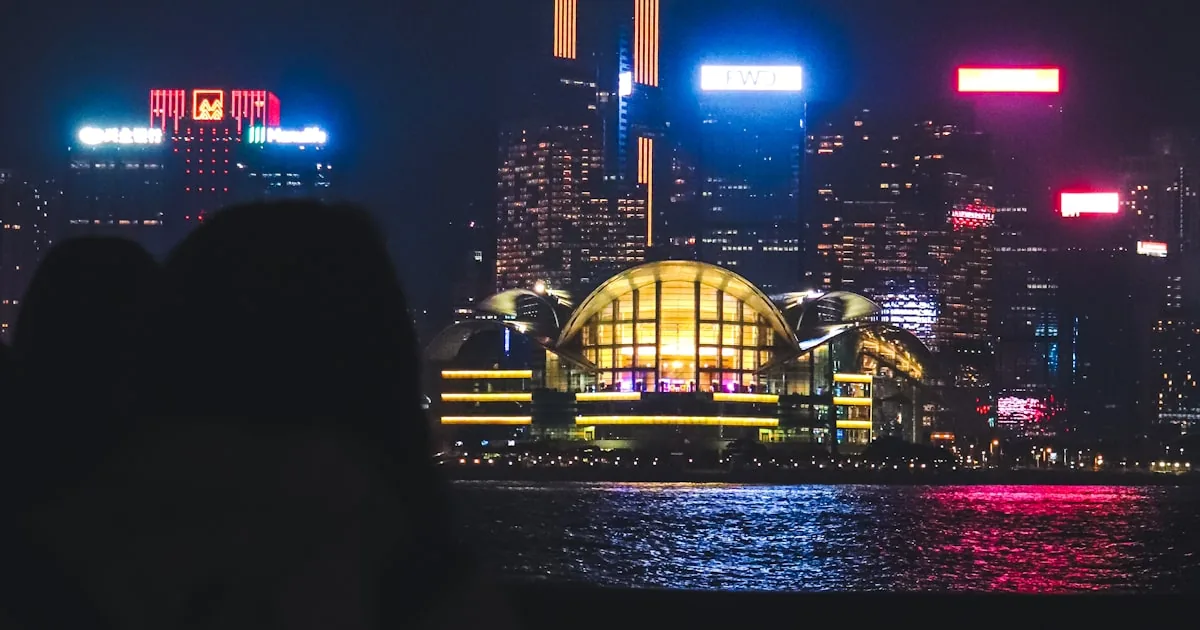
Symphony of Lights at 8pm nightly is a free harbour light show, best watched from the TST promenade.
Temple Street Night Market in Yau Ma Tei (Kowloon) is the classic night market, fortune tellers, street food, knock-off everything. It's touristy and a bit faded compared to its heyday, but worth an hour.
Big Buddha (Tian Tan Buddha) and Po Lin Monastery on Lantau Island. The Ngong Ping 360 cable car up is the experience: a standard-cabin round trip is around HK$270 for adults (crystal-floor cabins cost more), then it's a free walk to the giant bronze Buddha and the monastery. Budget a half to full day. This is the one big "nature" day most itineraries include.
Hong Kong Disneyland runs HK$669 and up for a one-day adult ticket depending on the date tier. Smaller than other Disney parks but easy to reach by MTR. Good with kids, skippable otherwise.
Ocean Park is the local theme park, part marine zoo, part thrill rides, dramatically perched on a hillside. Adult general admission is HK$538. More uniquely Hong Kong than Disneyland if you're choosing one.
If you want a fully sequenced plan rather than a menu, our ultimate 5-day Hong Kong guide maps out where to stay, what to ride, and how to pace it. Short on time? The 3-night weekend guide trims it to the essentials.
Getting around: the MTR and Octopus card
The MTR (metro) is the answer to "how do I get there." It's fast, clean, signed in English, and reaches almost everywhere you'll want to go. Single fares run from about HK$3.50 for short hops to HK$15 or so for cross-harbour trips; you only hit HK$25 to HK$50 for long runs out to the New Territories. Trains run roughly 6am to 1am.
Do not buy single tickets. Get an Octopus card. It's a tap-to-pay card that works on the MTR, buses, trams, the Star Ferry, most convenience stores, many restaurants, and vending machines. A standard adult Octopus is HK$200 (HK$50 refundable deposit plus HK$150 of starting value), refilled with cash at any station or 7-Eleven. Tap in, tap out, done, and it's slightly cheaper than paper tickets on every ride. You can refund the deposit and leftover balance at the airport when you leave.
The Octopus card also works in Macao and on some cross-border transit, which is handy if you're region-hopping. We break that down in the Octopus card Hong Kong and Macao transit guide.
Above ground, Hong Kong's century-old double-decker trams ("ding dings") trundle along Hong Kong Island's north shore for a flat HK$3. Slow, cheap, and a sightseeing ride in their own right. Taxis are metered and reasonable (red ones cover the city, around HK$29 to start), though traffic and tunnel tolls add up.
English is genuinely widespread here, more than anywhere on the mainland. Signs, menus, station announcements, and most service staff in tourist areas will get you through fine.
Food: where Hong Kong actually shines
This is the reason to come. Start with dim sum: go for a proper tea-house lunch, point at the carts or tick the order sheet, and don't overthink it. Har gow (shrimp dumplings), siu mai, char siu bao (BBQ pork buns), egg tarts.
Hit a cha chaan teng, the local diner, for the bizarre-but-great Hong Kong fusion: milk tea strong enough to stand a spoon in, pineapple buns (no pineapple, just a sweet crust), macaroni soup, and the famous baked-rice plates. Cheap, fast, everywhere.
For street food, curry fish balls, egg waffles (gai daan jai), and roast goose are the hall-of-famers. And Hong Kong has more Michelin stars per square kilometre than almost anywhere, including the cheapest starred meals on earth, so a splurge dinner doesn't have to wreck the budget.
Tap water is drinkable. Tipping is not expected, though a 10% service charge often lands on restaurant bills automatically.
Best time to visit
October to early December is the answer. Autumn brings warm, dry, clear days (highs around 23°C in November) with low humidity and little rain. It's the most comfortable stretch by a wide margin.
Avoid June to September if you can. It's hot, sticky, and the peak of typhoon season, when a single big storm can ground flights and shut ferries and outdoor attractions for a day or two. If a Typhoon Signal 8 goes up, the city basically closes, so build in a buffer day if you're traveling in summer.
Spring (March to April) is mild but grey and humid, with frequent fog on the Peak. Winter (January to February) is cool, dry, and pleasant, occasionally chilly enough for a jacket.
What it costs
Hong Kong is not cheap on lodging, but transport and food can be a steal. Rough daily ballpark per person:
Budget: HK$600 to HK$900 a day. Hostel or guesthouse bed, MTR and trams, street food and cha chaan teng meals, one or two paid sights.
Mid-range: HK$1,200 to HK$2,500 a day. A solid 3-star hotel room, mix of casual and sit-down dining, a couple of attractions.
Top-end: HK$3,000+ a day. Harbour-view hotel, fine dining, taxis everywhere.
The big variable is your hotel. Rooms are small and pricey by global standards, so that's where the money goes. Sights, transit, and food are where Hong Kong gives you a lot for a little.
Bring some cash for markets and small shops, but contactless cards (Visa, Mastercard, Amex, Apple Pay, Google Pay) work nearly everywhere else. Note that AlipayHK and WeChat Pay HK are local wallets that need a Hong Kong bank account, so as a tourist you'll lean on your Octopus card plus your home contactless card. The currency is the Hong Kong dollar (HKD), pegged around 7.8 to the US dollar.
Crossing into mainland China: the Greater Bay Area
Here's where Hong Kong's location pays off. The high-speed rail from West Kowloon Station puts you in the heart of mainland China in minutes, and immigration for both sides is handled inside the station before you board.
Shenzhen (Futian Station) is about 15 minutes away, with second-class fares around HK$75 to HK$80. It's a wildly easy day trip for shopping, tech markets, and a totally different vibe.
Guangzhou is roughly 48 minutes by the fastest trains, doable as a day trip or an overnight.
Just remember the visa point: you need the right entry document for mainland China (a Chinese visa, or in some cases a visa-free transit arrangement), and that's separate from your Hong Kong entry. Our Hong Kong side trips to Guangzhou and Shenzhen guide walks through the logistics, and if you'd rather a full multi-city route, see the 9-day Hong Kong, Macau, Shenzhen guide.
You can also reach Shenzhen by metro and at the border crossings without the high-speed train; we cover every route in the Hong Kong airport to Shenzhen transport guide.
FAQ
Do US citizens need a visa for Hong Kong? No. US passport holders get visa-free entry for up to 90 days with no pre-registration. Bring a passport valid for your stay and proof of onward travel. (A Chinese visa is a separate thing and is not needed for Hong Kong itself.)
How many days do you need in Hong Kong? Three days covers the highlights (Peak, harbour, dim sum, a market, one big day out like the Big Buddha). Five days lets you slow down, add Lantau, a theme park, and a day trip across the border without rushing.
Is Hong Kong part of China? Do I need a Chinese visa? Hong Kong is part of China but runs its own immigration and currency under "one country, two systems." Your visa-free Hong Kong entry does not let you into mainland China, and a mainland Chinese visa does not cover Hong Kong. If you're crossing into Shenzhen or Guangzhou, arrange the mainland entry separately.
Is the Octopus card worth it? Yes, get one immediately at the airport. It pays for transit, ferries, trams, and convenience stores with a single tap, gives a small discount on every ride, and saves you fumbling for fares. The HK$50 deposit is refundable when you leave.
Is English widely spoken in Hong Kong? Yes, more than anywhere on the mainland. Signage, transit, menus, and tourist-facing staff are reliably bilingual. You'll be fine without a word of Cantonese.
When is the best time to go? October to early December for warm, dry, clear weather. Skip July to September if you can, it's hot, humid, and typhoon season.
Ready to lock in a plan? Start with the ultimate 5-day Hong Kong guide for a day-by-day route, then sort your base with the TST hotel guide.
Tags
Getting around China without Chinese?
Save routes and key phrases offline — show your driver the address in Chinese with one tap.
Travelers also asked
View all →- Is Hong Kong still worth visiting given the recent political and cultural changes?
- Where should I stay for a 3-night weekend trip to Hong Kong to balance visiting Disney, Shenzhen, and Macau while managing hotel costs?
- What are the recommended time allocations for immigration and transport when leaving Hong Kong Airport during a layover?
- Is it better to visit Guangzhou or Shenzhen for a 2-day side trip from Hong Kong?