Beijing PEK Layover Timing Guide 2026: Is Your Connection Safe?
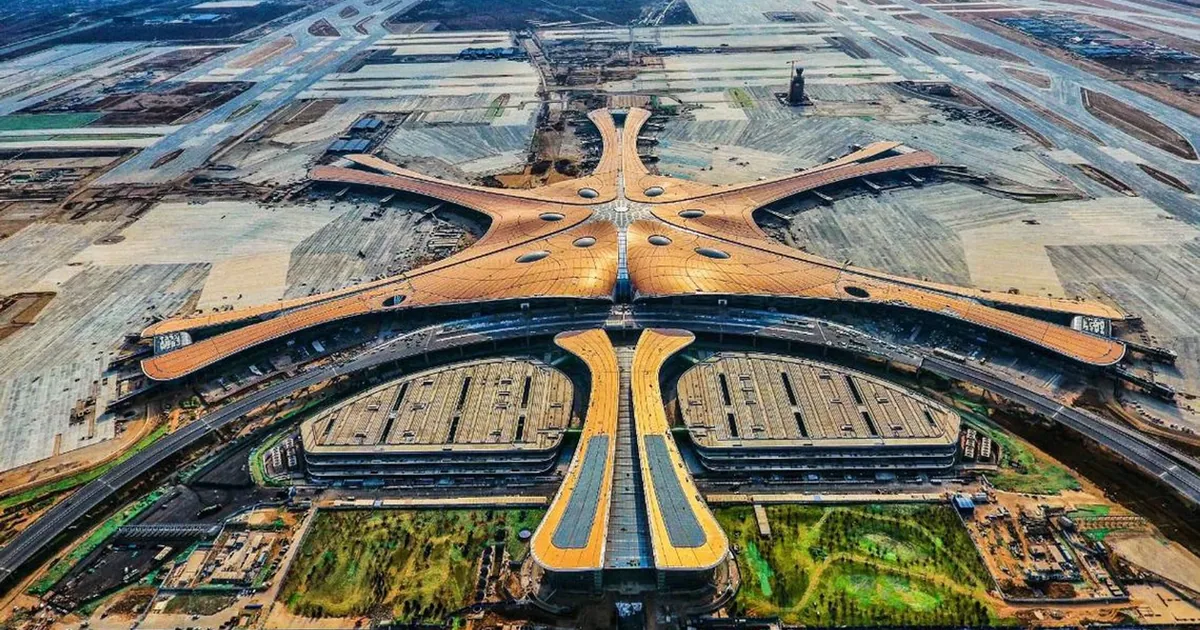
Before you worry about minimum connection times at Beijing Capital, settle one thing: are both your flights actually using the same airport? Beijing has two major ones — Capital (PEK) in the northeast and Daxing (PKX) in the far south — and they sit about 67 kilometres apart. Booking a "Beijing layover" that lands at one and departs from the other is the single most expensive mistake travelers make here. This guide is about connecting at PEK, and it starts by making sure you're in the right place.
First: PEK or PKX? Check which airlines fly where
When Daxing opened in 2019, a big chunk of traffic moved out of Capital. The split that matters for connections in 2026:
Stays at PEK (Capital): Air China (its main global hub) and Hainan Airlines.
Moved to PKX (Daxing): China Eastern, China Southern, and China United.
So if one leg is Air China and the other is China Southern, you may well be connecting between two different airports — check the airport code (PEK vs PKX) on every segment before you trust the layover. If you really are crossing between them, skip to the cross-airport section near the end.
Getting around China without Chinese?
Save routes and key phrases offline — show your driver the address in Chinese with one tap.
PEK terminal layout in 2026
Capital has three terminals, but one has changed role:
Terminal 1 is no longer a standalone terminal. Since August 2023 it reopened as a satellite extension of Terminal 2, so you won't be assigned "T1" as a separate building the way older guides imply.
Terminal 2 handles Hainan Airlines (all its international flights), most SkyTeam carriers still at PEK, and a few others.
Terminal 3 is the big one — Air China's hub and the Star Alliance terminal, plus OneWorld carriers. It's split into T3C, T3D and T3E, with T3E handling international departures.
A wrinkle worth knowing: Air China is a Star Alliance member, not SkyTeam, and most of the SkyTeam heavyweights (China Eastern, China Southern) are the ones that left for Daxing. The only SkyTeam carrier over in T3 is China Airlines. If a guide tells you SkyTeam dominates PEK's terminals, it's out of date.
Getting between terminals
T2 and T3 are connected by a free shuttle bus running every 10 to 15 minutes, with a ride of roughly 10 to 15 minutes. Treat a T2-to-T3 connection as changing buildings: budget the shuttle time plus a fresh security and, if relevant, immigration check. It is not a same-terminal walk.
Minimum connection times at PEK
These are the airline systems' minimums — the floor below which they won't sell you the connection. They are not your safety margin (more on that next).
Connecting within Terminal 3:
Connection | Minimum |
|---|---|
Domestic to domestic | 50 minutes |
Domestic to/from international | 120 minutes |
International to international | 60 minutes |
Connecting between T3 and T2 (changing terminals):
Connection | Minimum |
|---|---|
Domestic to domestic | 120 minutes |
Domestic to/from international | 160 minutes |
International to international | 120 minutes |
The jump is big — an international-to-international connection doubles from 60 to 120 minutes the moment you change terminals. When you book, favour connections that keep both flights in T3. (These figures come from published airline connection tables; the number your ticket is actually held to is whatever the issuing airline's system uses, so treat them as a guide.)
How much time is actually safe
The minimums above will get a ticket issued. For a layover you can relax into, give yourself more:
International to international, same terminal (T3): aim for 2.5 to 3 hours. International transfer security and the long walk through T3E eat time.
Anything crossing T2 and T3: 3.5 to 4 hours, to absorb the shuttle plus a second security and border check.
Domestic to or from international: plan on at least 3 hours — this almost always means collecting bags, clearing immigration, re-checking, and going back through security.
If your two flights are on separate tickets (a self-transfer), none of the airline minimums protect you. You must collect your bags and re-check from scratch, so plan as if you're starting a brand-new check-in.
Do you need a visa just to wait?
Three situations, three answers:
Staying airside on an international-to-international connection: generally no visa needed, as long as you never leave the secure transit area and your bags are checked through. At PEK this is cleanest entirely within T3E; if you'd have to change to T2 or your bags can't be through-checked, you may be forced to enter China and re-check, which changes things.
24-hour transit: open to all nationalities at all open ports, if you hold a confirmed onward ticket to a third country and stay within the permitted area for under 24 hours.
240-hour (10-day) visa-free transit: this applies at both PEK and PKX. If you qualify and want to actually leave the airport and see Beijing, this is the route — the conditions (onward ticket to a third country, eligible nationality) are covered in our China visa-free guide. For the wider picture on connecting through China, see our layover and transit basics.
If your connection crosses PEK and PKX
This is the scenario to plan around carefully. The two airports are about 67 km apart with no airside link — you leave one, travel across the city, and check in at the other from scratch:
Taxi or private car: roughly 70 to 90 minutes in normal traffic, longer at peak.
Airport shuttle bus: around 90 minutes, ¥35 to ¥55.
Public transit: over an hour and a quarter with multiple changes.
There is no through-baggage between the two airports. You'll reclaim your luggage, cross town, and re-check, so give yourself at least 4 to 5 hours between flights — more if either is international. And triple-check those airport codes when booking; PEK and PKX look alike on a screen and getting it wrong can cost you the trip.
Frequently asked questions
Are PEK and PKX the same airport? No. They're two separate Beijing airports about 67 km apart, with no connection between them airside. A connection that splits across both means leaving one airport and checking in again at the other.
How long is a safe international layover at PEK? If both flights are in Terminal 3, aim for 2.5 to 3 hours. If you change between T2 and T3, give yourself 3.5 to 4. The airline minimum (as little as 60 minutes same-terminal) is the floor, not a comfortable margin.
Can I leave the airport during my PEK layover? Yes, if you qualify for 24-hour or 240-hour visa-free transit, both of which work at PEK. The 240-hour route even lets you spend several days in Beijing, provided you're flying onward to a third country and your nationality is eligible.
Which terminal is Air China at PEK? Terminal 3, the Star Alliance terminal and Air China's hub. Hainan Airlines uses Terminal 2.
My flights are Air China and China Eastern — same airport? Probably not. Air China is at PEK; China Eastern moved to Daxing (PKX). Check the airport code on each segment and, if they differ, plan for a cross-city transfer with 4 to 5 hours' buffer.
Tags
Getting around China without Chinese?
Save routes and key phrases offline — show your driver the address in Chinese with one tap.
Travelers also asked
View all →- What are the recommended options for handling a 19-hour layover at Beijing Capital International Airport?
- Will I face boarding issues if I don't provide visa information for Beijing transit?
- Is it possible to visit the Great Wall and Forbidden City during a 10-hour layover in Beijing, and what is the best way to arrange transportation?
- When flying into China internationally and connecting to a domestic flight, do I clear immigration at the first airport and does my luggage check through?